Cenobio de Valerón: more than 350 chambers carved into volcanic rock, where the island’s original inhabitants stored their harvest. What you will see here, how many steps await you, admission, opening hours and getting there by car – a tour rep’s tips.
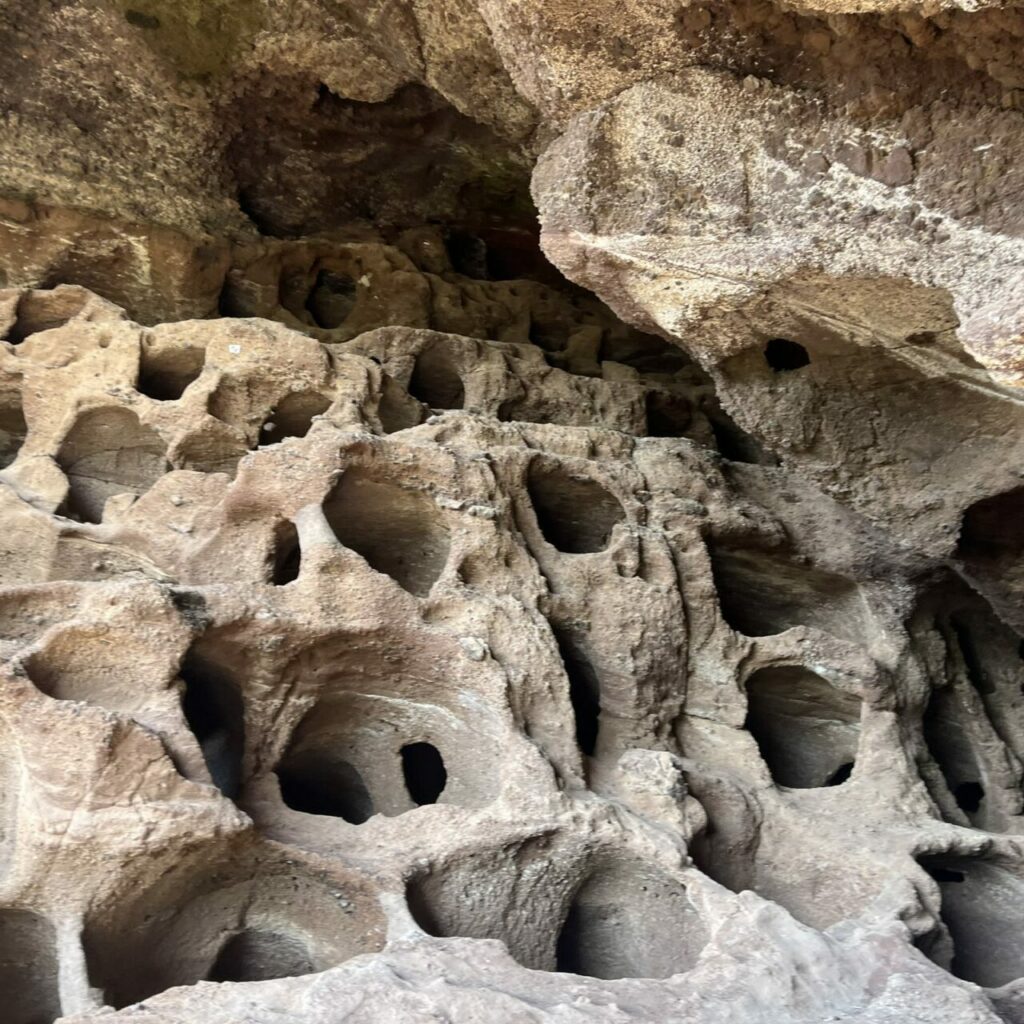
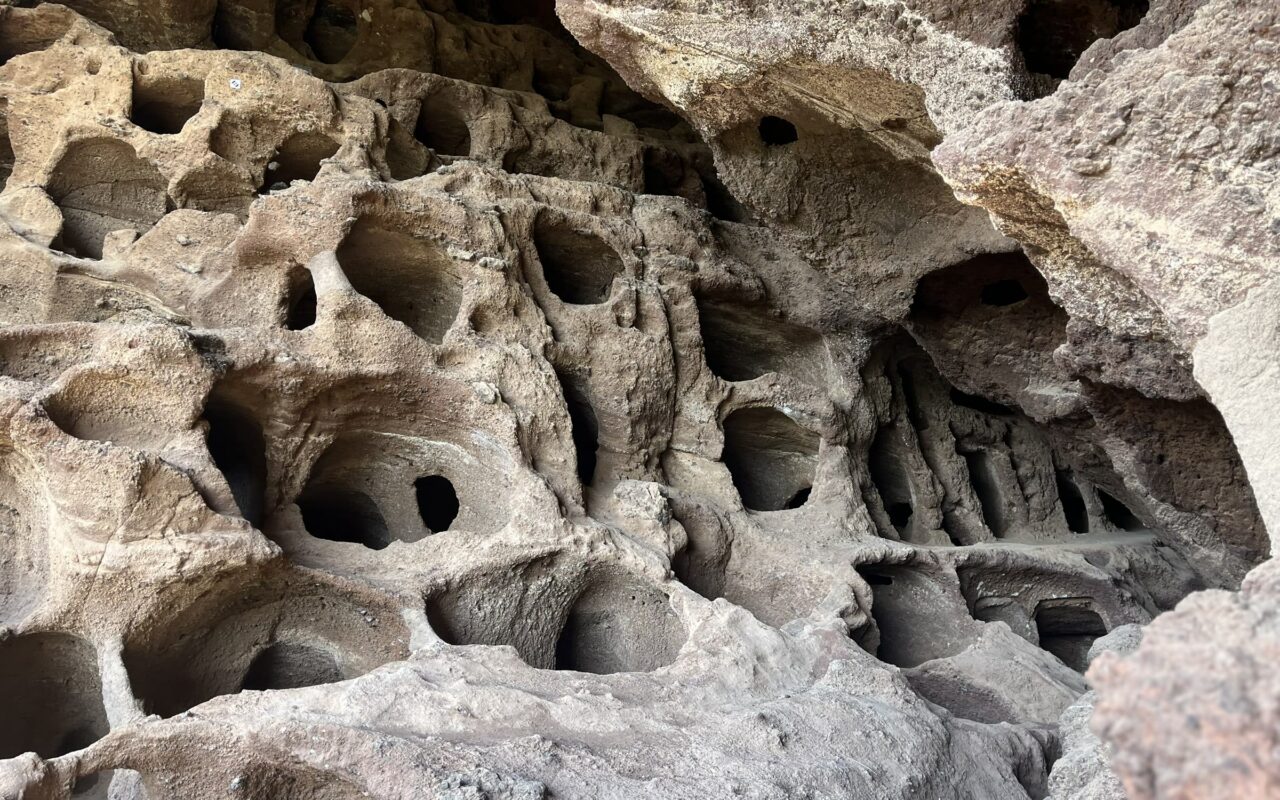
Cenobio de Valerón is an archaeological site in the north of Gran Canaria near the small town of Santa María de Guía. On the slope of the volcanic Montaña del Gallego, high above a deep gorge, more than 350 chambers are carved under a large rock overhang, on several levels one above the other. They were made by the island’s original inhabitants, the Guanches, more than 800 years ago. They served as a communal granary, where grain and other food were stored.
The name is misleading. The word “cenobio” means monastery and comes from an old, now disproved idea that there was some kind of monastery here. In reality it was a storehouse protected by the rock itself: almost invisible from the surroundings, hard to reach, and the harvest was safe here.
I recommend a visit mainly to those interested in the history of the island before the Spanish arrived. There are few places on Gran Canaria where the life of the Guanches can be seen as clearly as here.
Tuesday to Sunday 10:00–17:00 (October–March), 10:00–18:00 (April–September).
Santa María de Guía in the north of the island, exit 20 from the GC-2 motorway.
Best by car; steps lead up to the granaries.
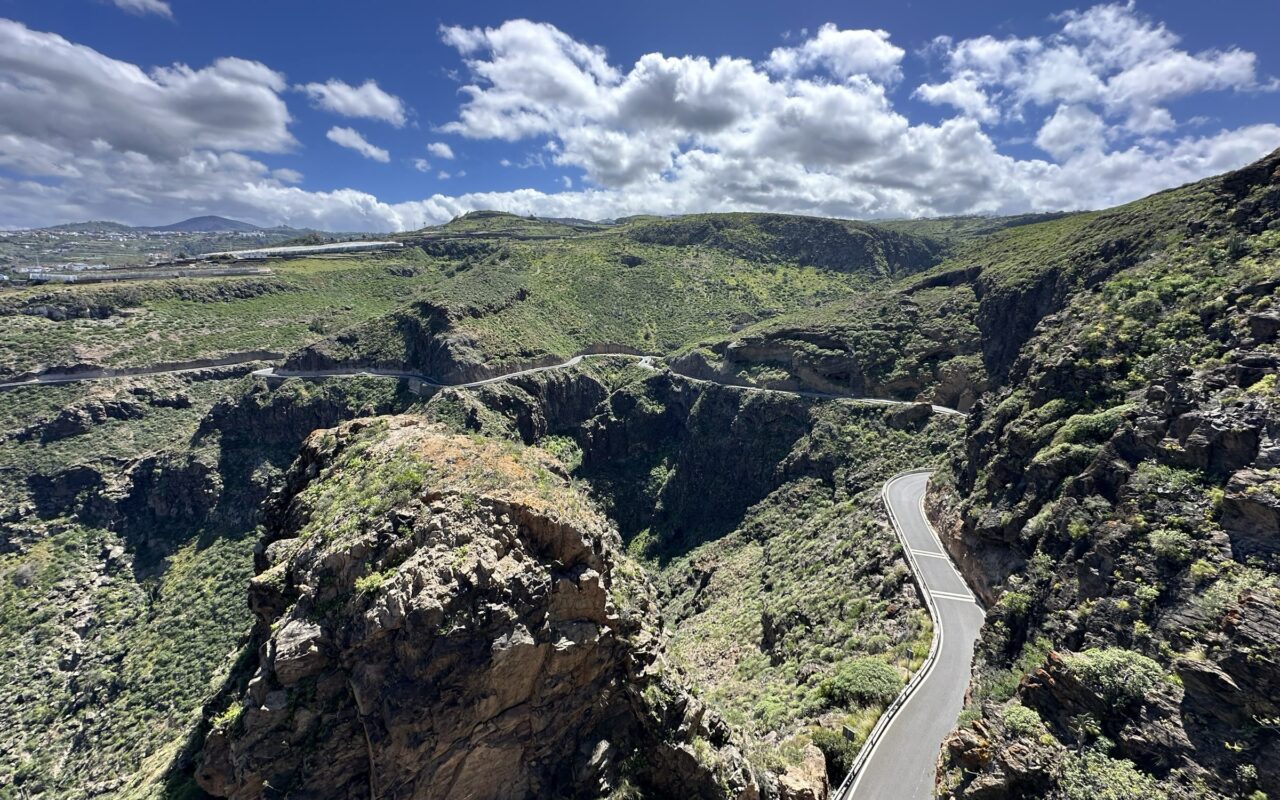
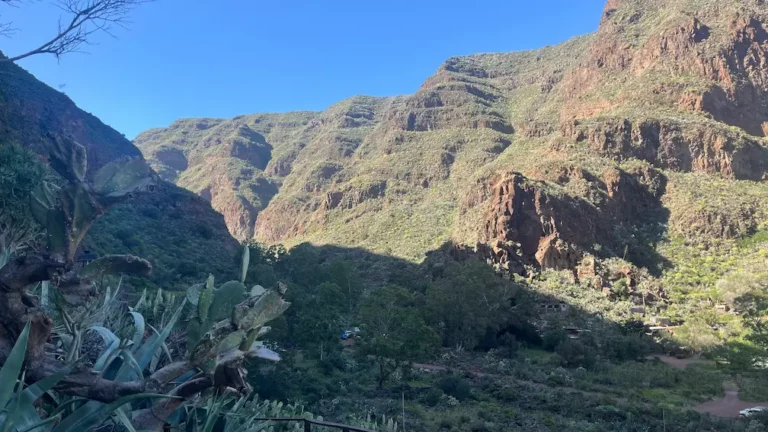
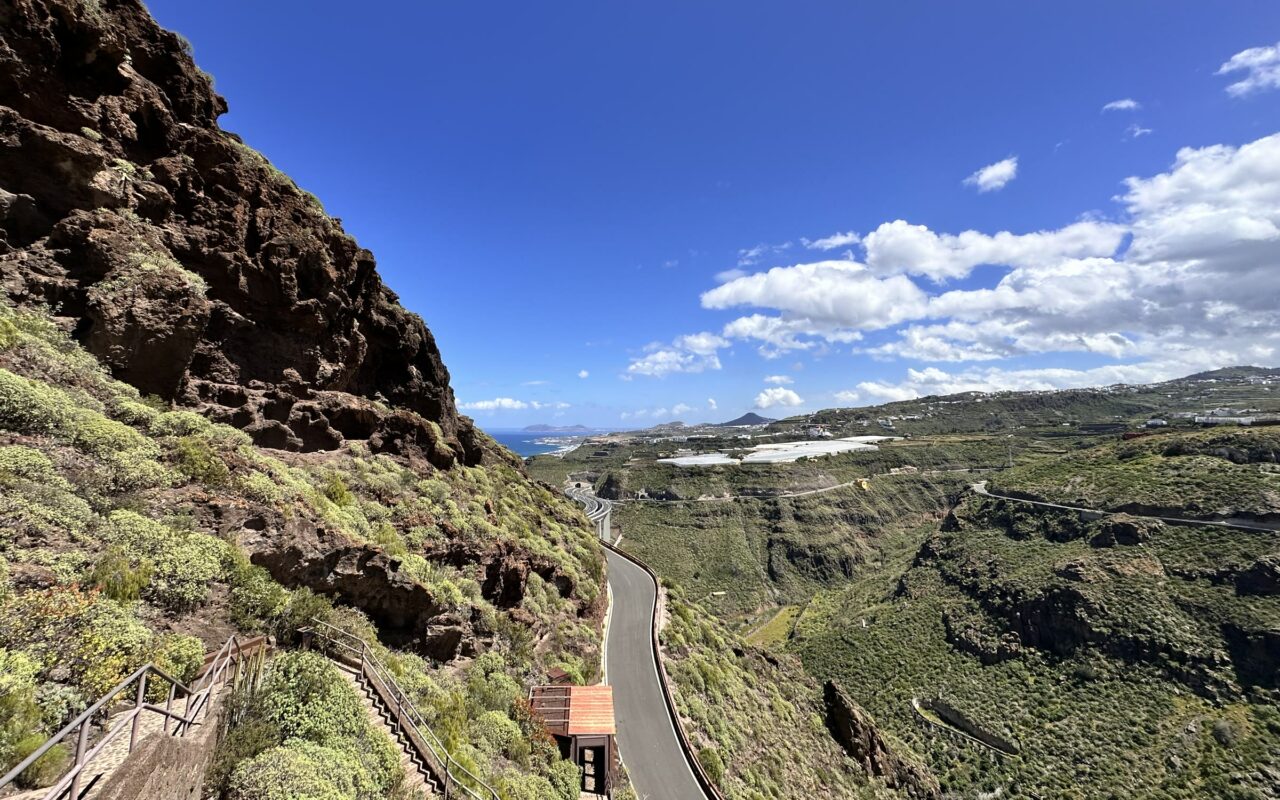
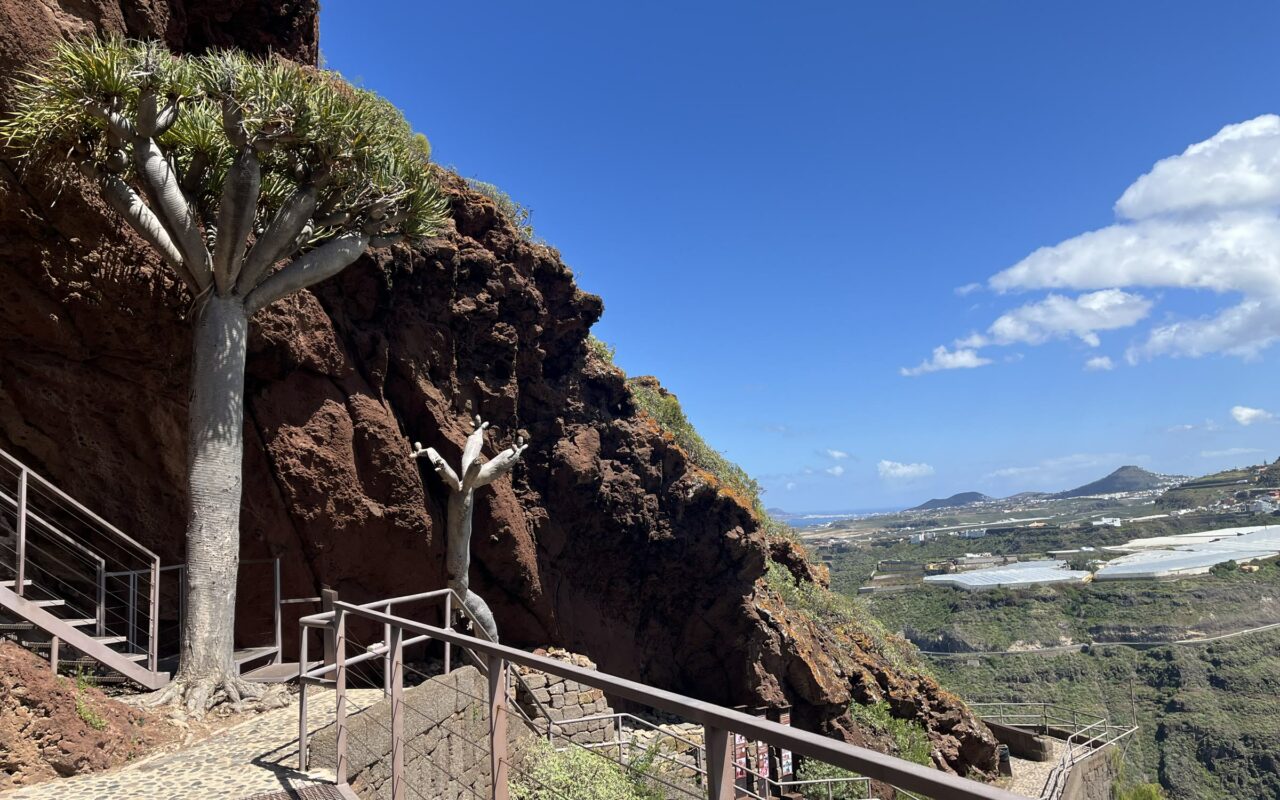
From the entrance, a staircase climbs the slope above the road to the granaries. There are many steps and they are steep in places, so expect a bit of effort. On the way you can stop by the dragon trees below the rock face and at the rest areas, from which you can see the deep gorge, the hairpin bends of the road and, in good weather, the sea on the north coast.
At the top you stand under a huge rock overhang. Above your head and all around you are hundreds of openings of different sizes, some connected, others set deep into the rock, and the whole face resembles a honeycomb. Under the overhang it is shady, cool and quiet. Looking at it, you realise that the Guanches had to carve every chamber by hand with stone tools and carry the harvest up the slope.
Along the path there are information boards explaining how the granary worked. Allow about an hour for your visit.
A long staircase leads up, steep in places. The site is not suitable for pushchairs or people with limited mobility.
Bring comfortable shoes and water. In summer, go in the morning, before it gets too hot.
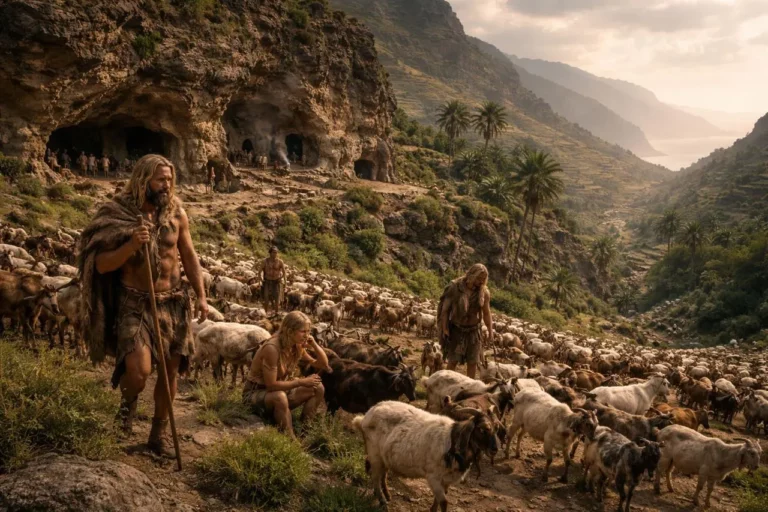
Before the Spanish arrived in the 15th century, Gran Canaria was home to the Guanches, descendants of the Berbers of North Africa. They were farmers and herders – they grew mainly cereals and kept goats. They needed to store their harvest for harder times, which is why communal granaries such as Cenobio de Valerón were built. You will find more about their origins and way of life in the article The Guanches.
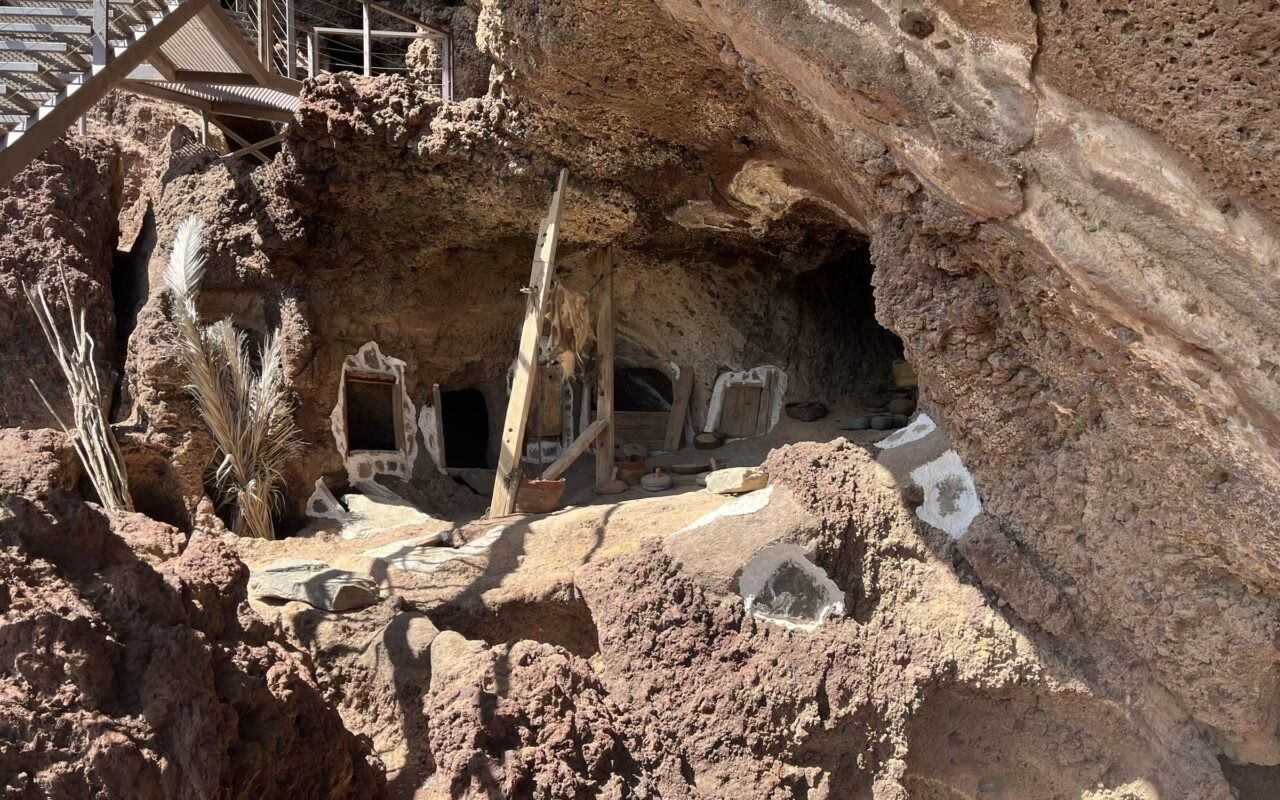
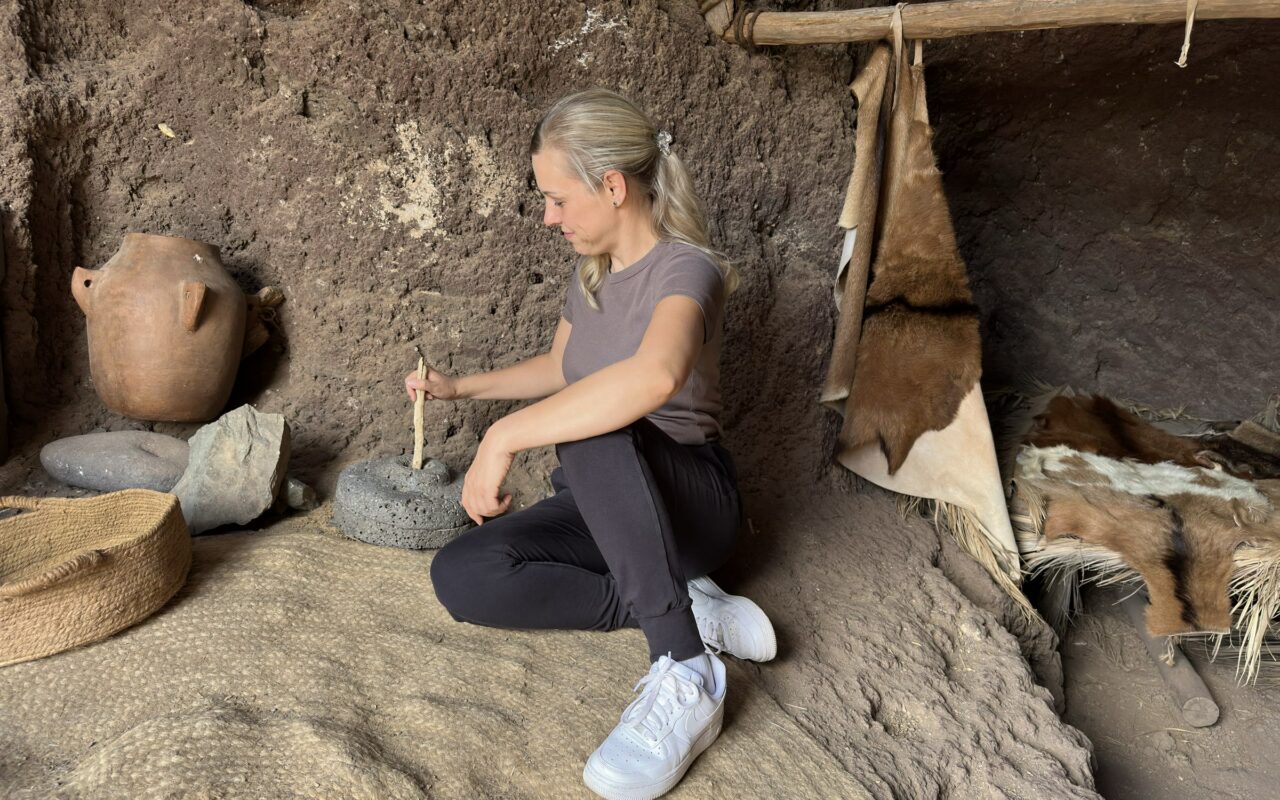
The stored grain was used to make gofio – toasted flour, which the Guanches ground on hand-operated stone mills. Gofio is still eaten in the Canary Islands today and you can buy it in any supermarket. In one of the caves there is a display of what it might have looked like here: clay pots, furs, mats and a mill on which gofio was ground.
Cenobio lies in an area that belonged to Gáldar, the seat of the Guanche kings. If you are interested in the history of the original inhabitants, combine your visit with the Cueva Pintada site – more in the article Gáldar. You can also see Guanche caves in the Barranco de Guayadeque gorge, and the whole story of the island in the article History of Gran Canaria.
The Cueva Pintada archaeological park with its Guanche paintings is about 15 minutes’ drive from Cenobio.
I recommend going to Cenobio de Valerón by car. It lies in the north of the island between Las Palmas and Agaete. Leave the GC-2 motorway at exit 20 and continue along the old Cuesta de Silva road. There is a small car park at the entrance, but spaces are limited. It takes about half an hour from Las Palmas and about an hour from the southern resorts.
You can get here by bus, but from the stop you face a walk of about 20 minutes uphill. With a car you can also easily combine Cenobio with other places in the north – Gáldar, Agaete or Arucas. You will find more tips in the article Las Palmas and the north of Gran Canaria.
Admission: €3, reduced €2 (children aged 10–14, students, seniors over 65), children under 10 free. The ticket is valid for a whole year. A combined ticket with the Maipés de Agaete site costs €5.
Opening hours: Tuesday to Sunday, from October to March 10:00–17:00, from April to September 10:00–18:00. Closed on Mondays, and on 1, 5 and 6 January, 1 May and 24, 25 and 31 December. Prices and times may change; you will find up-to-date information on the island’s tourism website grancanaria.com.
There is only a small car park at the entrance. Better to arrive in the morning.
Open from Tuesday to Sunday.
Cenobio de Valerón is a trip to the north of the island – it is closest from Las Palmas, but by car you can get here from the southern resorts in an hour too. You will find hotel tips in the articles Gran Canaria resorts and Las Palmas and the north of Gran Canaria.
Admission is €3, reduced €2 (children aged 10–14, students, seniors over 65), and children under 10 get in free. The ticket is valid for a whole year.
Tuesday to Sunday, from October to March 10:00–17:00, from April to September 10:00–18:00. Closed on Mondays.
Yes, a long staircase leads up, steep in places. The site is not suitable for pushchairs or people with limited mobility. Wear comfortable shoes.
Best by car – exit 20 from the GC-2 motorway, with a small car park at the entrance. You can also come by bus, but from the stop it is about a 20-minute walk uphill.
The island’s original inhabitants, the Guanches, more than 800 years ago. They carved more than 350 chambers into the rock, in which they stored grain and other food.
Cenobio de Valerón is one of the most interesting places on Gran Canaria for anyone interested in the life of the Guanches. Expect steps and wear comfortable shoes, go by car and combine your visit with Gáldar or other places in the north of the island.