The original inhabitants of the Canary Islands, known collectively as the Guanches, are one of the greatest historical puzzles of the Atlantic. Although they lived in Stone Age isolation, their culture showed an unexpected level of social organisation and ritual.
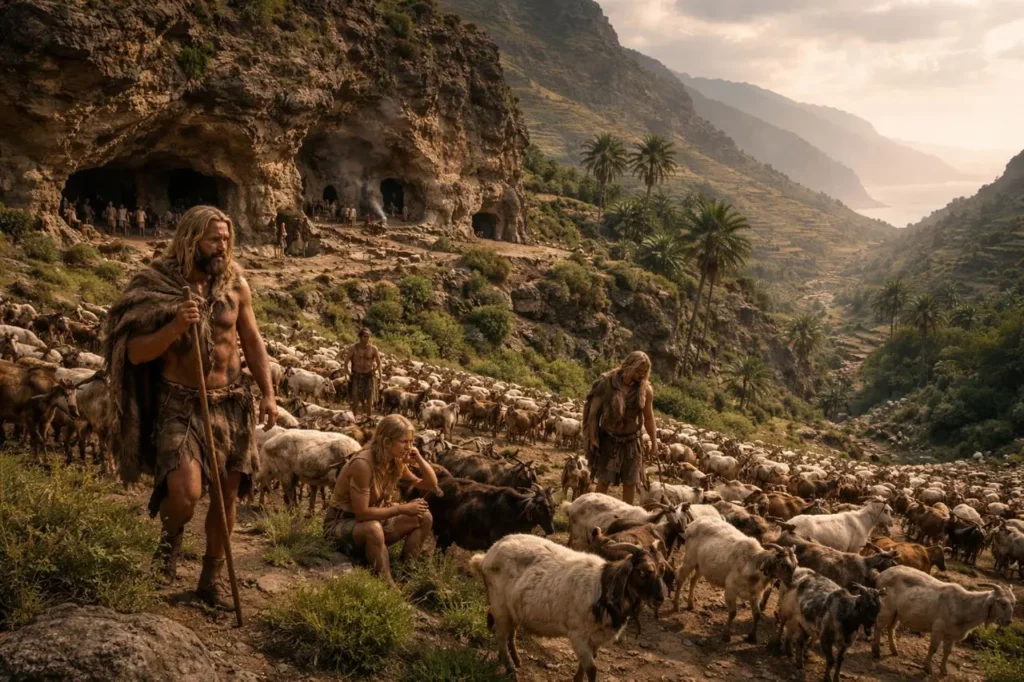
Even hundreds of years after the islands were conquered, the Guanches are still the subject of intensive research by archaeologists and historians, who are trying to decipher their unique way of life.
DNA analyses and linguistic studies (remnants of their language and the whistled speech Silbo) confirm that the Guanches were descendants of the Berbers of North Africa (the area of today’s Morocco and its surroundings). They shared genetic markers with them as well as similar cultural features, such as growing cereals and keeping goats.
The first European conquerors, however, were shocked by their appearance – many were tall, with fair skin and blue eyes. These facts still fuel theories about their connection with the legendary Atlantis.
Caves and stone houses
Cereals, goats and gofio
Conquest of the islands 1402–1496
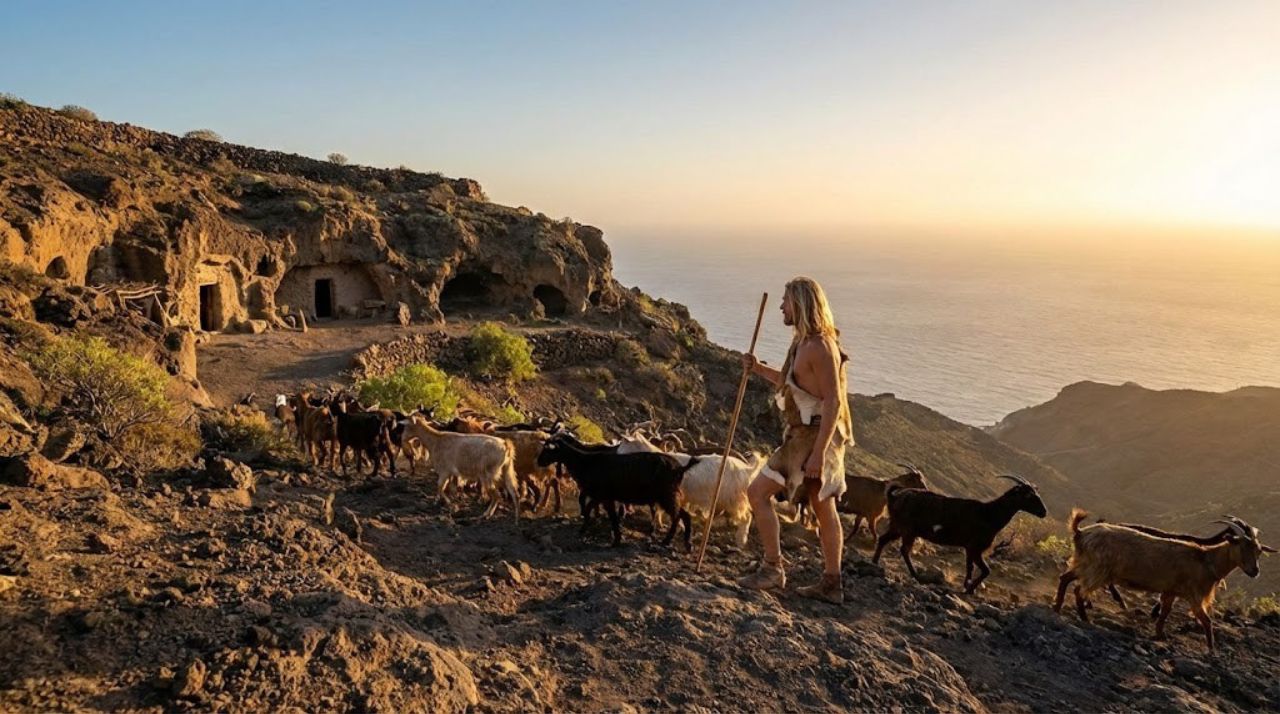
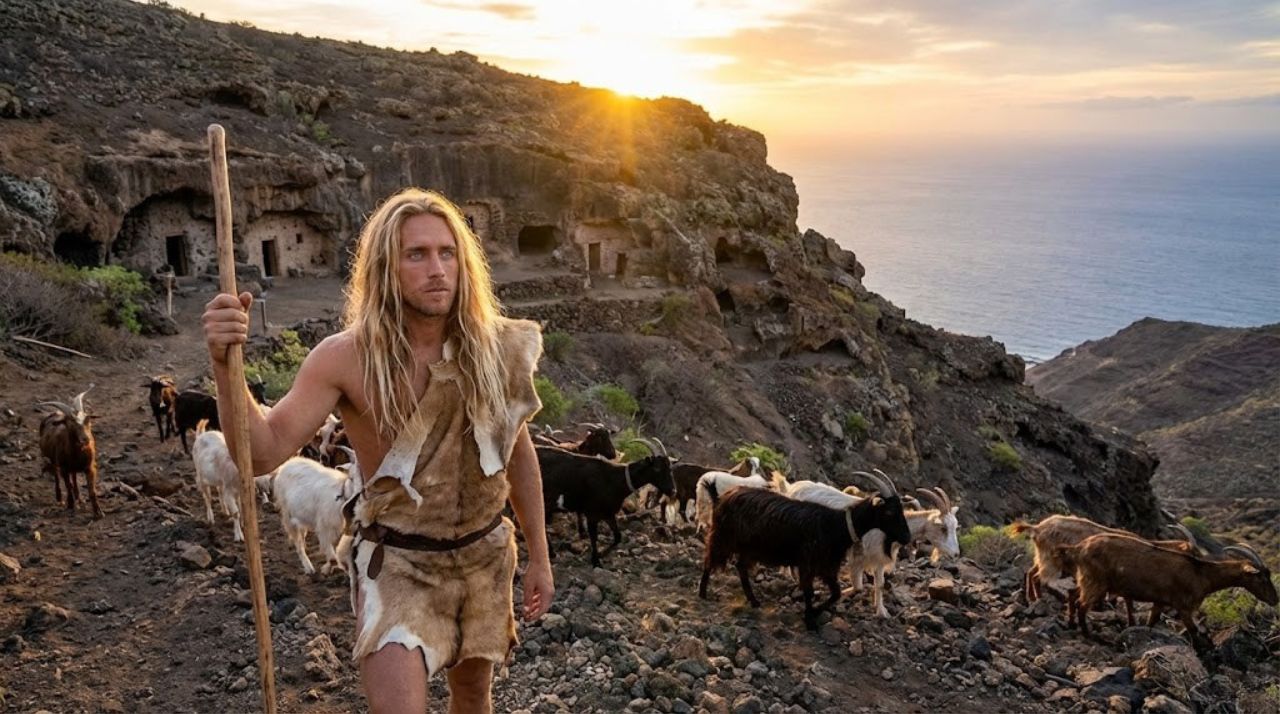
The Guanches were masters at adapting to the terrain and used two basic types of dwelling:
The Guanches’ toasted cereal flour is still a staple of Canarian cuisine today.
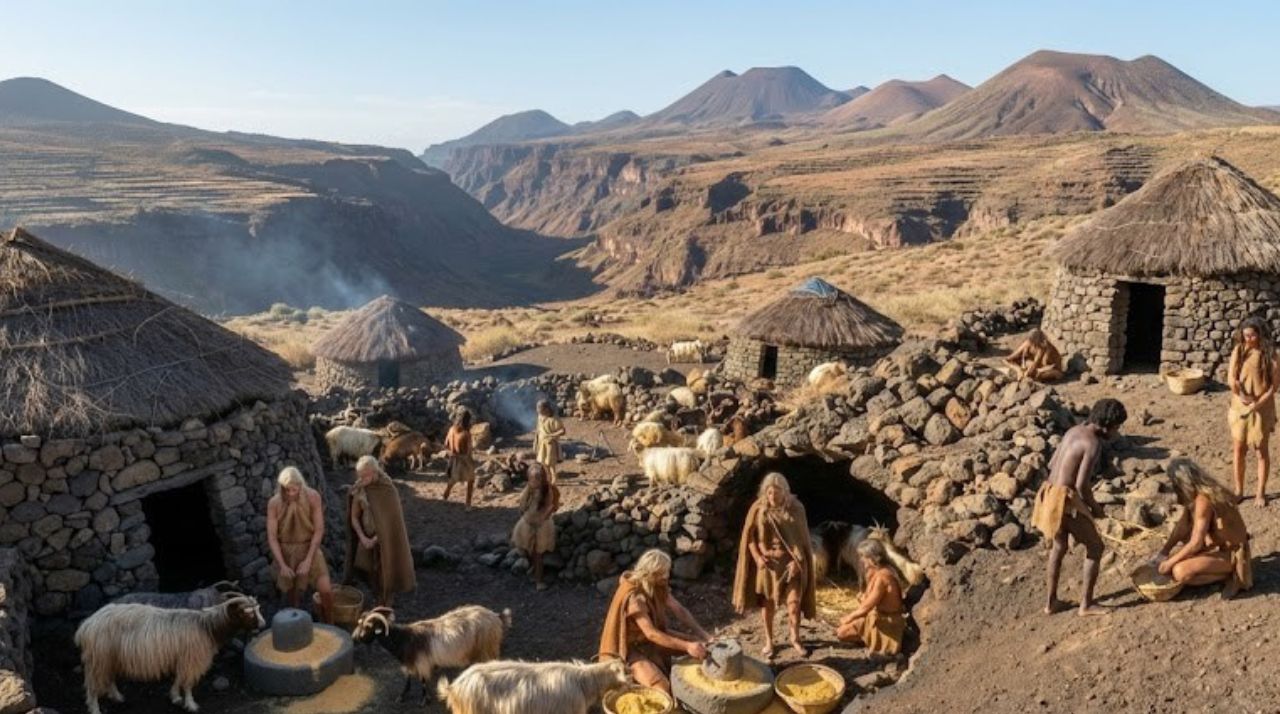
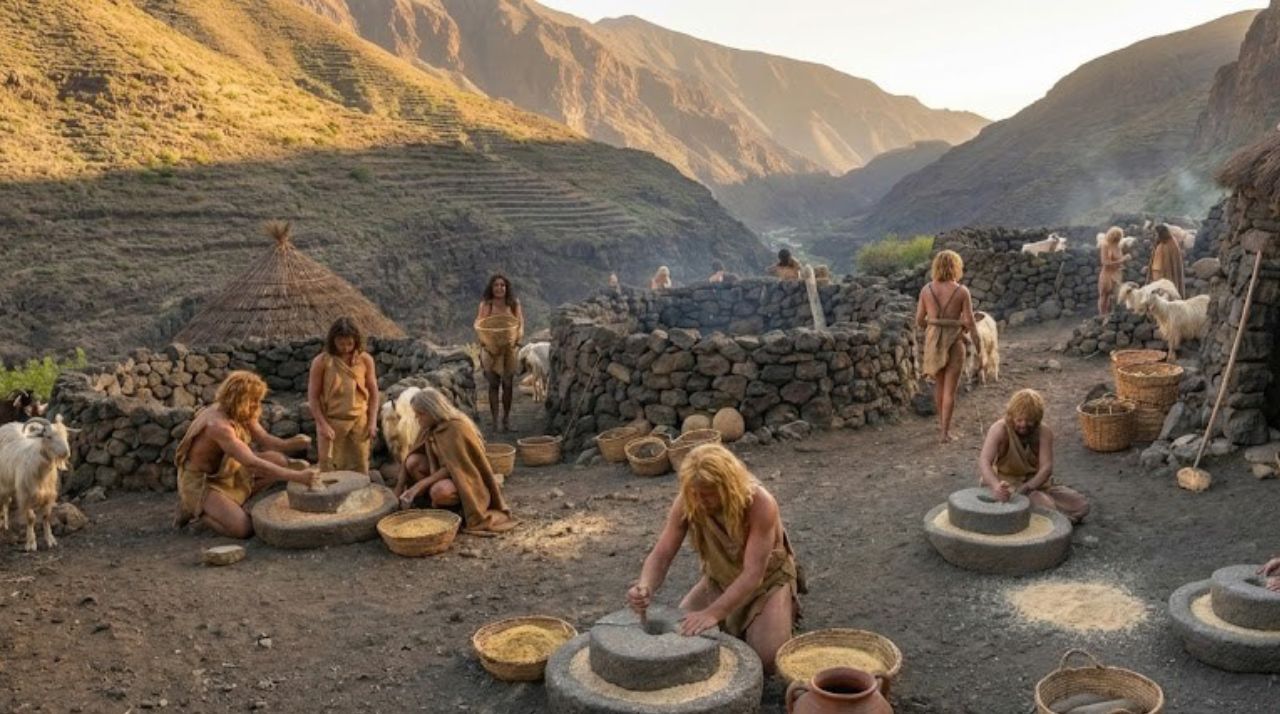
Although the native peoples shared Berber roots, centuries of isolation turned each island into a unique civilisation with its own destiny.
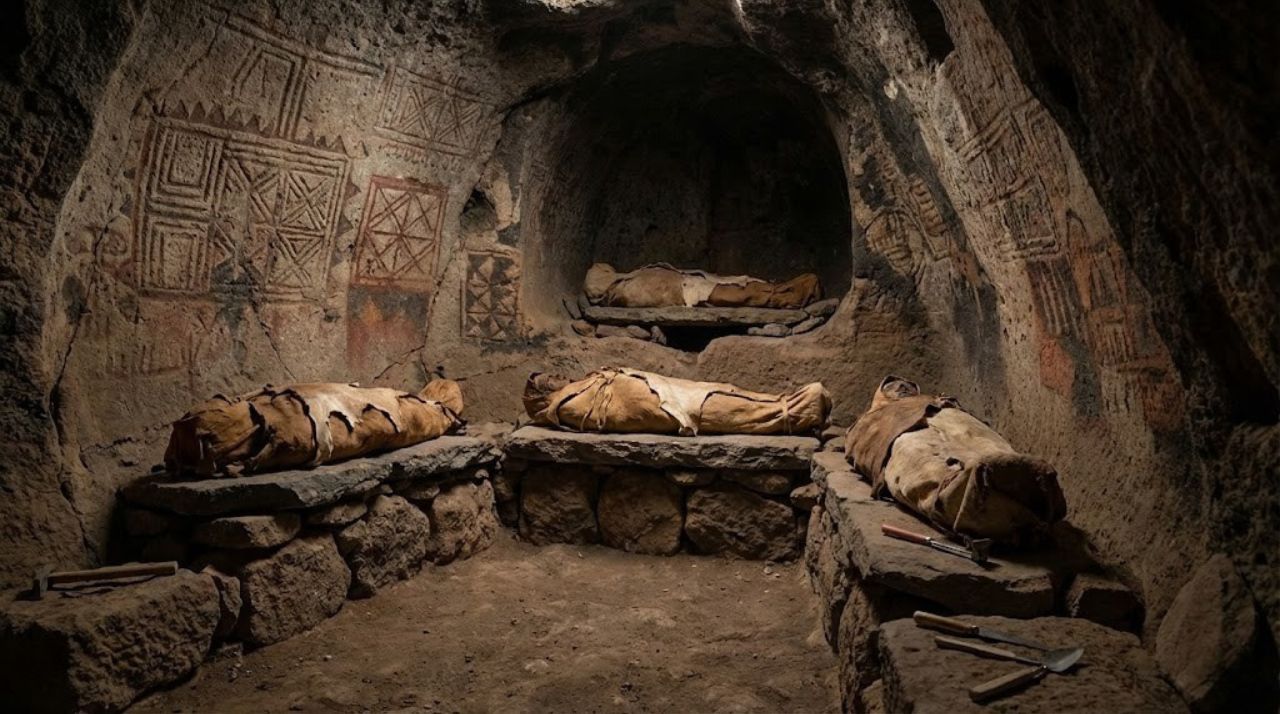
While the inhabitants of Gran Canaria built stone towns and complex cliff granaries, on mountainous Tenerife people focused on the cult of the dead and ritual mummification in deep caves.
On dry Lanzarote and Fuerteventura, life adapted to the harsh landscape because of the lack of wood and water – people built sunken underground dwellings and survived by gathering shellfish.
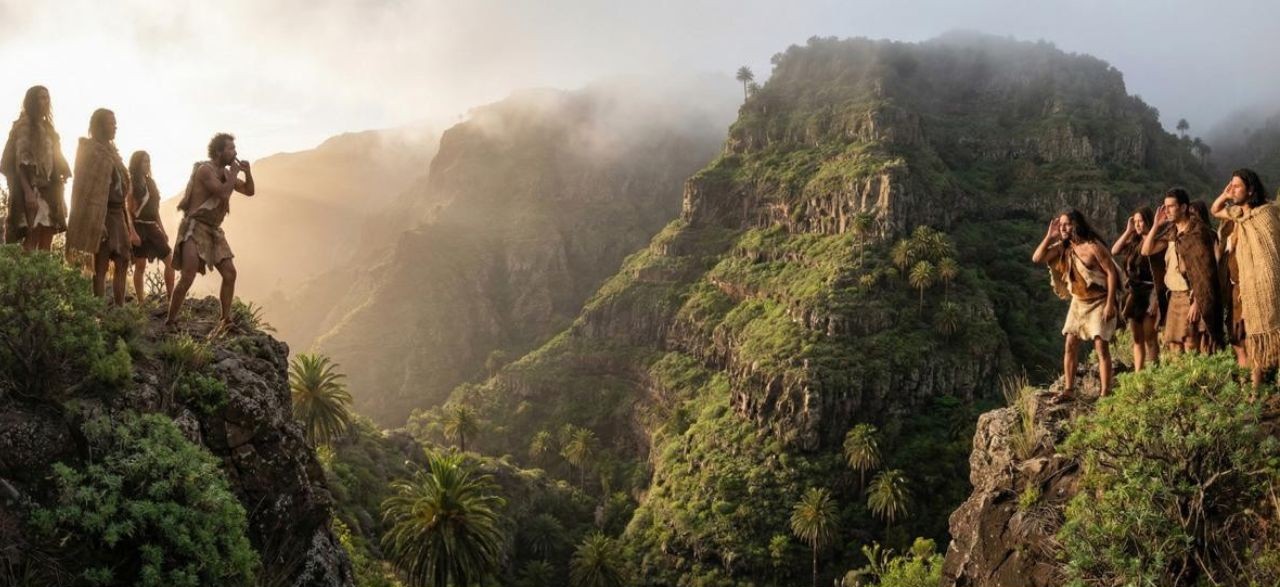
On rugged La Gomera, the unique whistled language Silbo developed, allowing herders to communicate across deep gorges. From the artists of La Palma, who covered the rocks with magical spirals, to the peaceful herders of El Hierro who worshipped sacred trees – each island created its own culture, of which its neighbours often had no idea.
The whistled language of La Gomera allowed herders to communicate across deep gorges.
The most fascinating aspect of Guanche history is the absence of seafaring. Although they inhabited an archipelago surrounded by ocean, there is no evidence that they knew how to build boats or sailed even between the individual islands. How they got to the Canary Islands is still a matter of debate.
This is a very popular theory today. It assumes that the Berbers were deliberately put ashore on the islands as convicts or slaves by the Romans or Phoenicians. At that time there were many uprisings against Roman rule in North Africa. It is very likely that the Romans simply loaded rebellious tribes onto ships and deported them to the islands. It suited them to use the islands’ resources (for example purple dye), but they did not want to live there permanently.
The people put ashore took their livestock with them, but because they were not sailors, they became “stranded” on the islands and gradually forgot how to build boats, or had neither the resources nor the need to build them. This theory could explain why the Guanches on the different islands had the same domestic animals even though they did not communicate with each other at all.
For a long time the Roman presence was only speculation, but in 2012 there was a breakthrough. On the small island of Lobos (off Fuerteventura), a Roman workshop for making purple dye was discovered. Thousands of sea snail shells, Roman pottery and tools dated between the 1st century BC and the 1st century AD were found there.
In antiquity this was the rarest and most expensive colour in the world. Owning a purple robe meant belonging to the highest elite (emperors, kings, high priests). In the Canary Islands it was obtained from two sources, sea snails or lichens, and in both cases it was unpleasant “slave” work.
The Romans never planned to settle the Canary Islands on a large scale. For them they were just a “remote industrial zone” at the edge of the world. From the 3rd century AD the Roman Empire began to collapse – it had to face barbarian attacks, inflation and internal strife, and there was no longer money or soldiers left to protect luxury purple workshops somewhere in the Atlantic. When the Vandals conquered North Africa in the 5th century, Rome lost its African ports. This cut off the connection with the islands completely. The ships stopped coming and the islands were “forgotten”.
A Roman purple dye workshop discovered in 2012 is evidence of a Roman presence on the islands.
The rarest and most expensive colour in antiquity – it was obtained from sea snails or from lichens.
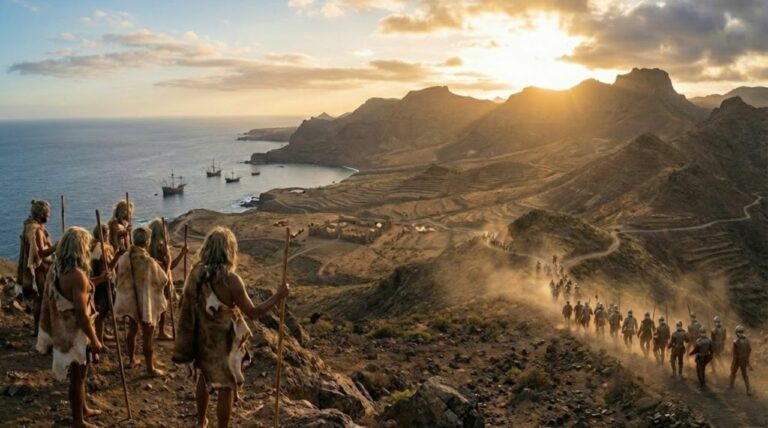
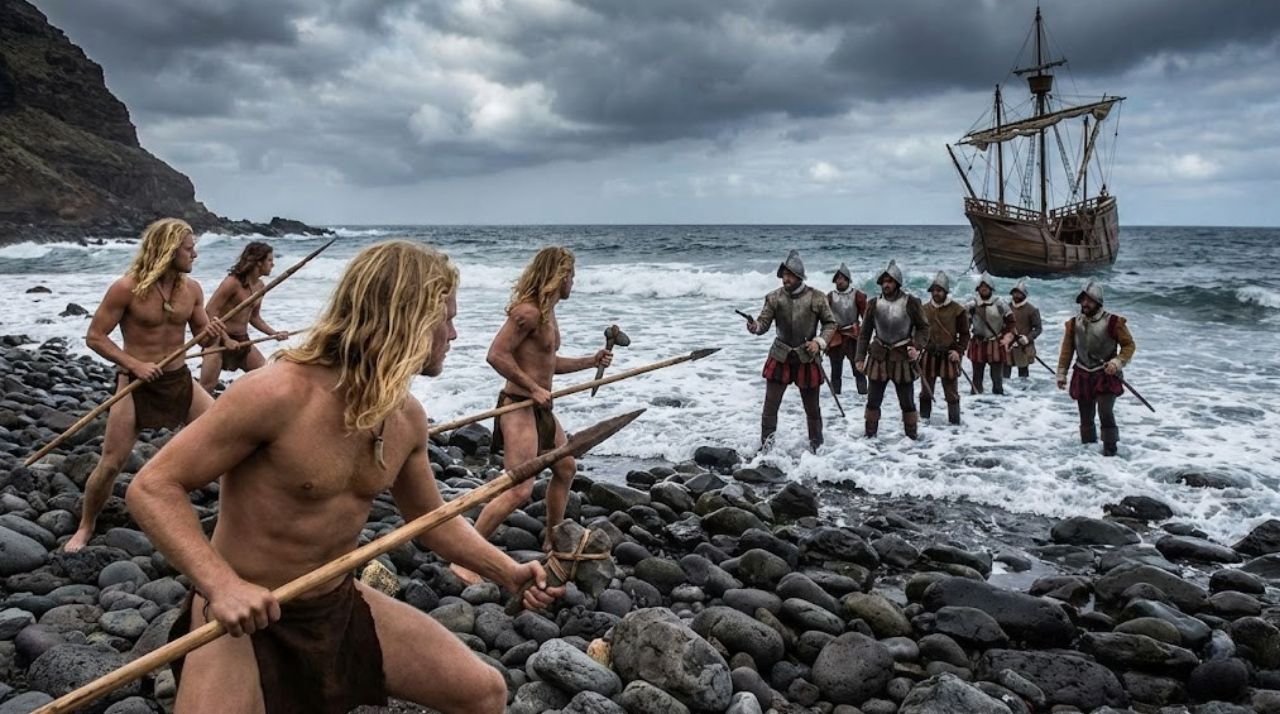
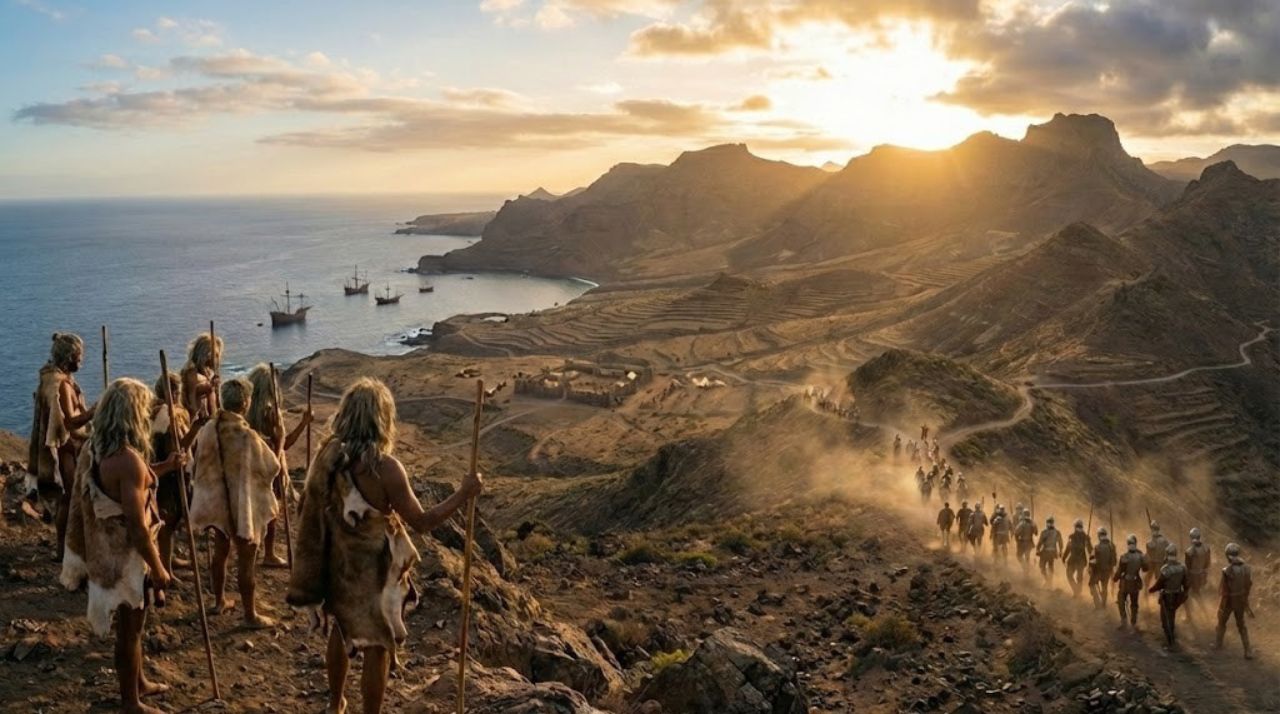
After the Romans left, the Guanches lived for many years in complete isolation. They had no ability to sail and supposedly did not even know that another world and other peoples existed somewhere. All the greater the shock when foreign ships began to appear on their horizon. Although the process is associated mainly with Castile, the conquest of the Canary Islands was an international undertaking that lasted almost a hundred years.
In 1402 the first wave of conquest began on the islands that were closest to the African coast and had less rugged terrain:
Béthencourt and his allies did try to attack Gran Canaria, La Palma and Tenerife too, but there they met fierce resistance. On Gran Canaria the Normans were crushingly defeated at the Battle of Arguineguín. La Gomera was a special case – the Normans partly settled there, but the natives kept a great deal of freedom and repeatedly rebelled against their European lords (including the famous “Peraza revolt”, in which the natives killed the Spanish governor). The large, mountainous islands remained free until the end of the 15th century, when a professional army under the direct command of the Spanish Crown sailed in to conquer them.
Only in 1478 did the final and bloodiest phase begin, when armies equipped with steel weapons, crossbows and horses, which the Guanches had never seen before, attacked Gran Canaria and later Tenerife. In addition, already baptised natives from previously conquered islands were often sent into battle, fighting against their own people.
For the emerging Spain it was essentially a “laboratory” for the later conquest of America – it was here that they tried out methods such as using horses in battle and coping with unfamiliar terrain, which they later repeated in conquering the Aztec and Inca empires.
On Gran Canaria the Normans were crushingly defeated, and the island remained free until the end of the 15th century.
The Spanish repeated the methods from the Canary Islands when conquering the Aztec and Inca empires.
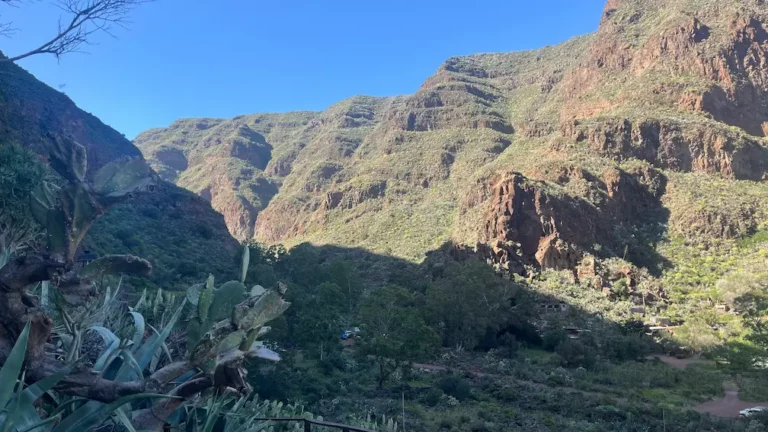
Barranco de Guayadeque – a deep valley that was one of the most densely populated places on the island. Today you can see hundreds of original caves here, many of which are still used as homes, chapels or unique restaurants carved right into the rock.
Gáldar – Cueva Pintada – an archaeological park with unique geometric paintings and the foundations of the original settlement, which was the centre of the island at the time.
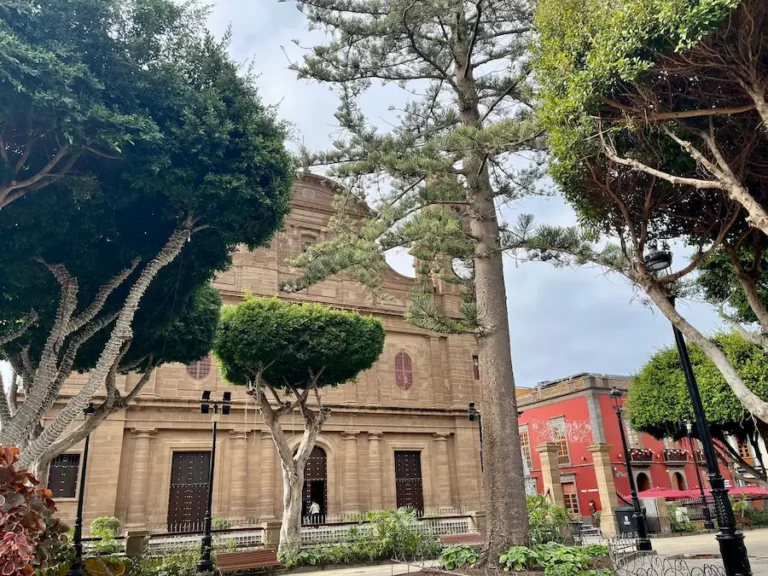
Artenara – the highest municipality on the island, famous for its “troglodyte” houses. The Casas Cuevas ethnographic museum shows how the cave style of living continued seamlessly from the days of the Guanches into modern history.
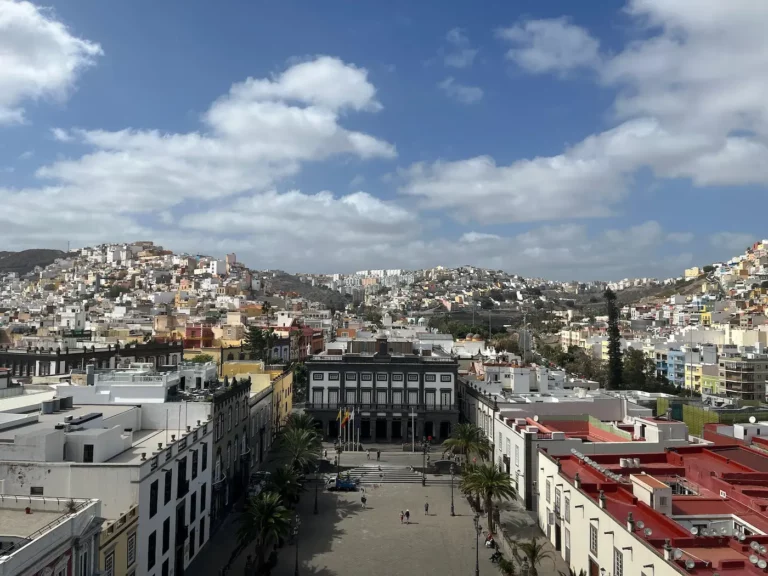
El Museo Canario (Las Palmas) – a must for the facts. The museum in the Vegueta quarter of the capital, Las Palmas, holds the largest collection of Guanche artefacts in the world, including a unique display of mummies and skulls that reveal details of the life and rituals of this people.
Cenobio de Valerón – a gigantic communal granary with more than 300 cave niches carved into a steep cliff.
The largest collection of Guanche artefacts in the world, including mummies – in the Vegueta quarter.
A communal granary with more than 300 cave niches in a steep cliff.
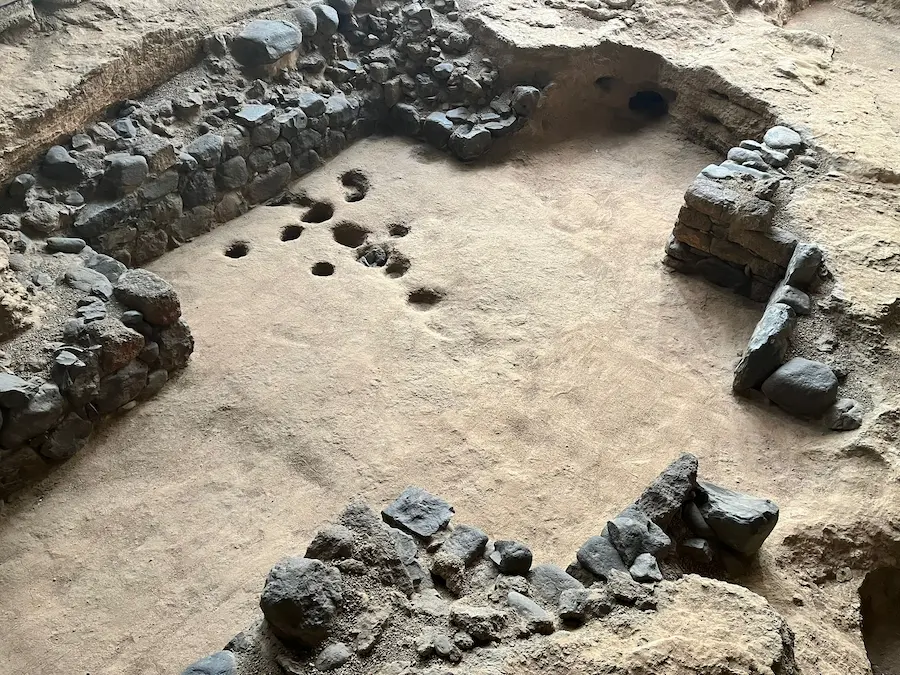
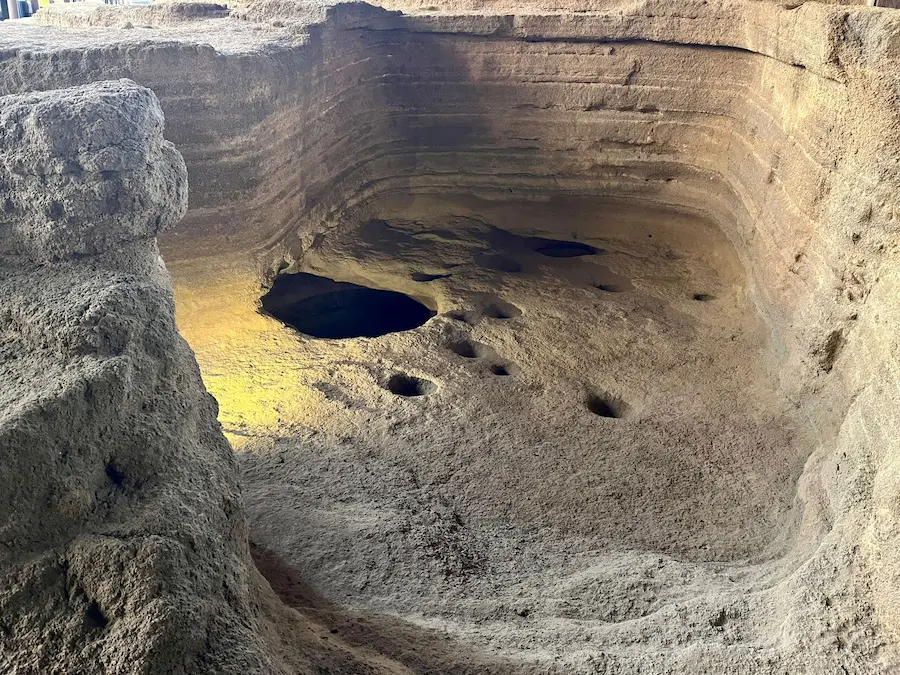
You will find the Guanche museum and the Cueva Pintada in the north of the island – Las Palmas is a great base for exploring them.
The original inhabitants of the Canary Islands, descendants of the Berbers of North Africa. They lived in caves and stone houses, grew cereals, kept goats and mummified their dead.
They did not know how to build boats, so it remains a mystery. The most recent theory speaks of Berber tribes being deported by ancient seafarers – the Phoenicians or the Romans.
Europeans conquered the islands between 1402 and 1496. The direct Guanche line died out, but their genetic and cultural legacy remains in today’s Gran Canaria.
In the Barranco de Guayadeque gorge, in Gáldar (Cueva Pintada), in Artenara, at the Cenobio de Valerón granary and in El Museo Canario in Las Palmas.
The history of the Guanches ended in the 15th century after the Spanish conquest of the island. Although their direct line died out, their genetic and cultural legacy lives on in the DNA and traditions of today’s Gran Canaria.