Calima in the Canary Islands – what it is and how to cope with it
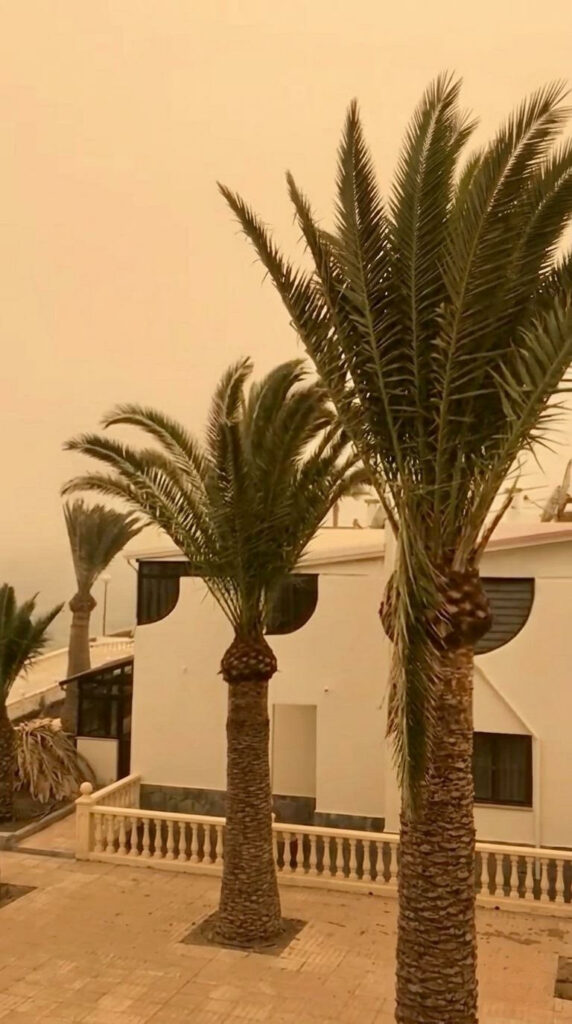
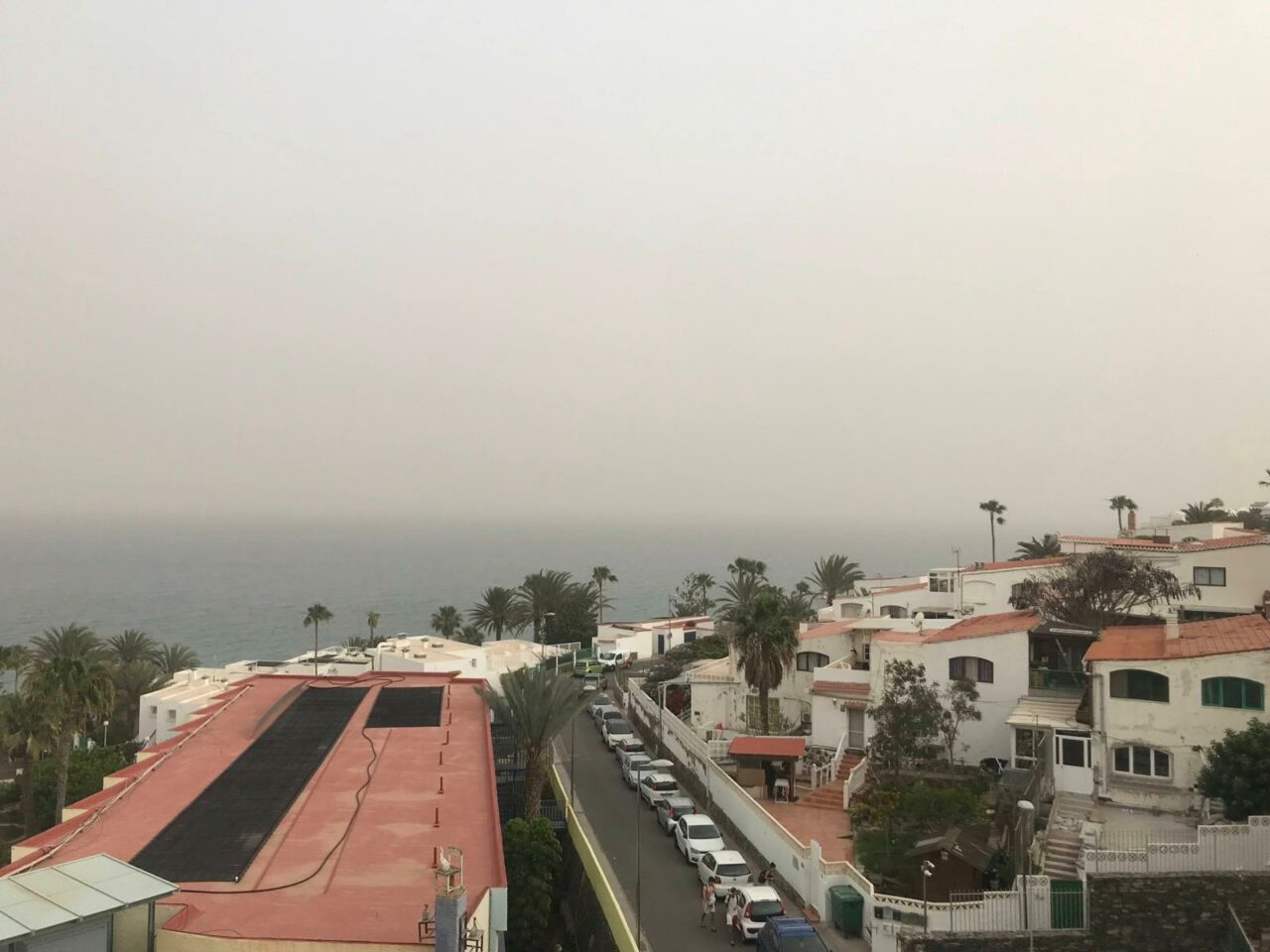
Calima in the Canary Islands brings Saharan dust over the islands: the sky turns yellowish, the air heats up and the view of the ocean disappears into haze. It is a common phenomenon – and with a few rules you can cope with it without any problems.
Put simply, calima is fine sand and dust from the Sahara that has travelled across the ocean. It forms when a strong east wind blows over the African continent and lifts sand particles high into the atmosphere.
Because the Canary Islands lie relatively close to the African coast, the dust cloud sometimes moves right over them. The result is reduced visibility, a sudden rise in temperature and very dry air.
To see whether there is calima on Gran Canaria right now and where the sun is shining today, check IslaBu.
At a glance
What it is
Dust and sand from the Sahara
When
All year round
How long
Usually 2–5 days
End
When the trade winds return
Calima in the Canary Islands
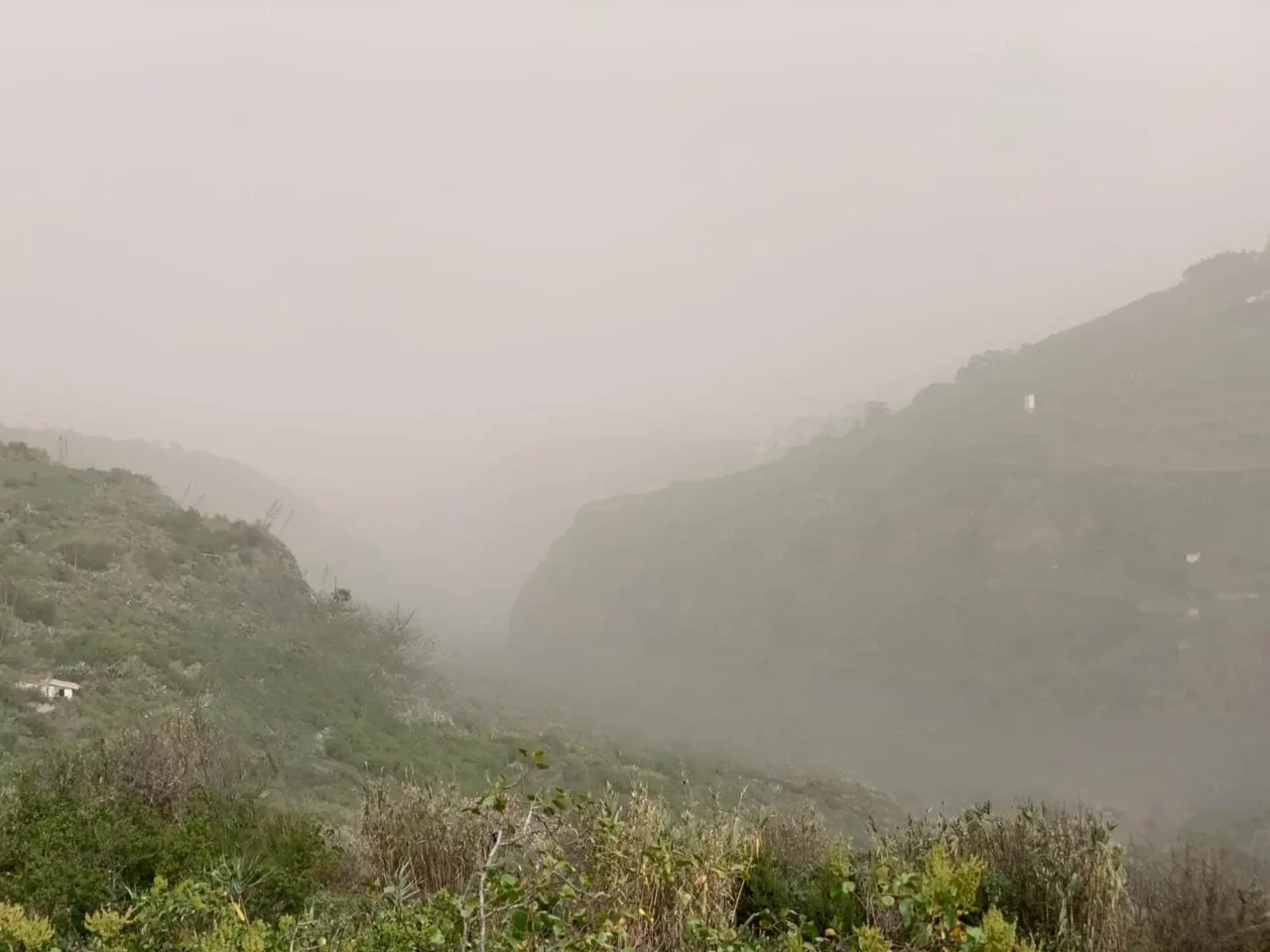
Calima in the mountains of Gran Canaria
HOW LONG IT LASTS AND HOW OFTEN IT OCCURS
Calima throughout the year
Calima occurs all year round; only its height in the atmosphere changes. In winter and spring the dust stays in the low layers and reaches the coast and the resorts directly, where it noticeably reduces visibility and worsens air quality. In summer the dust layer is concentrated at higher altitudes – by the ocean it shows mainly as haze and a sharp rise in temperature, while the highest dust concentrations and extreme temperatures hit the mountains.
It usually lasts a short time, 2 to 5 days. As soon as the wind changes back to the usual north-east trade winds, the air clears quickly and the sky is blue again.
Cancel your plans and stay at your accommodation – driving in strong wind is very risky.
FINAL THOUGHTS
Calima is a normal part of the Canary Islands’ climate – if you adapt your plans to the conditions and follow the authorities’ advice, you will get through it safely and without problems.