
The Gran Canaria mountains are just a short drive from the arid south: rock monoliths, pine forests, viewpoints and traditional Canarian villages.
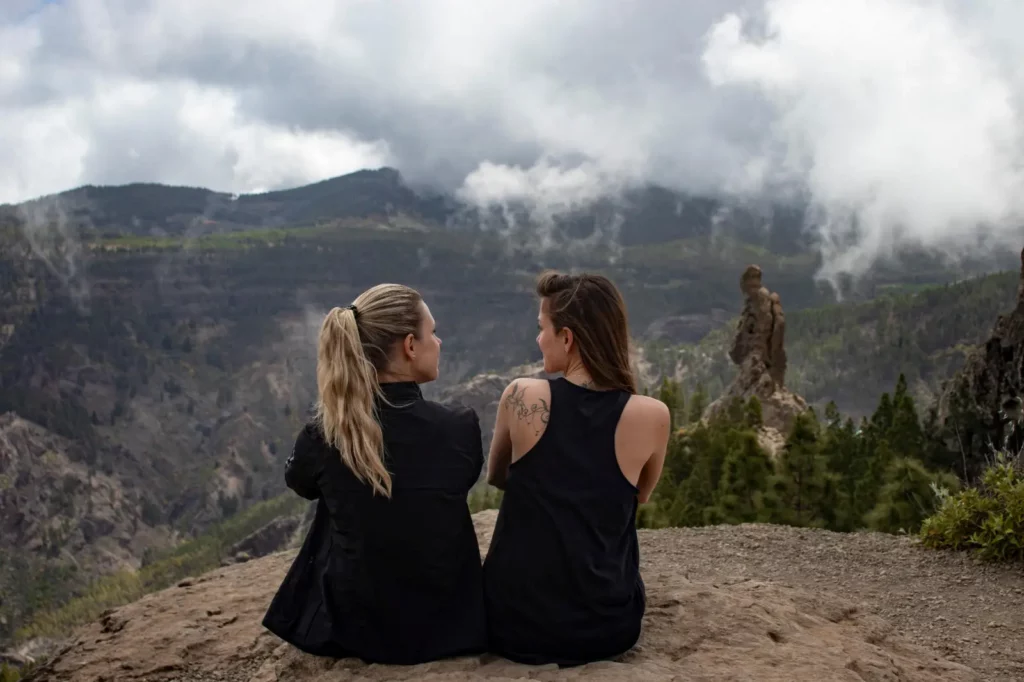
Gran Canaria is not just an island of sunny beaches, sand dunes and seaside resorts. Just leave the coast and head inland, where dramatic mountain massifs, deep valleys, pine forests, traditional Canarian villages and viewpoints await – on a clear day you can see all the way to Tenerife.
The variety of the landscape is one of Gran Canaria’s greatest charms. In a single day you can swap palm trees and the hot coast for fresh mountain air and a completely different world.
If you are spending your holiday in the south of the island, I recommend setting aside at least one day to explore the mountains. Ideally by car, so you can stop at viewpoints and discover places at your own pace. The places below are ordered by approximate driving distance from Maspalomas, not as one continuous route.
One of the first places you can visit on the way from the south into the mountains is the picturesque village of Fataga. It lies in a valley surrounded by rocky slopes and extensive palm groves. Thanks to them, the area has earned the nickname Valley of a Thousand Palms (Valle de las Mil Palmeras).
The road from Maspalomas follows the GC-60 mountain road. The coastal buildings gradually give way to deep valleys and green oases. The village itself has kept its traditional Canarian character: white houses, narrow lanes, small gardens and an atmosphere very different from the busy resorts.
Fataga is a great first stop on a trip to the central mountains. You can take a short walk here and then continue towards San Bartolomé de Tirajana.
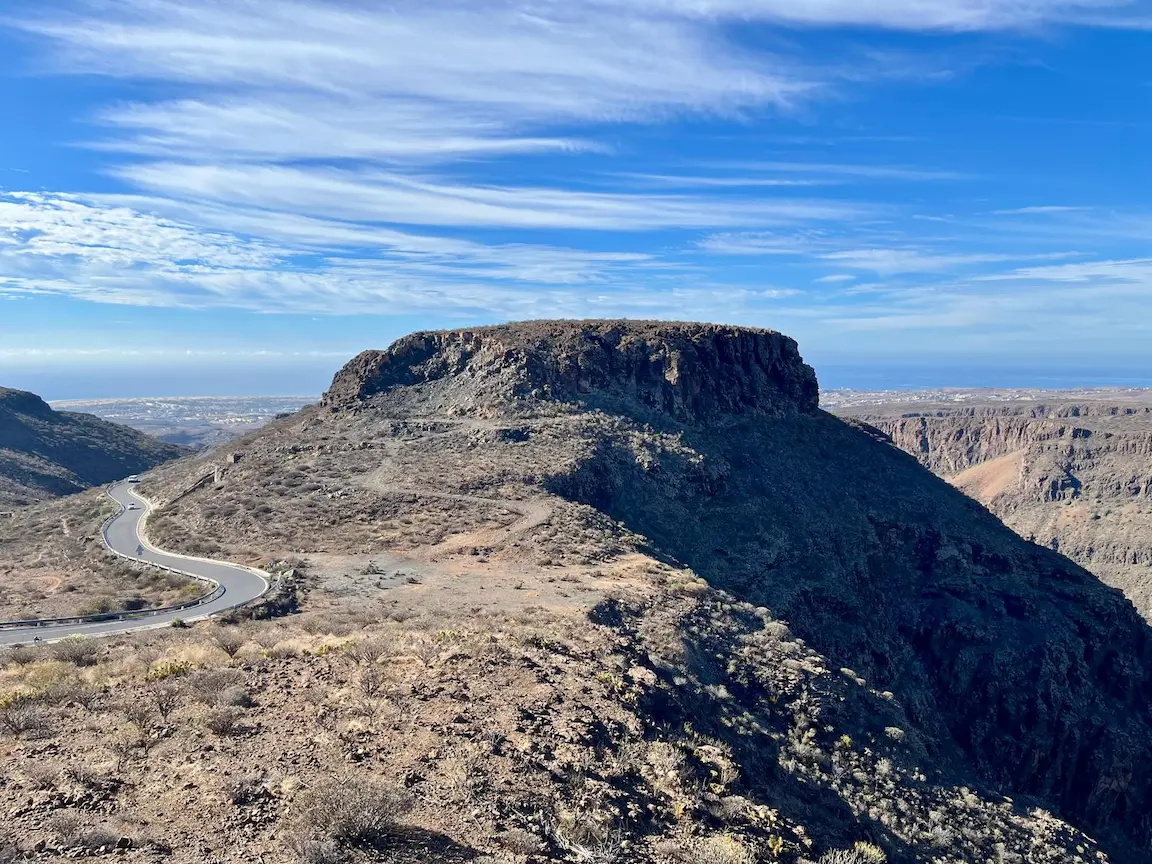
The GC-60 road is winding but very scenic. Allow about an hour for a visit to the village and short stops along the way; add extra time for the aloe vera plantation.
On the way from Maspalomas towards Fataga, stop on the GC-60 at the Mirador Astronómico de la Degollada de las Yeguas. It offers an impressive panoramic view into the Barranco de Fataga – the Valley of a Thousand Palms – and the surrounding rocky slopes. The viewpoint is also designed for stargazing. It has its own car park and is right on the way to Fataga.
On the way to Fataga you can also visit the Finca Canarias Aloe Vera plantation near Arteara. You will learn how aloe vera is grown and used in cosmetics, and you can buy products directly from the producer. The stop is enjoyable for families with children too.
In the east of the island, between the small towns of Agüimes and Ingenio, the Barranco de Guayadeque cuts into the mountains – a gorge about 15 km long that is one of the most important places on Gran Canaria. Cave dwellings and burial sites of the island’s original inhabitants, the Guanches, have survived in the rock walls. Archaeologists have also found a number of mummies and objects from the time before the Spanish arrived.
The gorge is not just an open-air museum, though. Some of the caves are still lived in today, and in the village of Cuevas Bermejas you will even find a chapel carved into the rock. A winding road runs through the valley to Montaña de las Tierras, where the road ends and where there are well-known restaurants right in the caves.
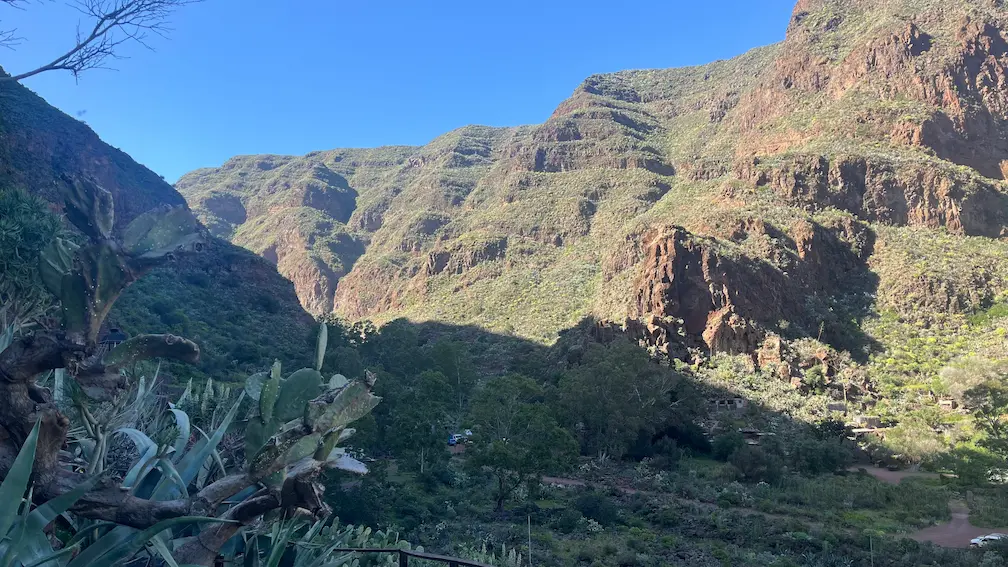
The GC-103 road is narrow and winding; from the visitor centre it is about 7 km to Montaña de las Tierras. Set aside at least half a day for a walk, a visit to the centre and lunch in a cave restaurant. From Maspalomas it takes about 40 minutes by car.
The visitor centre at the start of the gorge is itself carved into the hillside, just like the local cave houses. The exhibition presents how the gorge was formed, its nature and the life of the Guanches. Check the current opening hours and admission before your visit.
A village where people still live in the rock today. Stop at the small chapel carved into the rock and walk further along the path through the valley.
At the end of the road at Montaña de las Tierras there are restaurants right in the caves. Try the local cuisine – grilled meat, papas arrugadas with mojo sauce or Canarian cheeses.
Roque Nublo is one of the best-known natural symbols of Gran Canaria. The massive rock monolith of volcanic origin stands at more than 1,800 metres above sea level and is one of the most photographed places on the island.
Its shape was formed over millions of years of volcanic activity and subsequent erosion. For the island’s original inhabitants, Roque Nublo also had spiritual significance.
The best experience is the walk up to the monolith itself. It leads through mountain landscape between rock formations and Canary pines; when visibility is good, there are views of the interior and of Pico del Teide on neighbouring Tenerife.
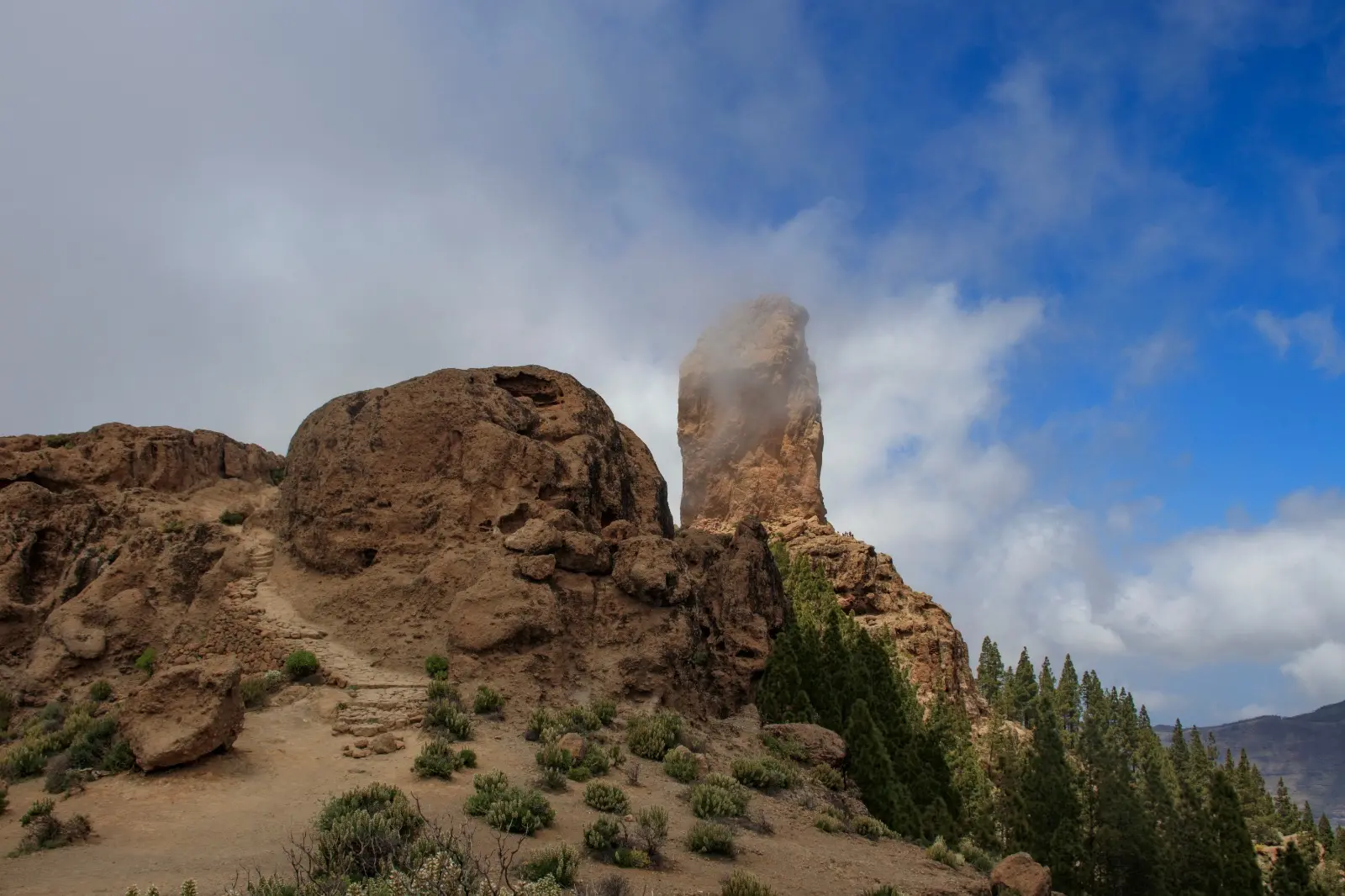
The walk takes about 1–2 hours depending on the route and your pace. The path is stony in places. Access is regulated during set visiting hours and you need to book in advance.
The route is not technically difficult, but it is not suitable in beach footwear. Bring sturdy walking shoes, water and, depending on the weather, an extra layer. Along the way there are beautiful views of the central mountains.
Parking right at the start of the trail is limited and visitors must follow the local traffic arrangements. Check the current conditions and book before you set off on the official Gran Canaria trails portal.
If you want a break from the rocky mountain viewpoints, head to the Llanos de la Pez area. Extensive stands of Canary pines, natural picnic areas and fresh mountain air make it an ideal place for an easy walk or a picnic.
This part of the island is also popular with local people, who like to come here at weekends. The landscape feels completely different from the south: instead of palm trees and dry valleys, you are surrounded by tall pines and forest paths covered in pine needles.
Llanos de la Pez is also a pleasant stop when travelling with children. You do not need to go on a demanding hike to enjoy the beautiful nature here.
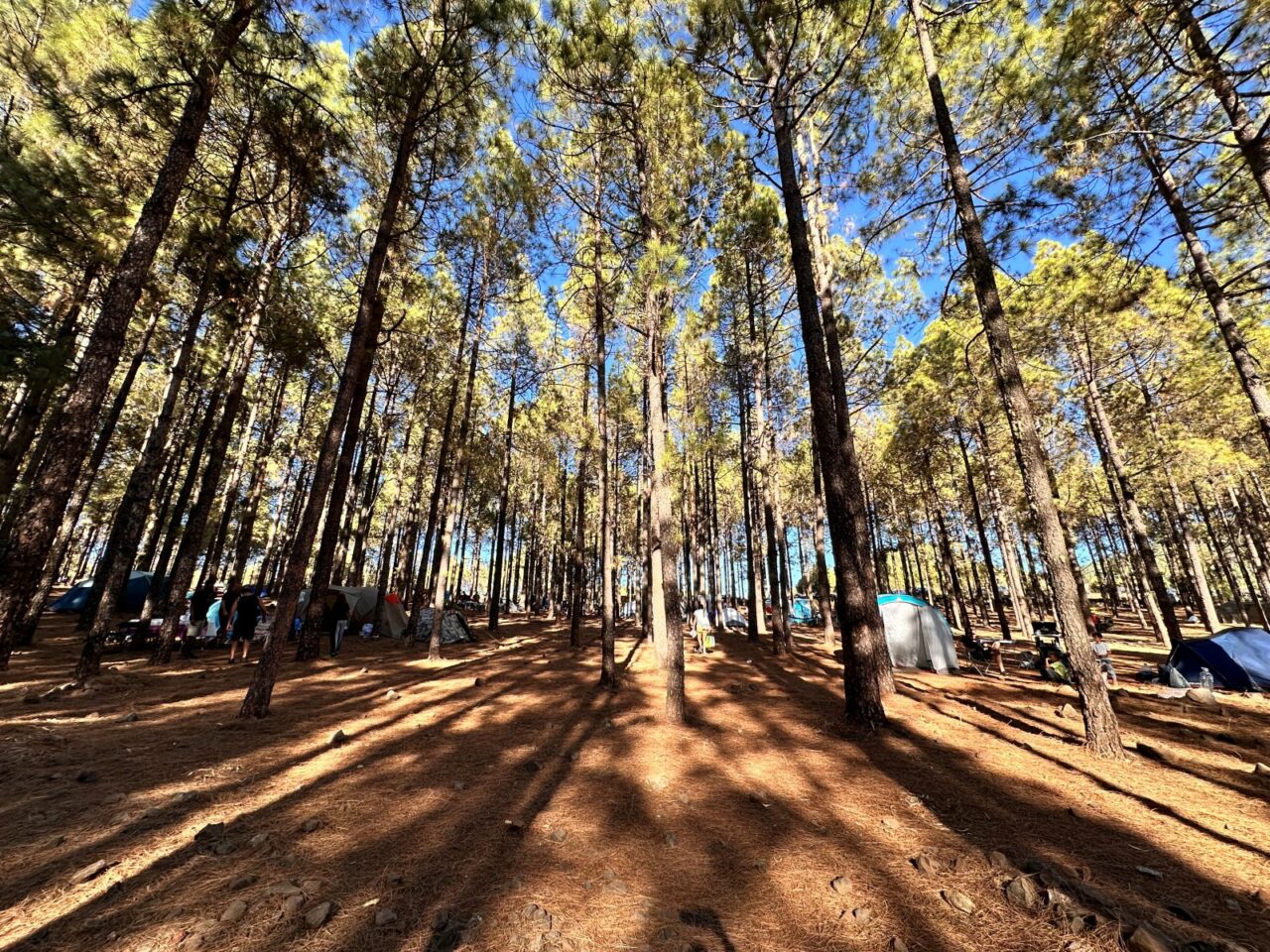
Suitable for a short walk or a picnic. At higher altitude it can be cooler than in Maspalomas, so pack a jumper.
The forest area offers plenty of space for a relaxed stop in the middle of the mountains. Use the designated picnic areas and respect any restrictions on lighting fires.
From here you can join the walking routes of the central part of the island. For a longer hike I recommend sturdier walking boots; the terrain is often stony and can be slippery.
While Roque Nublo is the best-known rock symbol of the island, Roque Bentayga is one of the most interesting historical and archaeological sites on Gran Canaria.
The massive rock formation rises above the mountain landscape around Tejeda and offers views of dramatic valleys and the surrounding ridges. For the original Canarian inhabitants, this was an important sacred place.
Remains of ceremonial spaces and archaeological structures have survived here, recalling the life of the island before the Spanish conquest.
The path and access to the rock formation are stony in places. Comfortable, sturdy shoes, water and care in windy weather are a good idea.
Roque Bentayga is of exceptional value for understanding the culture of the island’s original inhabitants. Its surroundings are not just a viewpoint, but also a landscape with archaeological monuments.
At the local interpretation centre you can learn more about the significance of the mountain, the archaeological finds and the history of the original settlement of Gran Canaria.
Pico de las Nieves is one of the best-known mountain viewpoints on Gran Canaria. It stands at an altitude of about 1,949 metres and offers a view of the rugged mountain landscape, deep valleys and the striking silhouette of Roque Nublo.
Although it is traditionally described as the highest mountain on the island, the highest point of Gran Canaria is actually the nearby rocky summit of Morro de la Agujereada.
A big advantage of this viewpoint is that you can drive there. In good weather you can also see the highest mountain in Spain, Pico del Teide on Tenerife, and sometimes a sea of clouds spread out below the mountains.
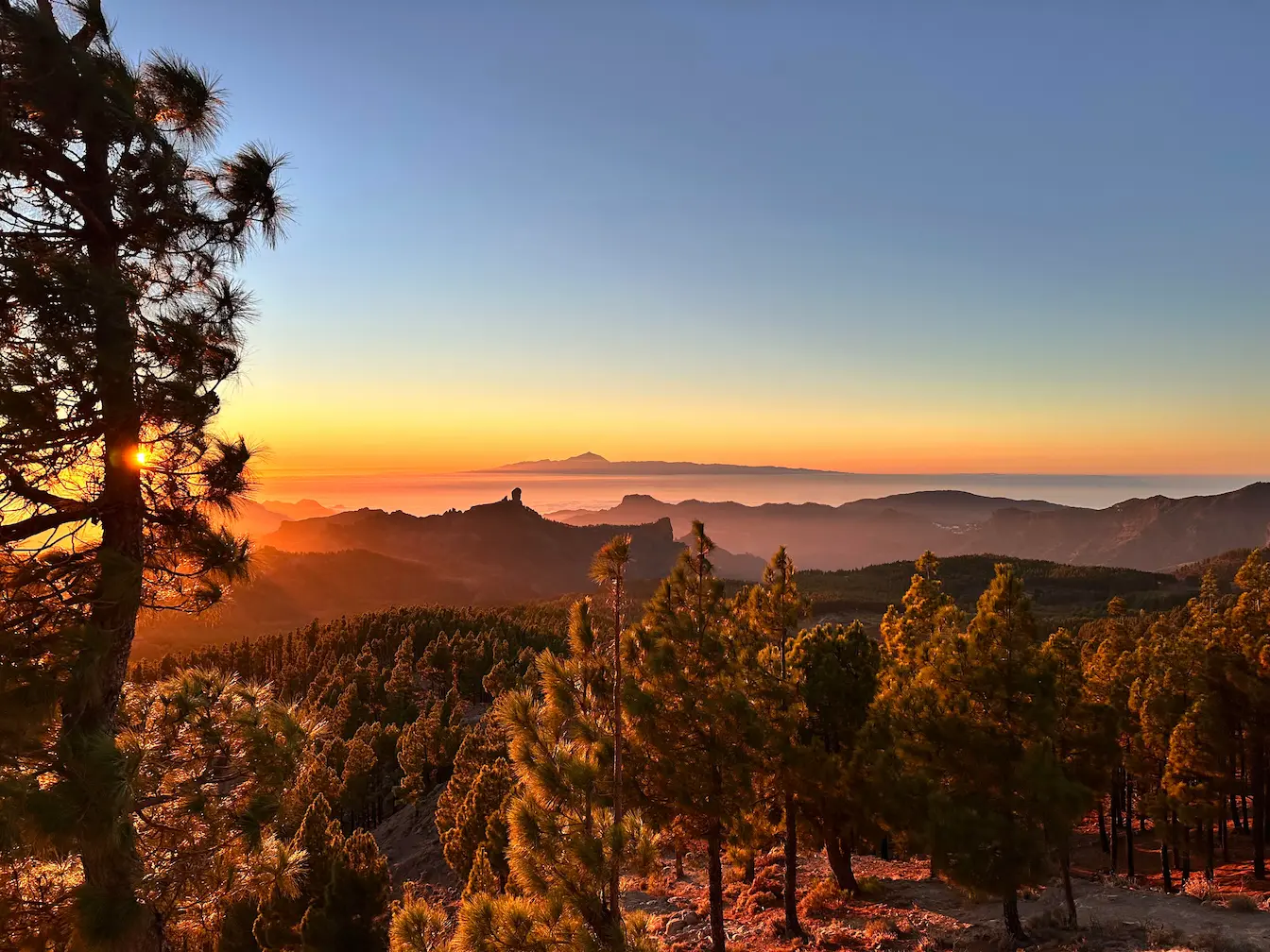
You can drive to the viewpoint without a demanding hike. Even if it is warm on the south coast, it can be much colder and windy up here.
The evening light turns the surrounding mountains golden and orange. On a clear day, the view towards Roque Nublo and Tenerife is one of the most beautiful panoramas on the island.
Pack a jumper or a light jacket. The difference between the coast and the highest parts of the island is often considerable, and the wind can make it feel even colder.
Cruz de Tejeda is one of the best-known places in central Gran Canaria and also an important junction of mountain roads. It lies at about 1,500 metres above sea level, and its viewpoints open up an impressive landscape around Tejeda.
The area is a popular starting point for walking routes and a stop on driving trips around the interior.
You will find traditional stalls with local produce, restaurants and cafés here. It is a good place for a short break, refreshments or a walk with views of the mountain massifs.
Cruz de Tejeda is easy to combine with Tejeda and the viewpoints in the central mountains. Expect changeable weather in the area.
Walk around the area, take in the mountain panorama and try the local produce. Cruz de Tejeda is a good starting point for exploring more of the interior.
The well-known mountain hotel Parador de Cruz de Tejeda offers a pleasant atmosphere, panoramic views, a restaurant and spa facilities. A night in the mountains can be a lovely alternative to a classic stay in a seaside resort.
Tejeda is one of the most picturesque villages on Gran Canaria. White houses with traditional Canarian features are set in a dramatic mountain landscape, with beautiful views of Roque Nublo and Roque Bentayga.
The village is ideal for a quiet stroll through its narrow lanes and a stop on the terrace of one of the local cafés. Although it is a popular destination for day trips, it has kept the character of a mountain village.
Tejeda is known above all for its almond products. Be sure to try the traditional marzipan and other sweets made from local almonds.
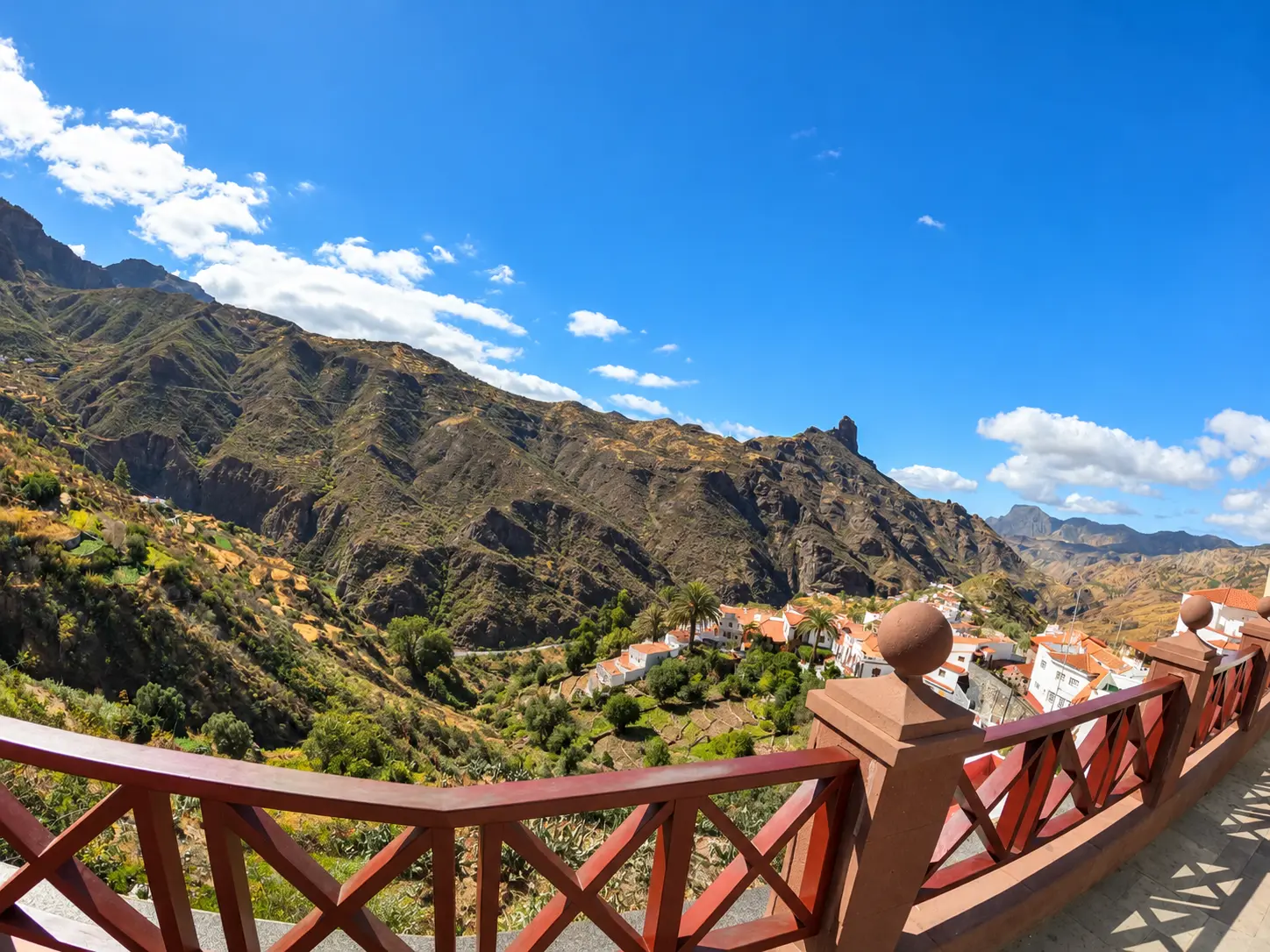
Allow at least an hour for a walk around the village. It combines nicely with Cruz de Tejeda and the viewpoints in the central mountains.
The local bakeries and patisseries are famous for their almond sweets. A stop for coffee and dessert with a view of the mountains is one of the nicest things to do in Tejeda.
If you like peace and nature, it is also worth considering accommodation in Tejeda. From here you can set off on more hikes or simply enjoy the atmosphere of a mountain village away from the coastal resorts.
Artenara is one of the highest villages on Gran Canaria and offers an interesting insight into the traditional way of life of its inhabitants.
Its most unusual feature is the cave dwellings built right into the rock. Some are still lived in today; others have been turned into museums, restaurants or tourist accommodation.
Artenara is a good destination for visitors who are interested not only in nature, but also in history, local culture and traditional architecture.
The village lies high in the mountains. Allow extra time for the journey and expect some climbing when walking between the viewpoints.
In a traditional cave house you can get a glimpse of the former everyday life of local people and see how living in homes carved into the rock worked.
The Mirador de Unamuno viewpoint offers an impressive view of the mountainous interior and the rugged landscape of central Gran Canaria.
Teror is one of the most beautiful historic towns on Gran Canaria. It is famous for its traditional Canarian houses with carved wooden balconies, cobbled streets and peaceful atmosphere.
The town is dominated by the Basilica of Nuestra Señora del Pino, an important place of pilgrimage dedicated to Virgen del Pino (Our Lady of the Pine), the patron saint of Gran Canaria.
As you walk through the historic centre, you will notice beautifully preserved houses, colourful façades and typical Canarian architecture. I recommend Teror to anyone who wants to see the traditional side of the island.
Right by the basilica is the Casa del Perfume Canario, a charming family shop with a small perfume museum. It is housed in the second oldest building on Gran Canaria, with its original thick stone walls. The family continues a perfume-making tradition that is more than 200 years old, so you can learn about the history of perfumery, smell the essences and enjoy the unique atmosphere.
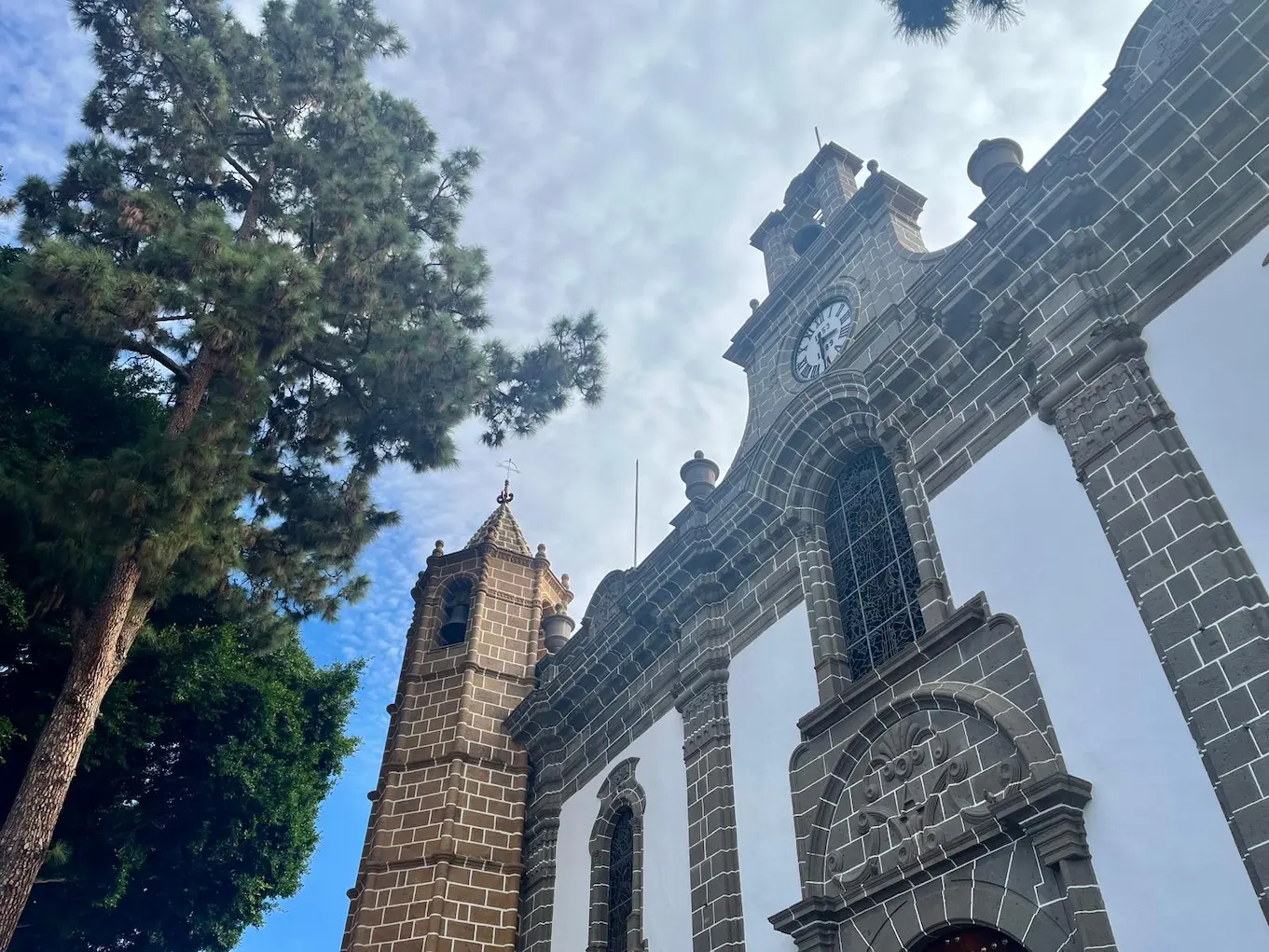
For the liveliest atmosphere, come on a Sunday, when the traditional market takes place. Also leave time for the historic lanes and a visit to the Casa del Perfume.
Walk around the Basilica of Nuestra Señora del Pino and do not forget to visit the Casa del Perfume Canario right next to it. Behind the unassuming door of the historic house you will find a cosy little shop and a small museum dedicated to the family’s perfume-making tradition.
The Sunday market offers local produce, food and handicrafts. Local specialities include chorizo de Teror, a soft, spreadable pork sausage often served on bread.
Tamadaba Natural Park is one of the most valuable natural areas on Gran Canaria. It stretches across the north-west of the island and includes vast pine forests, deep gorges, mountain massifs and dramatic coastal cliffs.
The typical Canary pines create a unique mountain environment. Tamadaba is an ideal place for hiking, watching nature and relaxing far from the busy resorts.
Some viewpoints offer impressive views of the west coast of Gran Canaria and, when visibility is good, towards Tenerife. The whole area feels quieter and wilder than the well-known viewpoints in the central part of the island.
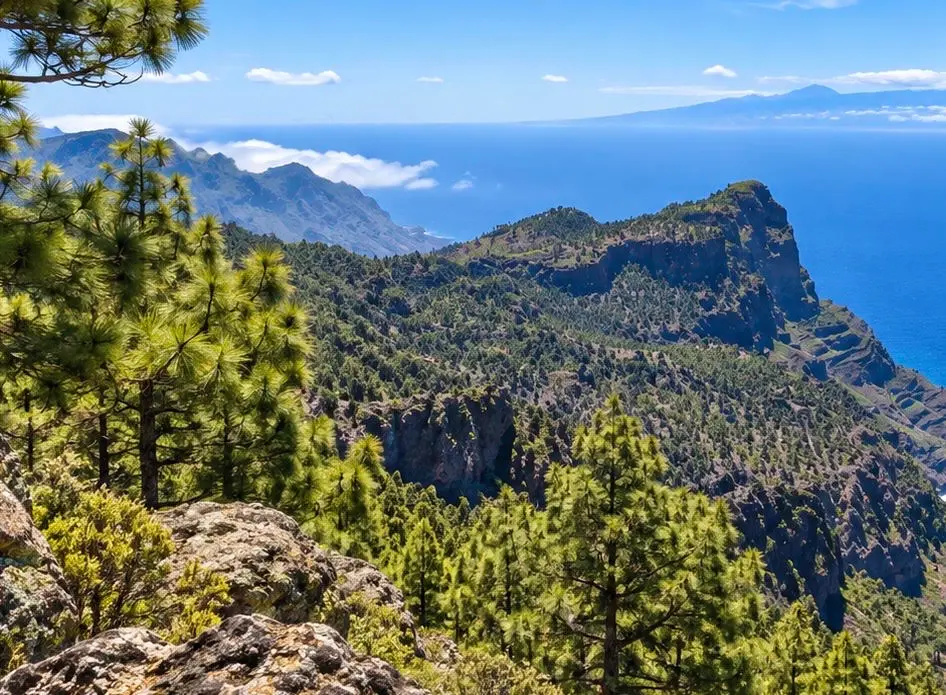
Tamadaba is a large park, so the distance depends on your starting point. Allow plenty of time for the trip; the mountain roads are winding.
The pine forests are one of Tamadaba’s most striking natural features. Walking here, you will discover a completely different side of the island from the arid south.
There are many walking options in the area. Before you set off, check the state of the trails, the weather and any access restrictions. Head to the more remote places with plenty of water and suitable gear.
Mountain roads: Journeys tend to be slower than the number of kilometres suggests. The roads are often narrow and winding and run along the mountainsides. Allow time for stops at viewpoints.
Weather and clothing: It can be much colder in the mountains than on the coast. Pack a light jacket or jumper, and sturdier footwear for walks.
Water and snacks: On longer routes, take plenty of water and something small to eat. In remote areas there are not shops at every turn.
Reservations and restrictions: Before a trip to Roque Nublo, check your reservation and how to get to the start of the trail. On longer routes, watch the weather and any closures.
How to plan your day: For one day from the south, I recommend Fataga, Roque Nublo and, depending on time, Pico de las Nieves or Tejeda. You can leave Teror until the end, then drive down to Las Palmas and return to the south on the motorway, a much faster route along the coast. Allow more time for Artenara and Tamadaba.
The mountains and interior are one of Gran Canaria’s biggest surprises. Whether you climb up to Roque Nublo, stroll through the lanes of Tejeda or head into the pine forests, you will see the island from a completely different perspective. This is where you will best understand why Gran Canaria is often called a miniature continent.