The Finca Canarias aloe vera plantation lies in the valley below Fataga, about 25 minutes’ drive from Maspalomas. On a short tour you will see how aloe is grown and processed, taste fresh gel and, in the shop, buy cosmetics directly from the producer. You can easily combine a visit with a trip into the mountains.
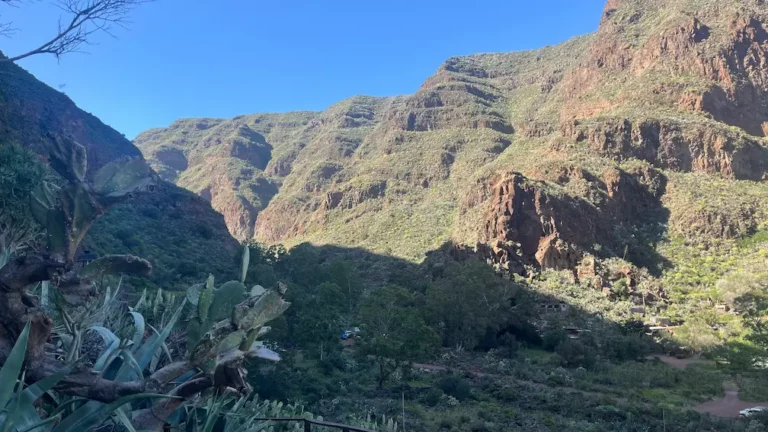
Finca Canarias is a Canarian company that grows aloe vera organically on its own plantations and makes its own cosmetics and food supplements from it. The plantation near Fataga lies by the GC-60 road in the Arteara area, in the Valley of a Thousand Palms (Barranco de Fataga), close to the Ayagaures and Pilancones nature park and the Guanche burial site at Arteara.
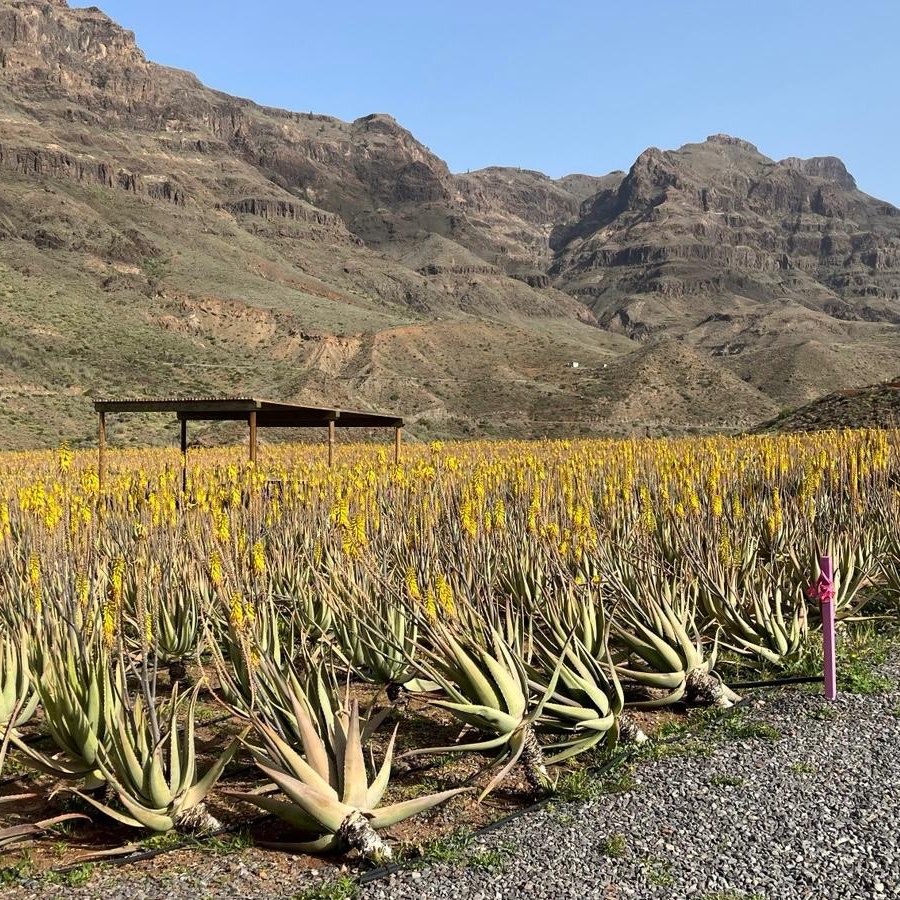
Rows of aloe grow here on dry slopes below rocky mountains. In winter and spring the aloe flowers – tall yellow flowers grow out of the rosettes and the whole field turns yellow.
The plantation lies on the way from the south into the mountains, so you can easily combine it with a visit to the village of Fataga and other places in the interior, which I write about in the article Gran Canaria mountains and interior.
Entry to the plantation and the guided tour are free.
Shop daily 9:00–17:00.
About 45–60 minutes, with a gel demonstration and tasting.
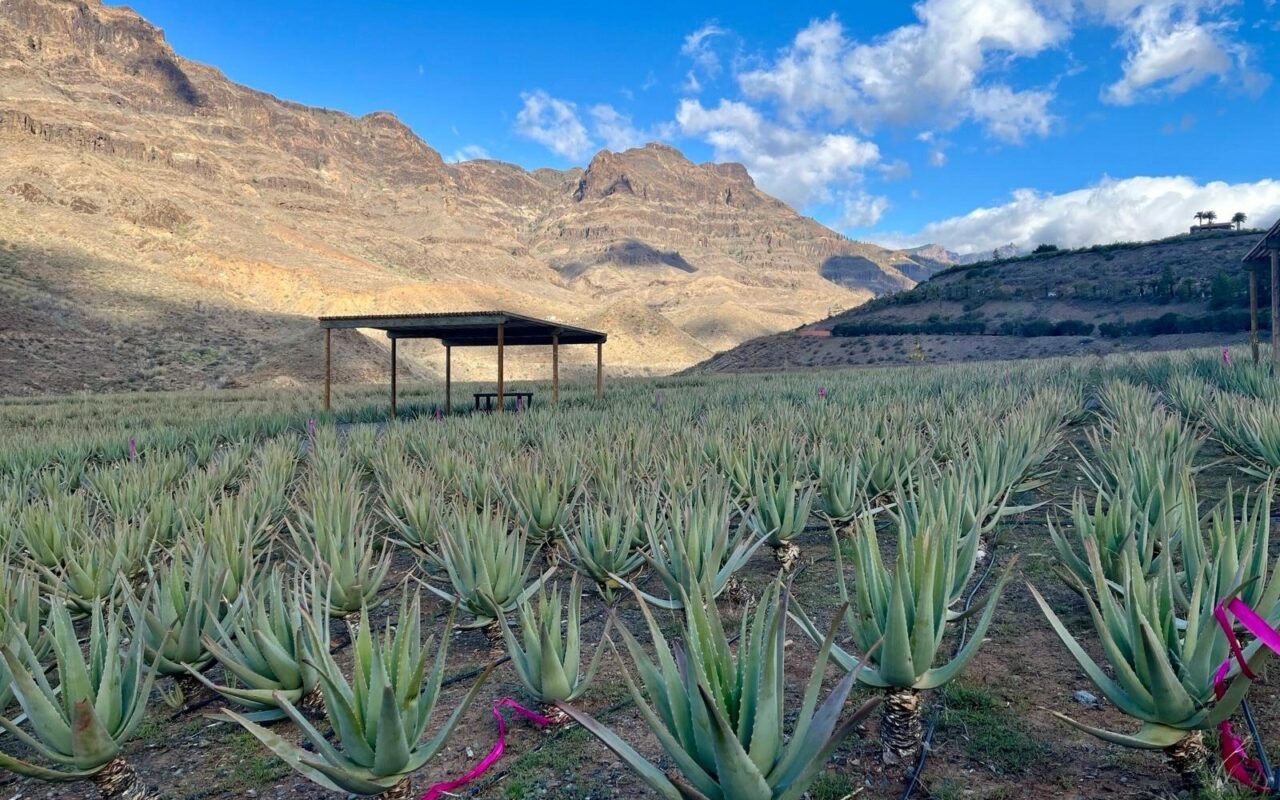
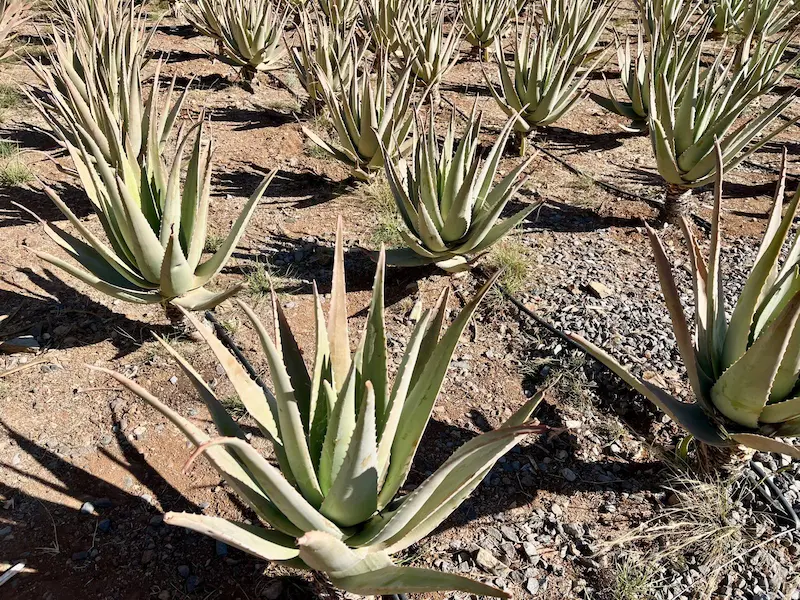
The plantation grows true aloe vera (Aloe barbadensis Miller), the species used in cosmetics and food. It thrives in the Canary Islands thanks to the warm, dry climate, the sun and the volcanic soil. Thousands of plants are planted in rows and watered by drip irrigation – you will see the tubes by every plant.
Aloe is harvested by hand. A plant is ready for harvesting after about three years, and only the 3–4 lowest, oldest leaves are cut from each plant at a time so that it can keep growing. The harvest is repeated several times a year.
The leaves have to be processed quickly, while the gel is fresh. First the leaf is washed and left to drain so that the yellow juice (aloin), which has a laxative effect, runs out. Only then is the leaf cut open and the clear gel removed. Finca Canarias states that its gels contain 98% fresh cold-pressed pulp.
On the tour, the guide cuts a leaf open right in front of you. You can try the gel on your skin and taste it.
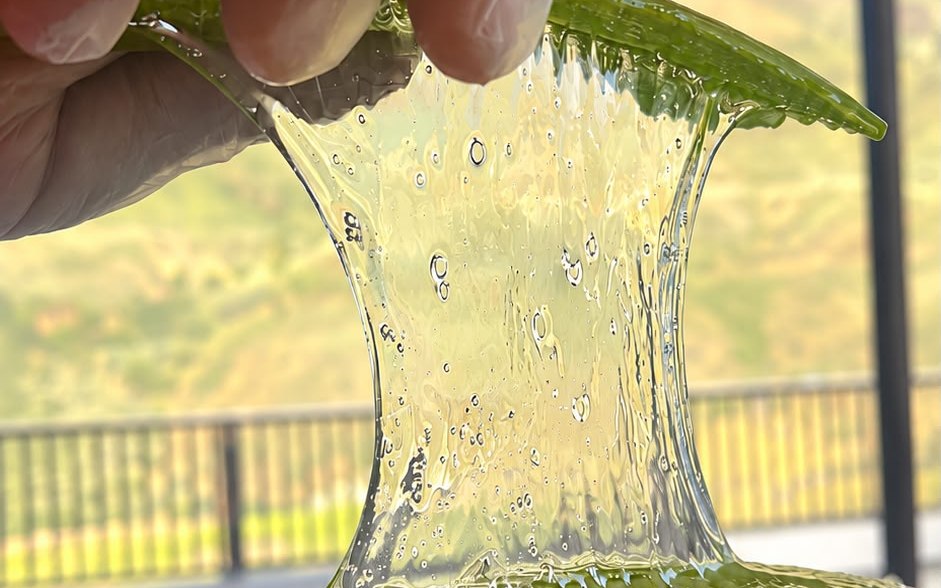
The gel from the leaf is more than 98% water. The rest is made up of the substances that have made aloe popular for thousands of years:
The gel is absorbed quickly, cools and forms a thin protective layer on the skin. That is why aloe vera is added to creams, after-sun gels and shampoos.
Aloe helps with minor skin problems, but for more serious problems you should see a doctor.
On the skin (gel):
Anti-ageing effects: Aloe hydrates the skin and contains antioxidants that protect it from sun damage. Some studies show that with regular use the skin’s elasticity improves and fine wrinkles are less visible. But do not expect miracles – it works best as part of your normal skincare.
Internally (juice): Aloe juice is traditionally drunk to support digestion. At the plantation they recommend drinking it in the morning on an empty stomach, one to two tablespoons.
Before you use gel from a fresh leaf, let the leaf drain and wash it. The yellow juice from the skin (aloin) has a laxative effect.
Pregnant and breastfeeding women, small children and people taking medication (especially for diabetes or blood thinners) should not drink aloe juice without consulting a doctor.
The guided tour takes about 45–60 minutes and is given in several languages – English, German, Spanish, French, Italian and Dutch. You walk between the rows of aloe and the guide explains how the plant is grown, harvested and processed. Then the guide cuts a leaf open, shows how to remove the aloin, and you can try the fresh gel on your skin and taste it. You can also taste aloe juice.
At the end of the tour there is a shop with Finca Canarias products. You will find, for example:
You do not have to buy anything. If you come to love the products, you can also order them later on the fincacanarias.com website.
Coach trips also stop at the plantation. If you arrive at the same time as them, your tour may be delayed. You can book a time in advance using the form on the plantation’s website.
By car: From Maspalomas and Playa del Inglés, take the GC-60 road towards Fataga and San Bartolomé de Tirajana. The drive takes about 25 minutes. The plantation lies by the road about 5 minutes before the village of Fataga, with a car park right next to it.
By bus: Global line 18 runs from Faro de Maspalomas via Fataga to San Bartolomé and Tejeda, but only a few times a day. You will find timetables on the guaguasglobal.com website. Going by car is more convenient.
Entry: Entry to the plantation and the guided tour are free. You only pay for products if you buy any.
Opening hours: the shop is open daily from 9:00 to 17:00. There are toilets on site.
Without a car, you can get here on a full-day trip to Fataga and Tejeda with pick-up from your hotel in the south. The trip stops at the plantation for about 50 minutes.
Just before the plantation, stop at the Mirador Astronómico de la Degollada de las Yeguas viewpoint, which looks out over the Valley of a Thousand Palms. It has its own car park.
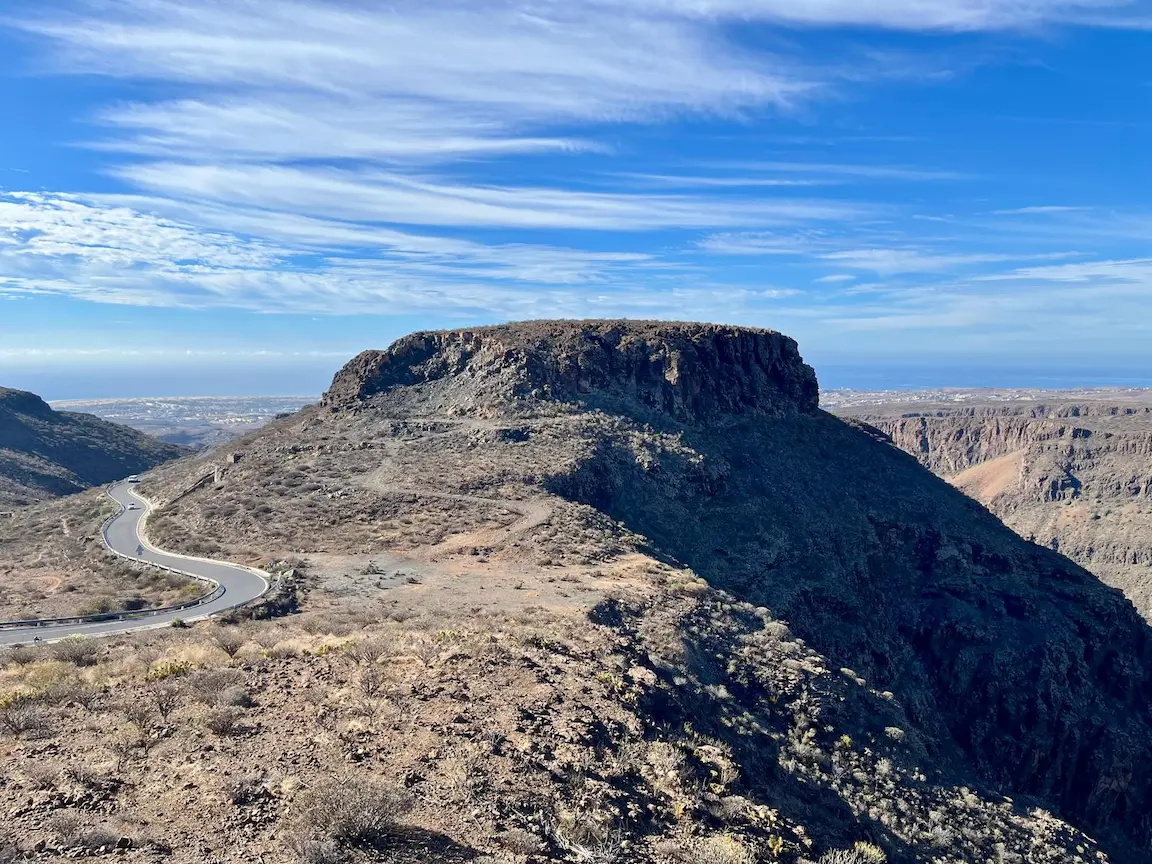
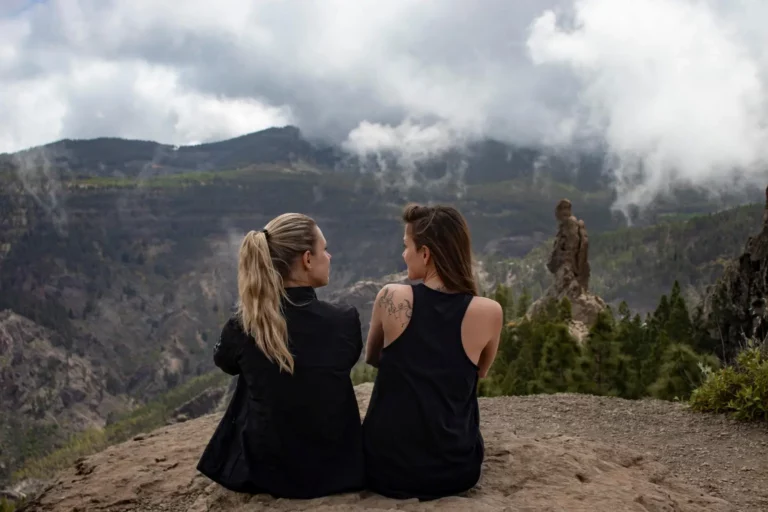
The plantation lies at the start of one of the most beautiful mountain roads on the island. If you are driving, you can continue into the mountains after the tour:
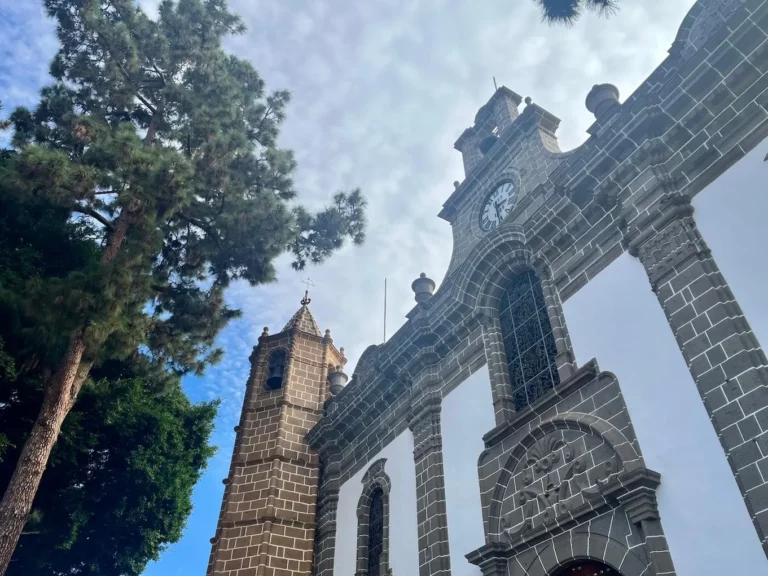
I describe all these places in detail in the article Gran Canaria mountains and interior, and Teror has its own article, Teror. From Teror, the quickest way back to the south is via Las Palmas on the GC-1 motorway.
Allow a full day for a circuit through the mountains. The roads are winding and it tends to be cooler at the top than on the coast, so bring a jumper or a jacket.
The aloe vera plantation is closest to the resorts in the south – Maspalomas, Playa del Inglés and San Agustín. You will find hotel tips in the article Gran Canaria resorts.
Entry to the plantation and the guided tour are free. You only pay for products if you buy any.
About 45–60 minutes, including the gel demonstration and tasting.
The shop is open daily from 9:00 to 17:00.
Best by car along the GC-60 road from Maspalomas; the drive takes about 25 minutes. There is a car park at the plantation. The plantation is also a stop on trips to Fataga and Tejeda.
Tours are given in English, German, Spanish, French, Italian and Dutch.
To Fataga and on into the mountains to Roque Nublo, Pico de las Nieves, Cruz de Tejeda and Tejeda. On a full-day circuit you can also add Teror in the north of the island.
The aloe vera plantation near Fataga is a short stop that you can easily combine with a trip into the mountains. You will learn how aloe is grown and what it is good for, and you can buy cosmetics directly from the producer.