Salinas de Tenefé are historic salt pans on the south-east coast of Gran Canaria. Salt is still harvested here by hand from seawater, in shallow ponds edged with black stones. In this article you will find out how the salt is made, how to walk around the salt pans and how to get there.
Salinas de Tenefé lie on the Punta de Tenefé headland near the village of Pozo Izquierdo, in the municipality of Santa Lucía de Tirajana. The salt pans date from the end of the 18th century and cover about 20,000 m². Salt is made here by the same manual method as more than 250 years ago.
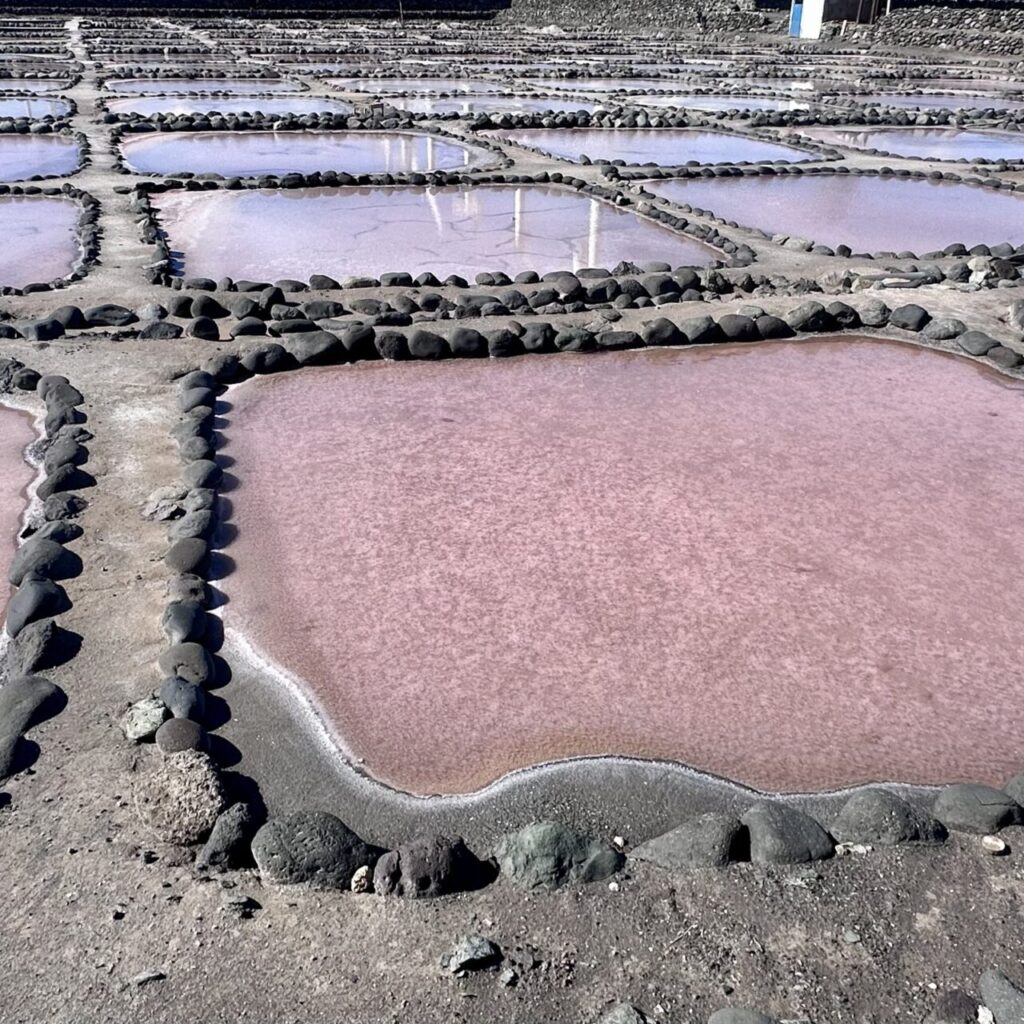
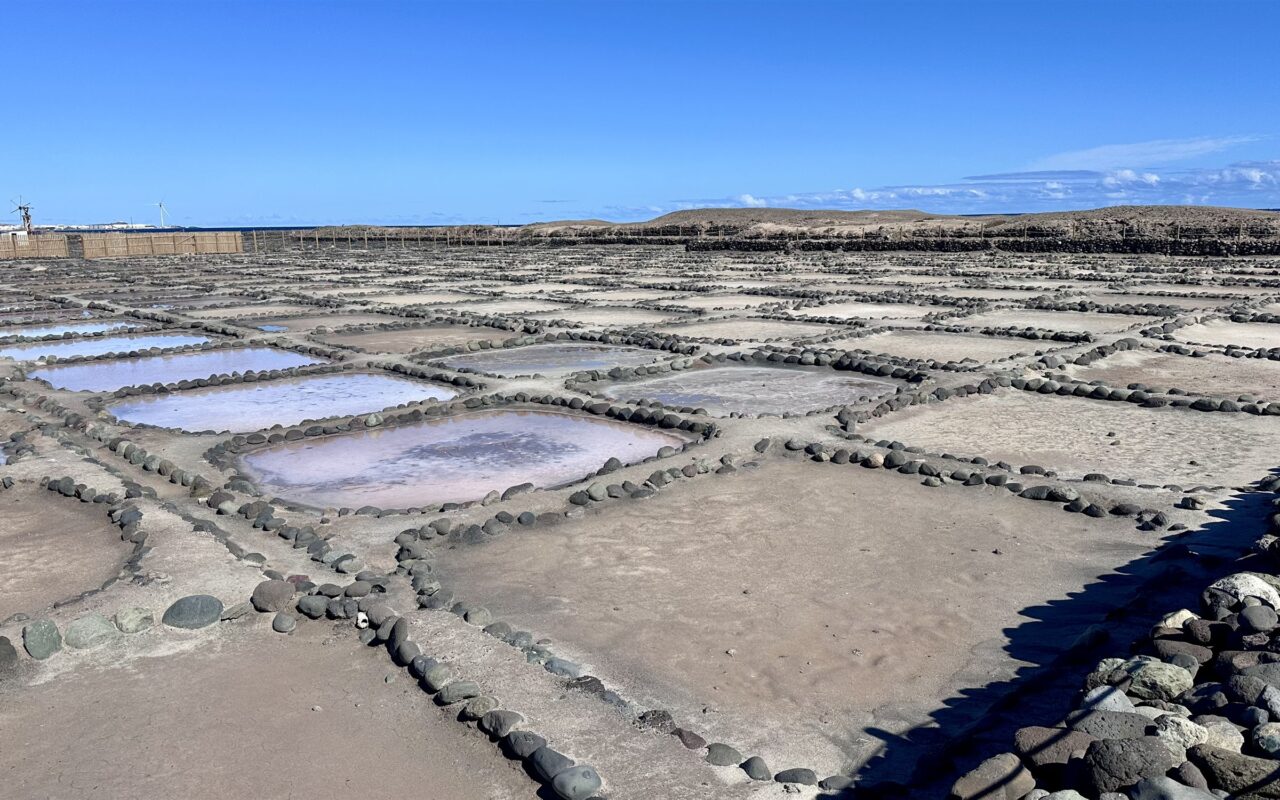
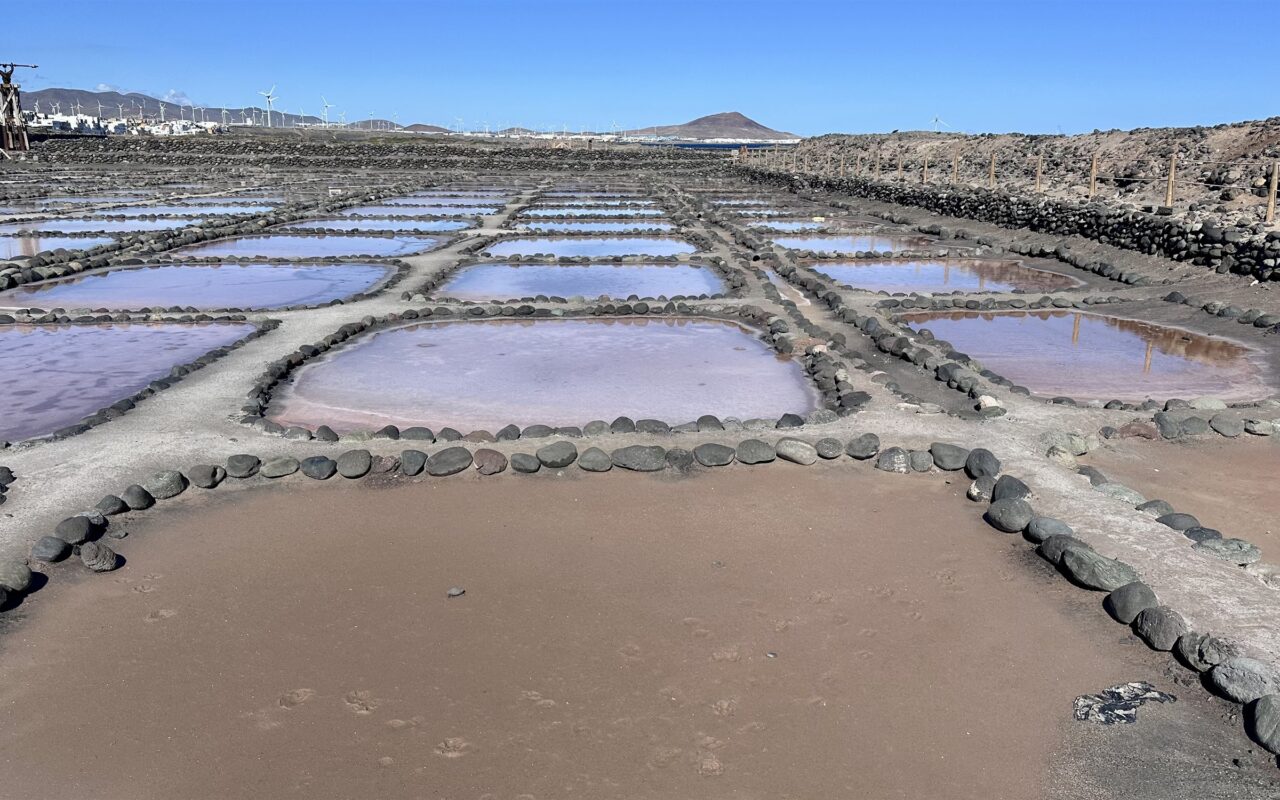
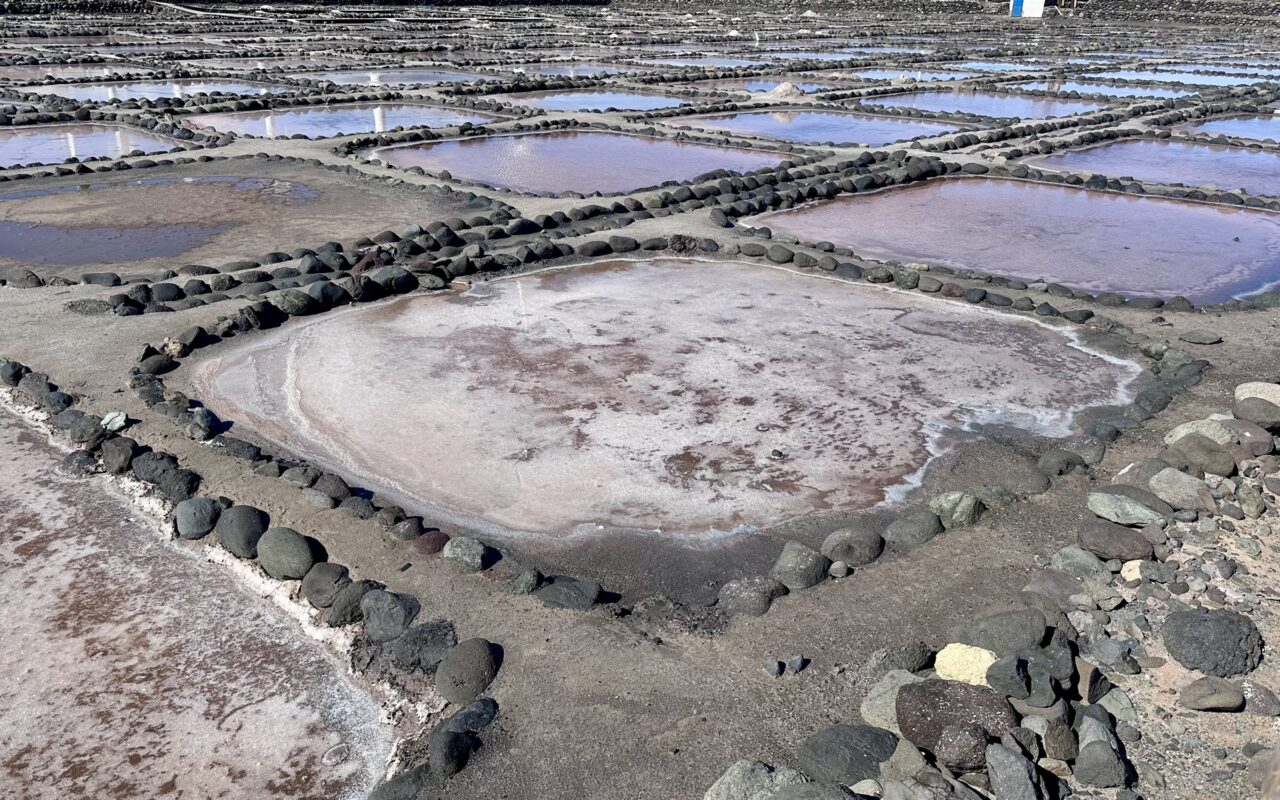
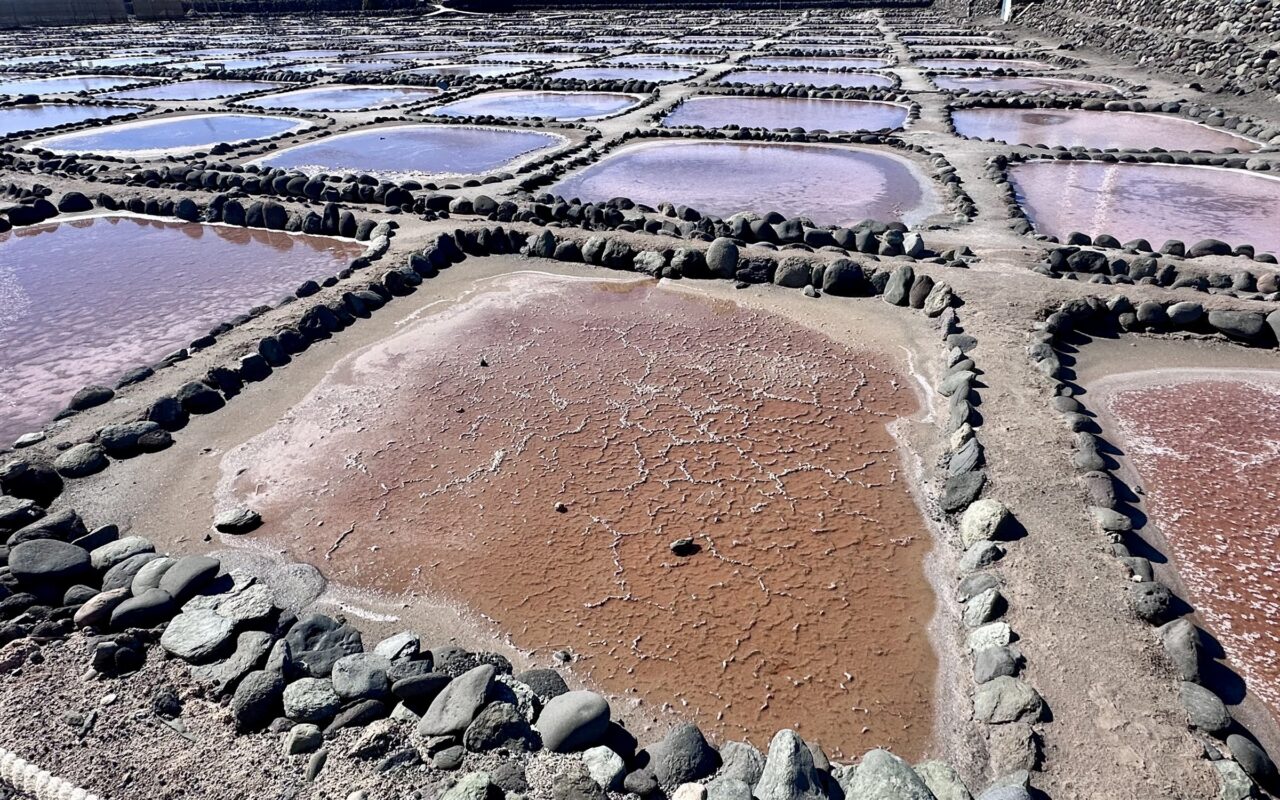
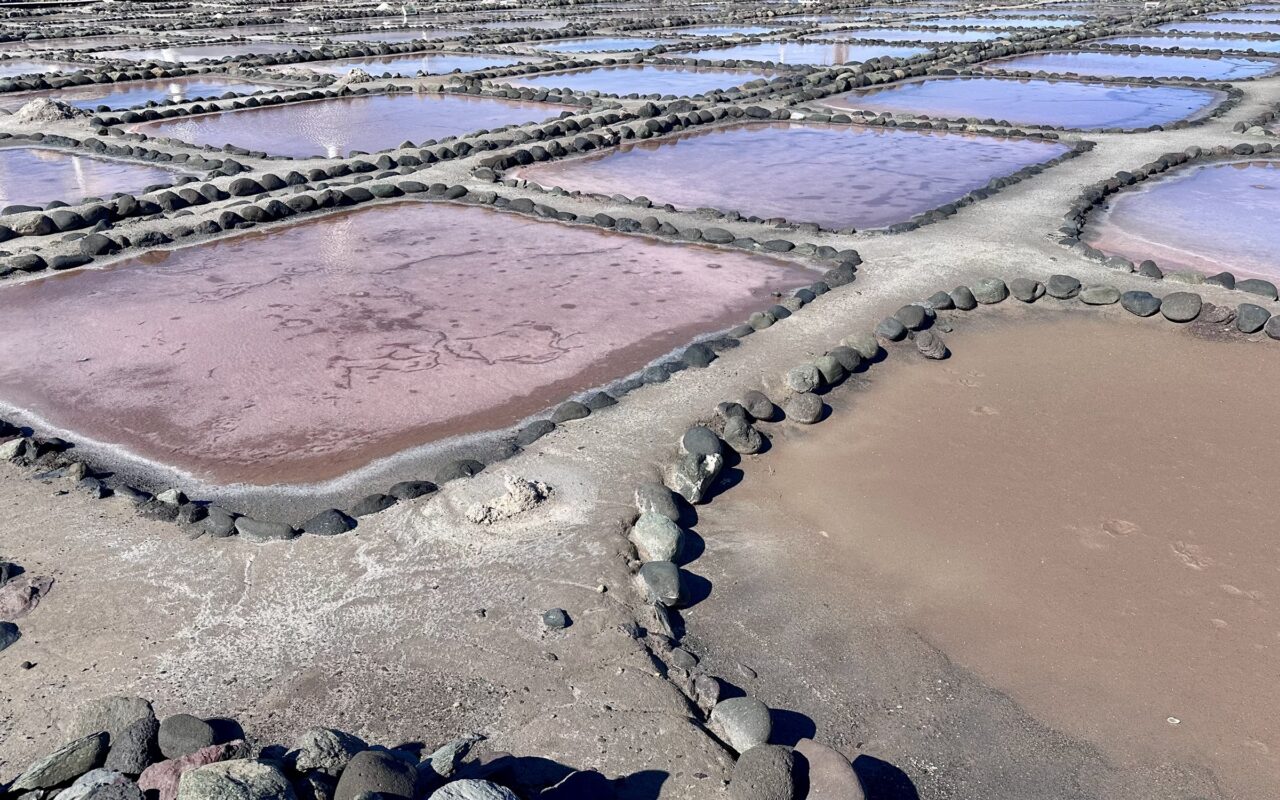
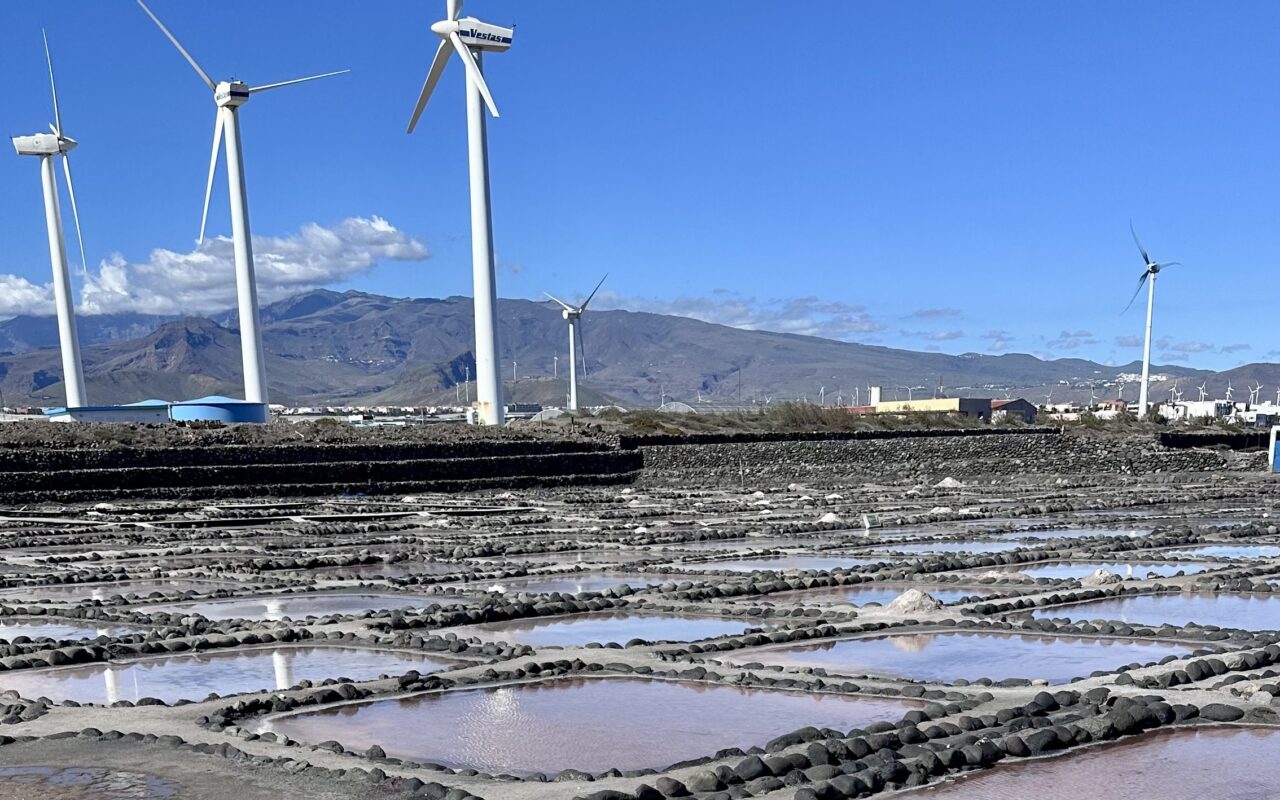
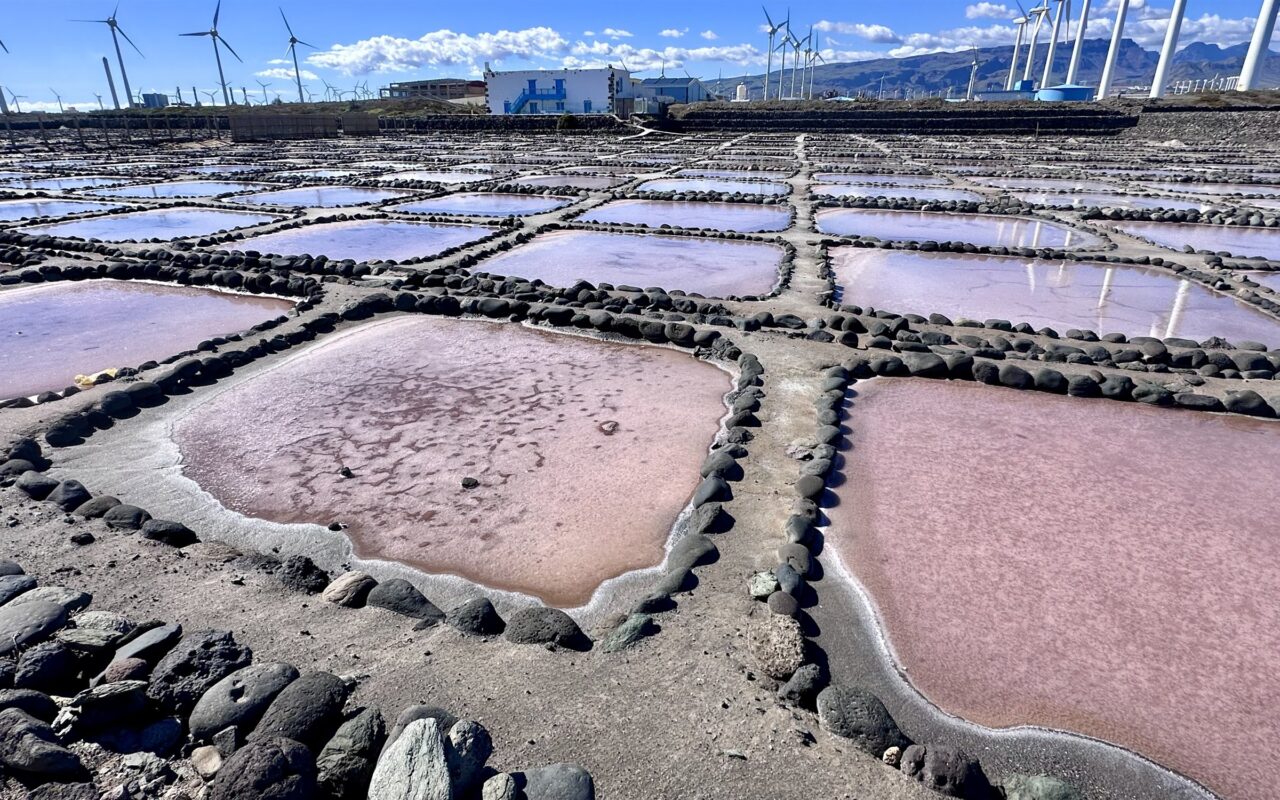
The salt pans consist of hundreds of shallow ponds separated by paths and borders of round black stones. Depending on how far the evaporation has gone, the ponds have different colours – grey, white and pink. In 2005 the salt pans were declared a protected cultural site (Bien de Interés Cultural).
Of the roughly 25 salt pans that once operated on Gran Canaria, only four still produce salt today. Salinas de Tenefé are the only ones open to visitors.
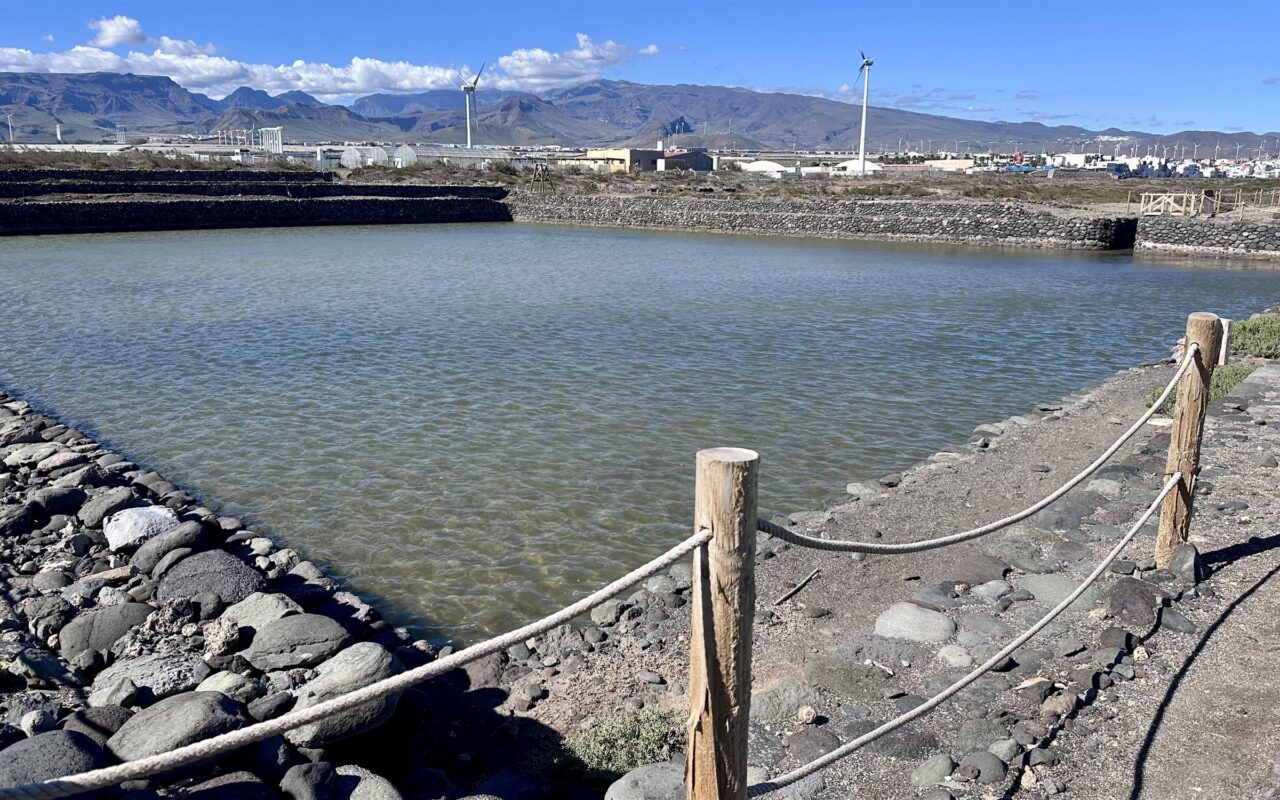
Seawater first flows into a large reservoir by the shore. There it evaporates for several days in the sun and wind and gradually becomes more concentrated. It is then pumped into ponds set higher up and finally into the crystallisation pans, where the salt forms. The water used to be raised by a windmill, today by an electric pump.
The salt pans have 386 crystallisation pans and produce around 100 tonnes of salt a year. The salt is harvested by hand and is not industrially refined – the salt works call it virgin salt (sal virgen). There is no fixed harvest schedule – it depends on how quickly the water in the pans evaporates. They produce coarse and medium-grain cooking salt, salt flakes and fleur de sel (flor de sal), a thin layer of crystals collected from the surface.
Why is the water pink
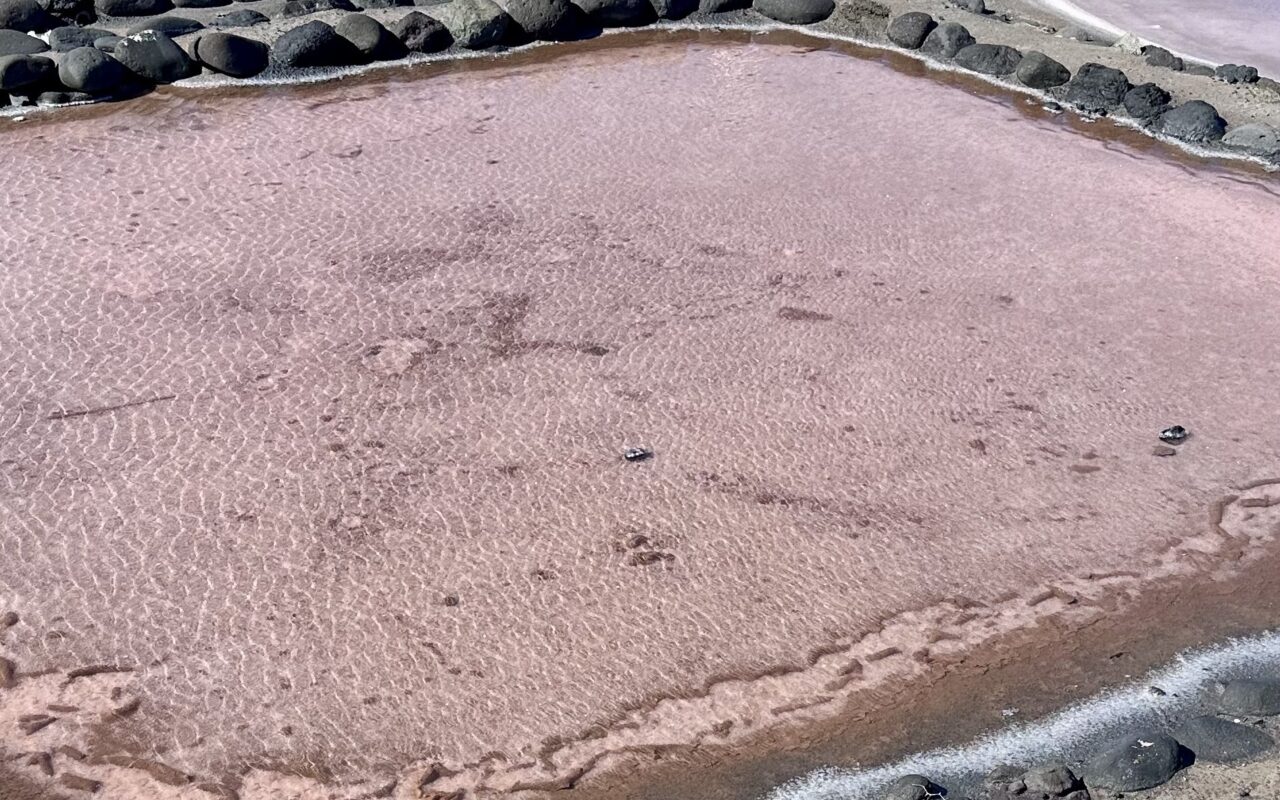
The pink colour comes mainly from two tiny organisms that can survive even in very salty water: the alga Dunaliella salina and microorganisms called haloarchaea. The alga contains beta-carotene, one of the carotenoids – the same group of pigments that makes flamingos pink. There are no flamingos here, but where they live they eat algae and tiny crustaceans that feed on algae, and the pigments are stored in their feathers, skin and beaks.
VISIT
Walking around the salt pans and the audio guide
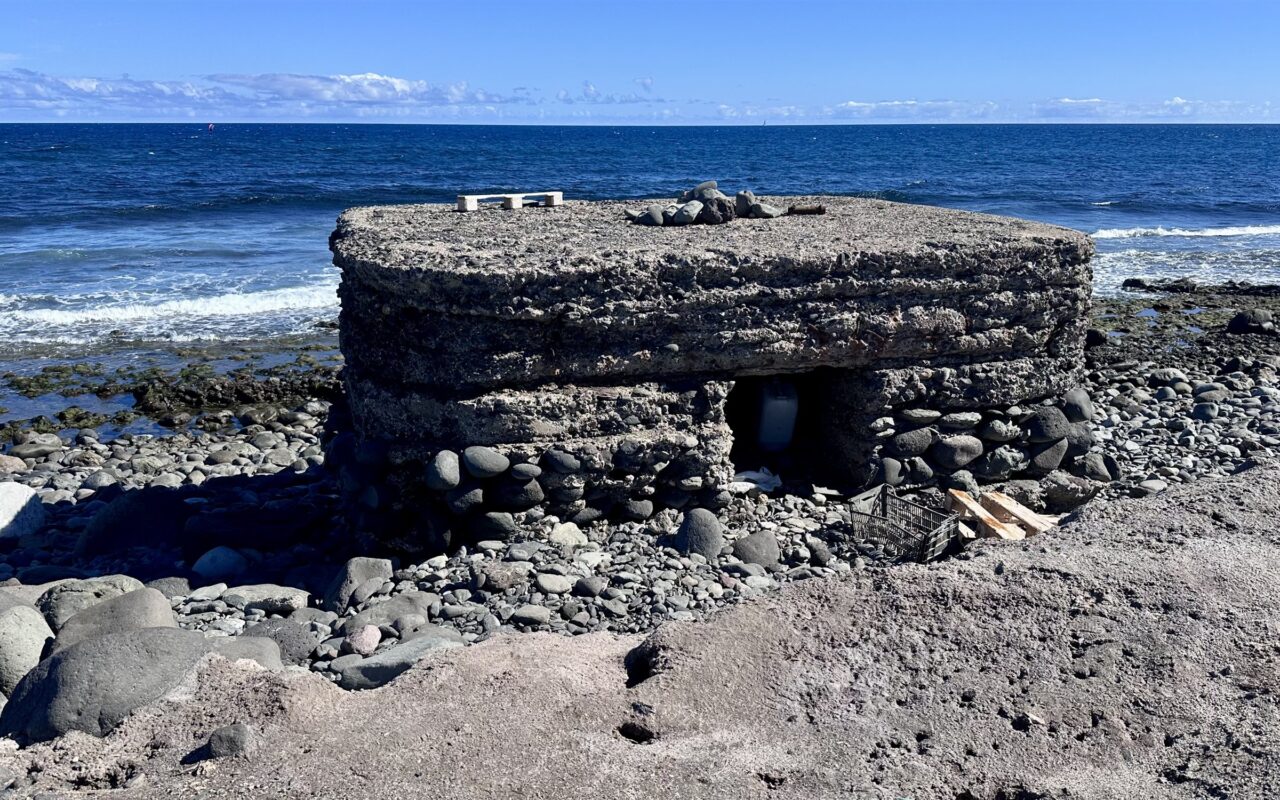
You can walk around the salt pans on your own and for free, without a guide and without booking. Paths run between the ponds and the circuit around the salt pans is about 2 km long and flat. You will pass the seawater reservoir, the crystallisation pans and the bunker on the coast.
If you would like a commentary, you can hire an audio guide for €5 (€10 refundable cash deposit). According to the salt pans, the tour with it takes 35–50 minutes and is available in Spanish, English, German, French and Italian – it covers the history of the salt pans, salt making, plants and birds. The salt pans are a stopover for migrating birds, especially waders.
Groups of 10 or more must book in advance; guided tours are run only for them. The former salt worker’s house is now a visitor centre with an exhibition about salt.
Visitor centre
You can visit the salt pans at weekends too. The visitor centre and the audio guide rental have limited opening hours, which differ from source to source. If you want an audio guide, check the hours in advance via the salt pans’ WhatsApp: +34 669 816 242.
What to bring
Comfortable shoes, a hat and sun cream. There is no shade on the salt pans and a strong wind often blows around Pozo Izquierdo.
NEARBY
Second World War bunkers and windsurfing
Within the protected area of the salt pans there are also remains from the Second World War – concrete bunkers and machine-gun posts on the coast. You will also find a burial site of the island’s original inhabitants from before the Spanish arrived. The audio guide covers both.
The area around Pozo Izquierdo is one of the windiest places on the island, which is why there are many wind turbines here. The wind and waves attract windsurfers. Every July, El Arenal beach hosts the Windsurfing World Cup; in 2026 it was held for the 38th time.
Combine with the Guayadeque gorge
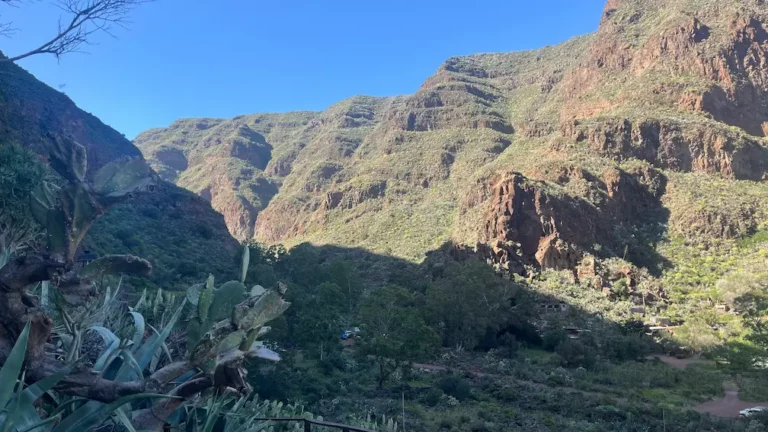
From the salt pans it is not far to the gorge near Agüimes with its Guanche caves. More in the article Barranco de Guayadeque.
PRACTICAL INFO
How to get to the salt pans and where to park
The easiest way is by car. Leave the GC-1 motorway at exit 31 if you are coming from the south (from Playa del Inglés and Maspalomas), or at exit 28 if you are coming from Las Palmas and the airport. Continue into Pozo Izquierdo along Avenida Las Bajas. At its end, by the windsurfing beach, turn right onto the Lugar la Punta road (signposted Salinas de Tenefé) and drive about 700 metres to the end of the tarmac by the desalination plant. From there, turn left and follow the dirt track to the salt pans.
You can park right by the salt pans on an unpaved dusty area.
Salt without a visit
Salt from Salinas de Tenefé is sold in shops with Canarian specialities and in the salt pans’ online shop.
ACCOMMODATION
Where to stay
Salinas de Tenefé are close to the southern resorts – from Playa del Inglés and Maspalomas it is about a 20-minute drive. You will find hotel tips in the article Gran Canaria resorts.
In south-east Gran Canaria, near the village of Pozo Izquierdo in the municipality of Santa Lucía de Tirajana, about 20 minutes by car from Playa del Inglés.
Nothing. You can walk around the salt pans on your own and for free, without booking. For €5 (plus a €10 refundable deposit) you can hire an audio guide.
The colour comes from tiny organisms that can survive even in very salty water – mainly the alga Dunaliella salina and microorganisms called haloarchaea. Pigments from the same group (carotenoids) also turn flamingos pink through their food.
Right by the salt pans on an unpaved dusty area. You reach it along a dirt track from the end of the tarmac road by the desalination plant.
FINAL THOUGHTS
Salinas de Tenefé make a trip of an hour or two that you can combine with a drive to the airport or to Las Palmas. You can walk around the salt pans on your own and for free; the audio guide is just an extra option.