Santa Ana Square – the historic heart of Las Palmas
Santa Ana Square is the oldest planned square in the Canary Islands. A majestic cathedral guarded by eight bronze dogs, and stories of pirates and power.
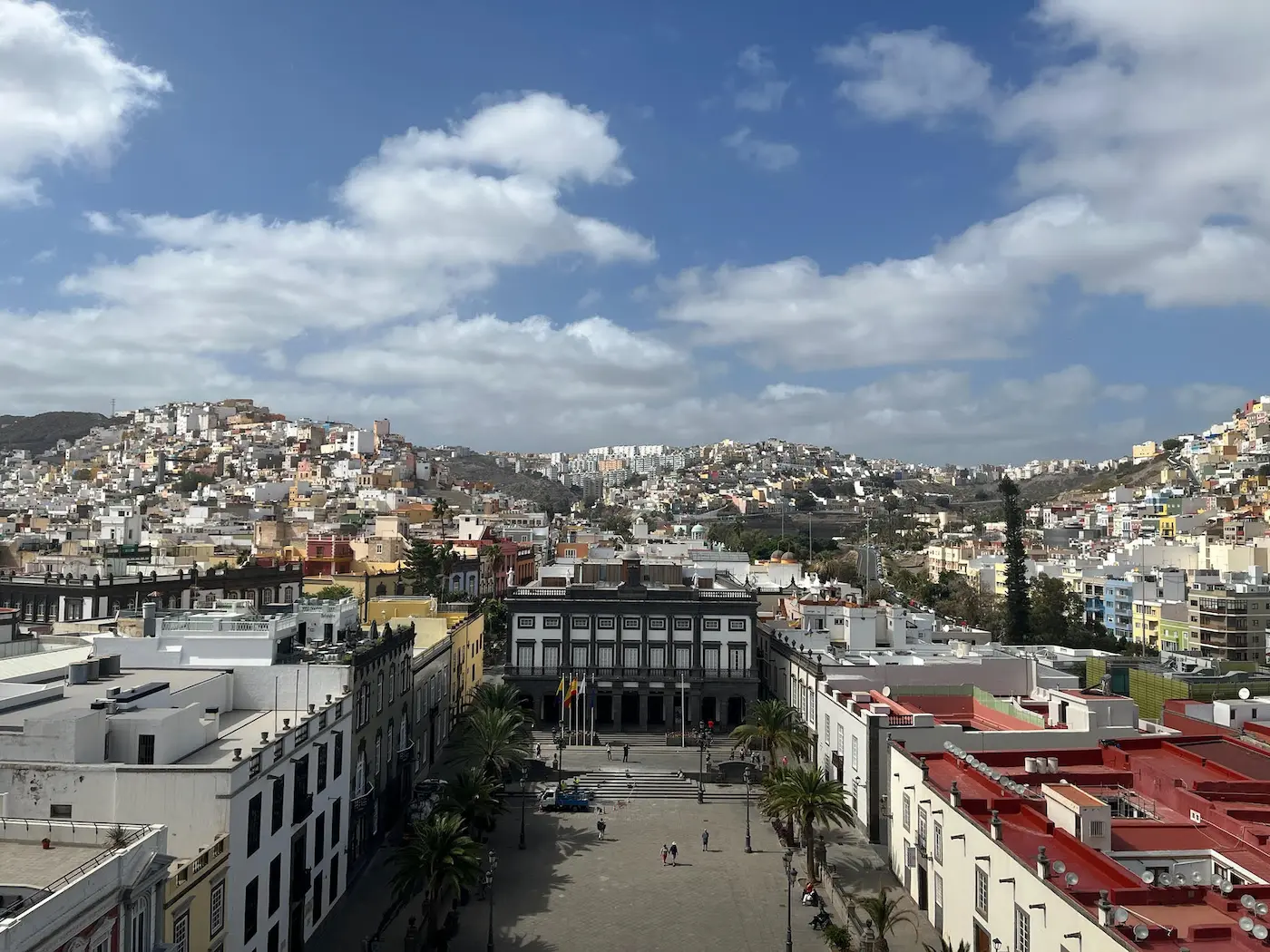
If you want to feel the real history of Gran Canaria, head to the Vegueta quarter and Santa Ana Square (Plaza de Santa Ana). It was the first planned main square in the Canary Islands, and it is still surrounded by the most important buildings – opposite the cathedral stands the neoclassical building of the original town hall, the Casas Consistoriales, and to one side the Bishop’s Palace with its carved wooden balconies.
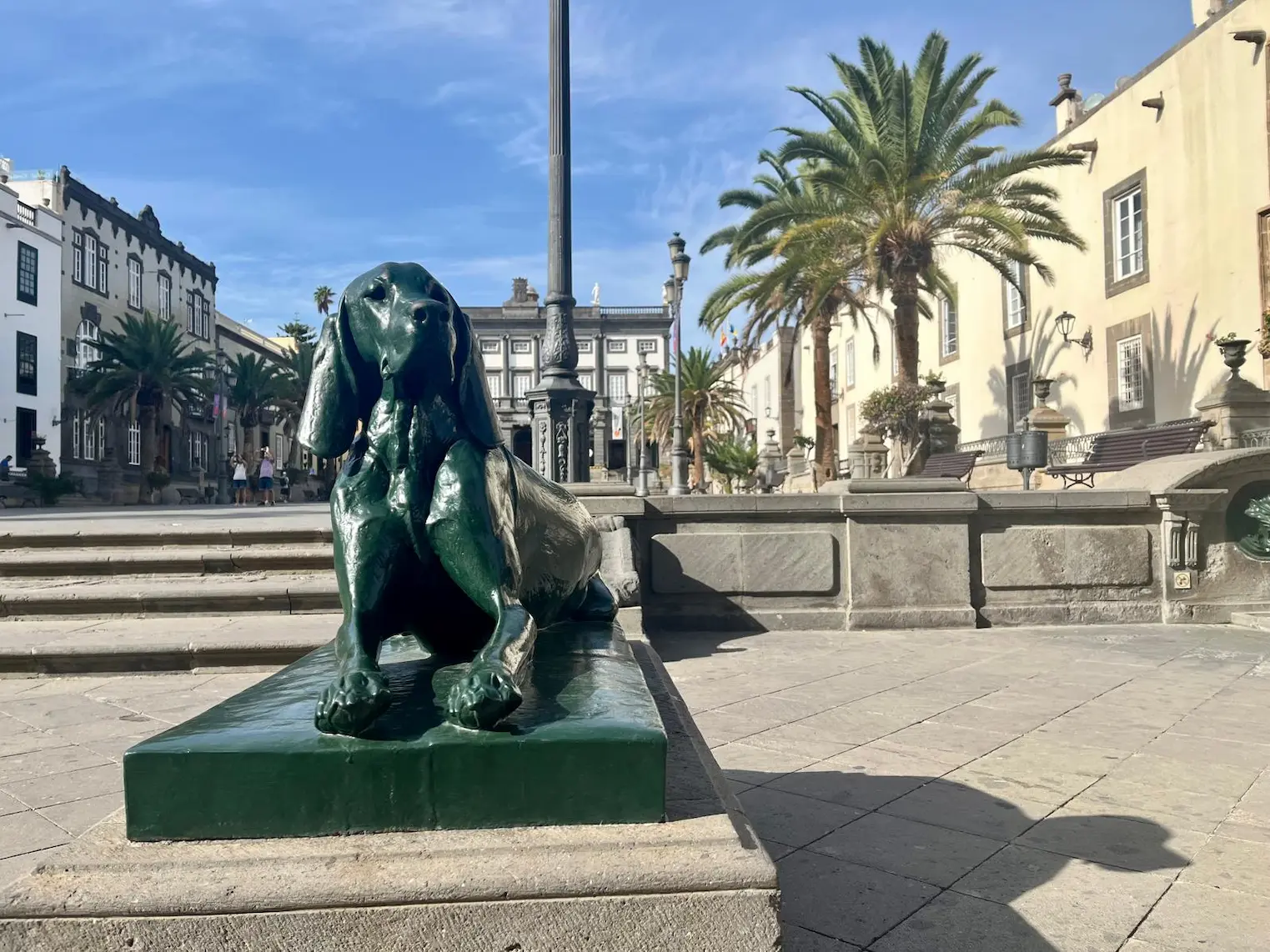
In front of the cathedral, eight bronze dog statues proudly guard the square. The name Canary Islands does not come from canaries, but from the Latin word “canis” (dog). According to legend, large dogs lived here in ancient times and gave the whole land its name.
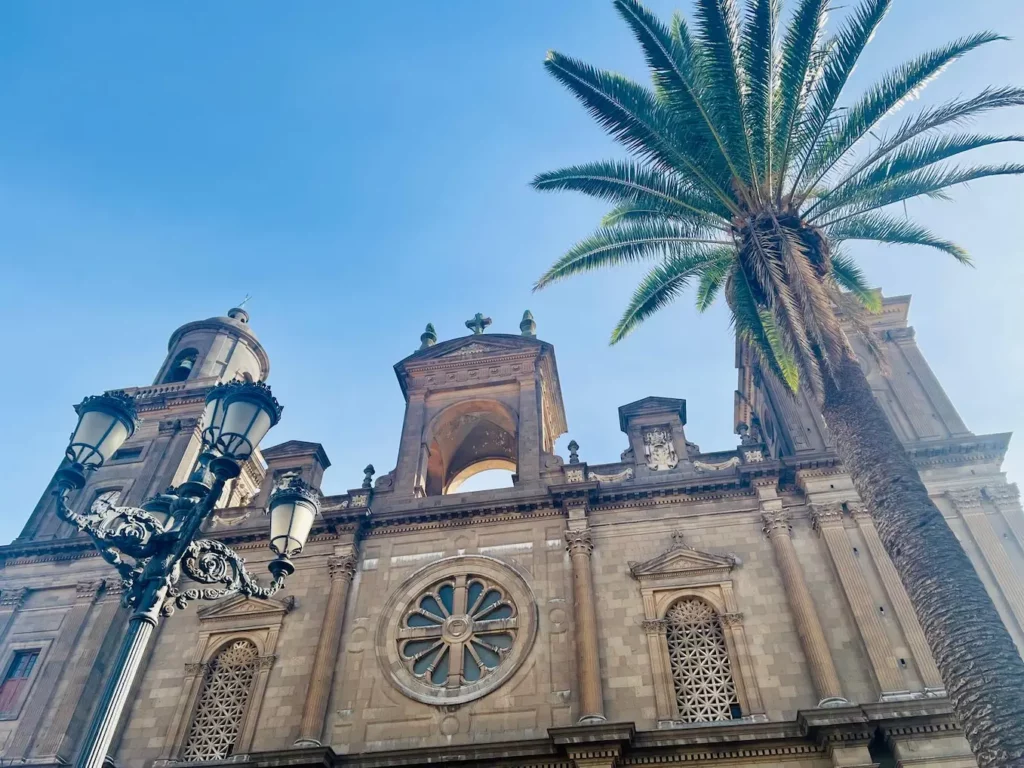
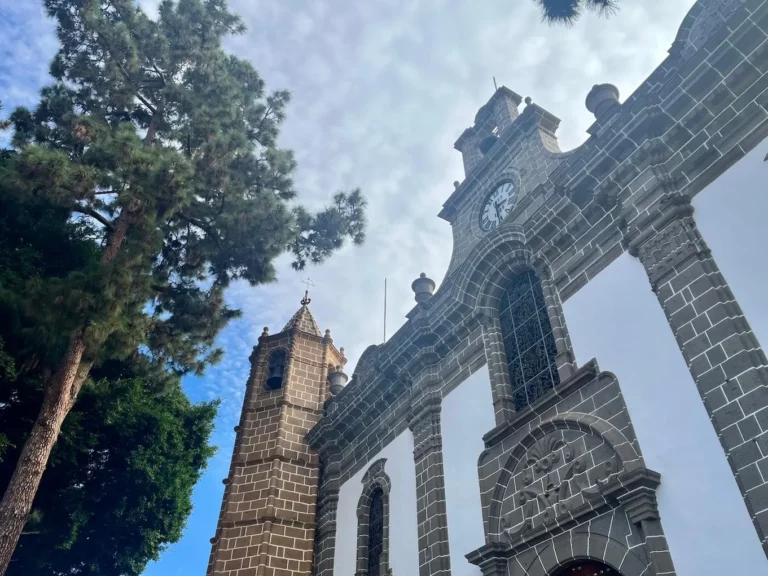
Santa Ana Cathedral is the undisputed symbol of Las Palmas. Its story began as early as 1497, but because of huge breaks the construction took almost 400 years. That is why it is a fascinating parade of styles – from late Gothic and Renaissance to Baroque and Neoclassical.
Looking at the left side of the cathedral, notice a part that looks like a ruin. In the 19th century the church was to be extended further, but work was stopped when a burial ground from shortly after the founding of the city was found under the foundations. Out of respect for the first settlers and because of its archaeological value, the work was not continued and the ruin became a permanent part of the church.
The view from the tower
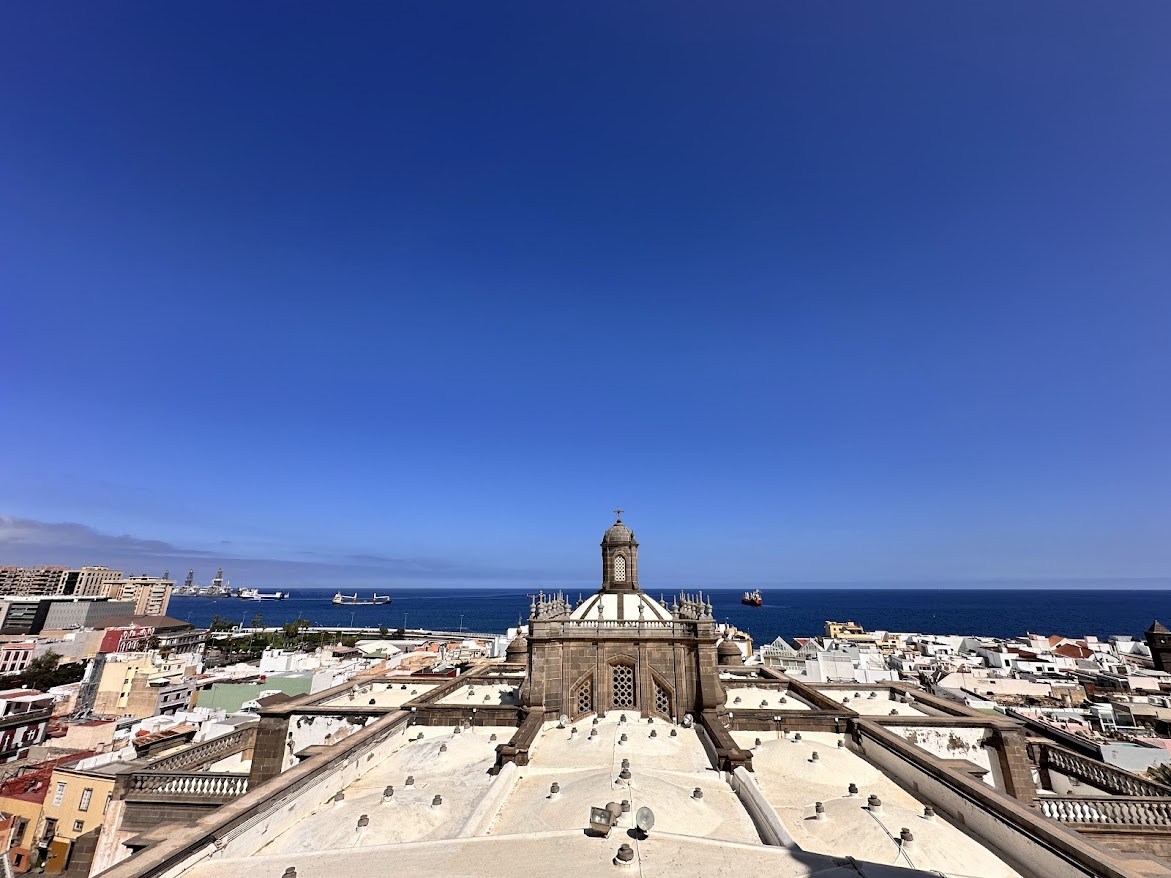
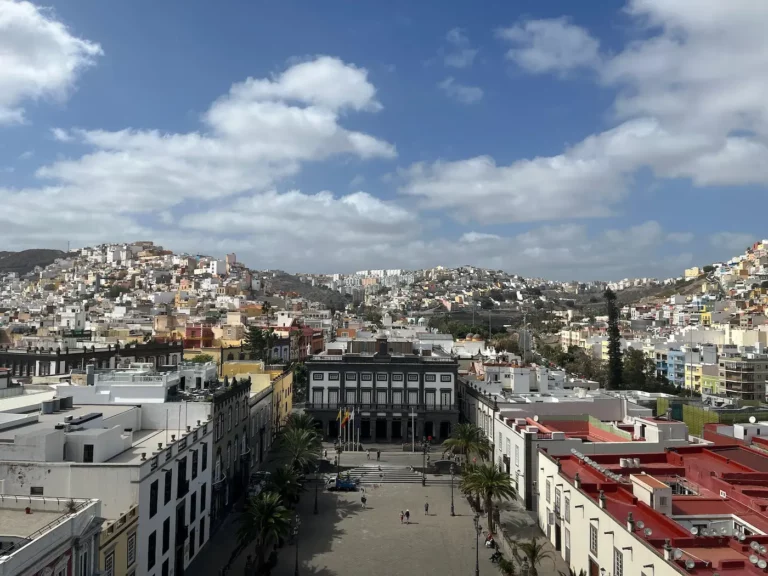
Take the lift up the tower – you will see the whole of Las Palmas, the colourful houses of Vegueta and the busy port. Admission €6.
Interior and gallery
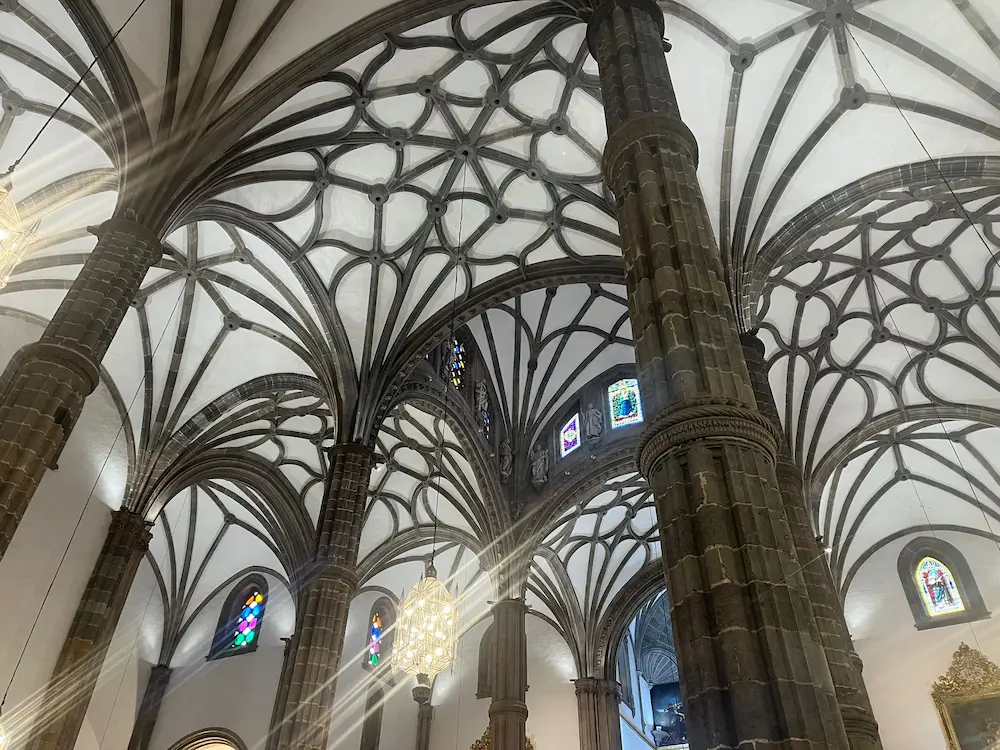
Columns resembling stone palm trees, and a gallery of sacred art in a courtyard with a fountain and wooden balconies.
The view from Santa Ana Cathedral
Santa Ana Square with the cathedral
HIGHLIGHTS
Why come here
In just a few square metres you will find everything – from seafaring legends to architectural gems:
The cathedral as a fortress – in the days of pirate raids it also had to serve a defensive purpose; the back has massive walls and barred windows.
Fake cannons – dummies on the walls were meant to deter enemy ships from attacking. The trick then caught on as decoration on other buildings too.
The view from the tower – the whole city laid out before you.
Stone palm trees – unique columns in the interior.
Eight bronze dogs – a symbol of the origin of the islands’ name.
Vegueta is a short distance from the centre of Las Palmas – an ideal base for exploring the north of the island. You will find more tips in the article Las Palmas de Gran Canaria.
During an extension in the 19th century, a burial ground from the period after the city was founded was found under the foundations, so the work was stopped.
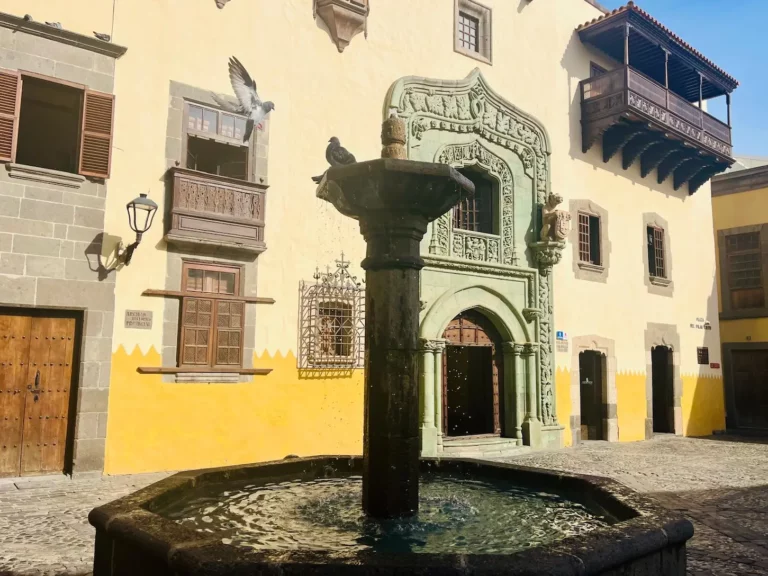
The old town hall, the Bishop’s Palace, Casa de Colón and the whole historic Vegueta quarter.
FINAL THOUGHTS
Plaza de Santa Ana and its cathedral are simply a place where, in just a few square metres, you will find everything – from seafaring legends to architectural gems.