
The best beaches on Gran Canaria: from the golden Maspalomas Dunes to the small coves of the north. Choose a beach by its atmosphere and find accommodation that is genuinely close to the ocean.
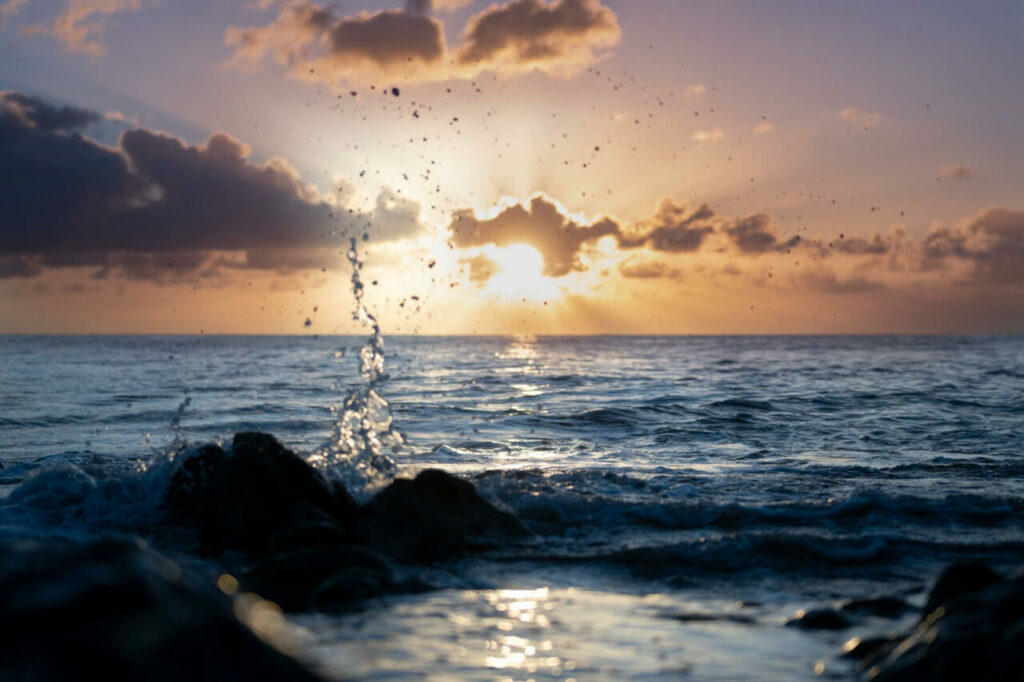
Gran Canaria offers much more than just the wide sandy beaches of the south. There are sheltered coves with calmer water, dark volcanic beaches, the Las Canteras city promenade and remote coastline below high cliffs. And above all: a beautiful view from your hotel does not necessarily mean the sea is easy to reach.
In this guide I therefore focus on the beaches themselves – what they are like, who they suit and where you can stay genuinely close to the sand. If you are choosing a resort first, have a look at the overview of Gran Canaria resorts as well.
To see what the sea, wind and sun are like on each beach today, check IslaBu.
Maspalomas is exactly the place most people associate with Gran Canaria. The long, light-coloured beach stretches from the Faro de Maspalomas lighthouse towards Playa del Inglés, with the famous sand dunes rising right next to it. By the lighthouse you will find restaurants, a promenade and easy access to the beach; towards the dunes the landscape becomes more and more open.
If you like long walks on the sand, this is one of the best choices on the island. Bear in mind, though, that this is the open Atlantic coast. When it is windy, waves build up and in places there can be stronger currents. For a full day here, take sun protection; services are not always at hand on the more remote stretches.
The dunes themselves are a protected area. Walk along the marked paths and read more about their nature in the article Maspalomas Dunes.
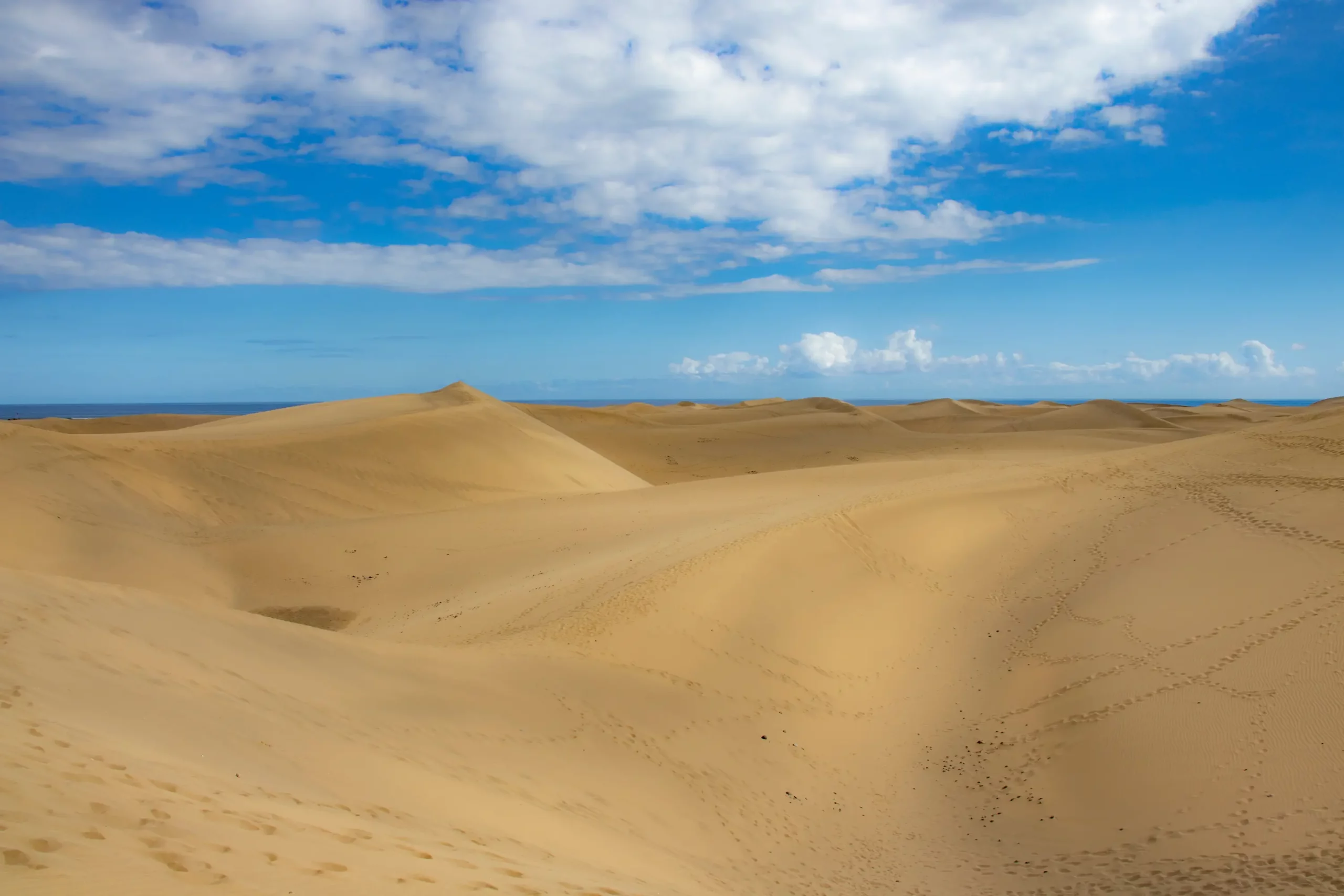
An extensive sandy beach on the open ocean. Good facilities by the lighthouse; fewer services further away. Always swim according to the flags and the state of the sea.
A comfortable choice by the lighthouse in Maspalomas, just a few steps from the beach. A good base for morning walks to the dunes.
Playa del Inglés is busier and more urban than neighbouring Maspalomas, but the two beaches run seamlessly into each other. The wide strip of sand invites you to relax, play sport and take long walks. By the main access points there are restaurants, sunbeds and other services, while towards the dunes you can easily find more open space.
This part of the coast suits people who want the sea during the day and restaurants or entertainment in the evening. Another advantage is that services are easy to reach without a car. The downsides can be bigger crowds at the busiest access points and stronger waves when the wind changes.
If you are also choosing based on the atmosphere of the resort, I recommend comparing it with San Agustín or Maspalomas. They look close on the map, but each one feels different on holiday.
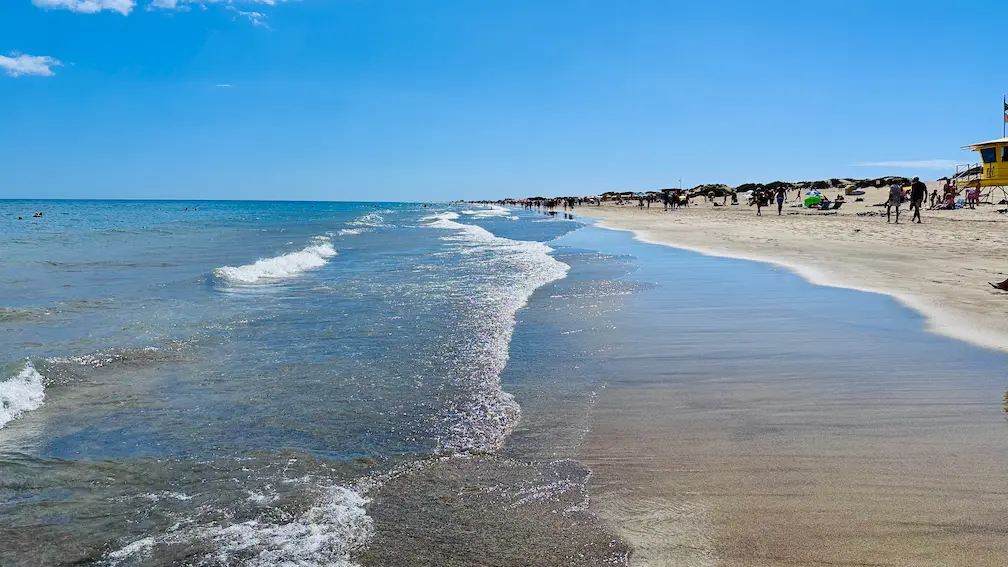
A wide sandy beach with sunbeds, a promenade and restaurants. A more open coastline – keep an eye on the waves and the lifeguards.
A hotel about 200 metres from the sandy beach, also close to the restaurants and the centre of Playa del Inglés.
San Agustín is a good alternative for those who want the beach and services within walking distance but do not long for the busiest resort. The beach here, with its darker sand, has a pleasant atmosphere and connects to the coastal promenade, which you can follow to the neighbouring bays.
Nearby you will find restaurants and the usual tourist facilities, yet it tends to be quieter than Playa del Inglés. San Agustín suits couples, but also families who prefer an easy trip between the hotel and the beach.
A quieter atmosphere does not, however, mean a permanently calm sea. If it is windy or the surf is bigger, follow the flags just as you would anywhere else on the island.
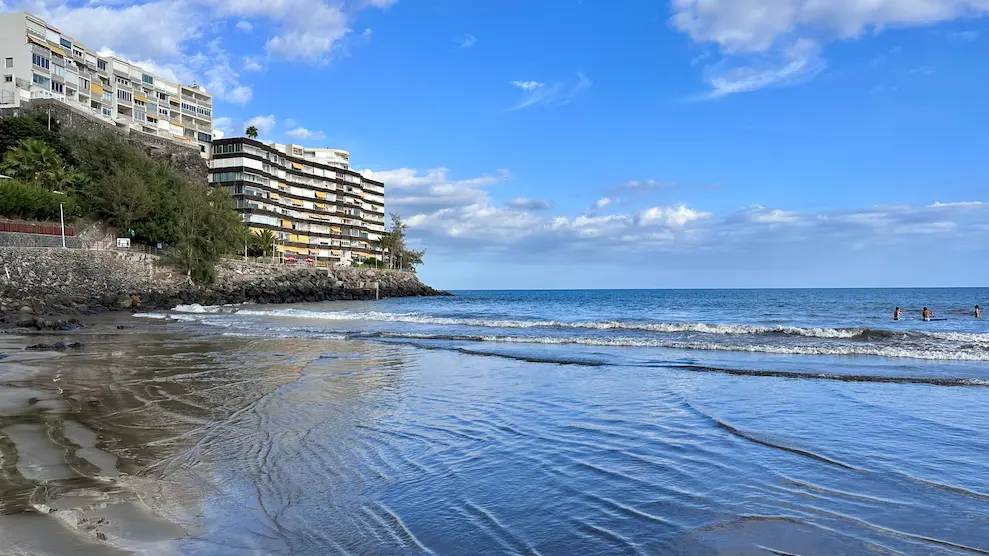
Darker sand, a coastal promenade and restaurants nearby. Take care when the surf is stronger.
A quieter adults-only hotel with direct access to the San Agustín coastline.
Playa de las Burras lies between two well-known resorts, but it does not feel as busy as the main beach at Playa del Inglés. Darker sand, the coastal promenade and a few places to eat nearby make it a pleasant spot where you do not have to rush anywhere all day.
Its biggest advantage is the combination of fewer crowds and easy access. If you want a longer walk, you can easily continue along the neighbouring coast; if you just want to read a book by the sea, you can stay put. The beach is popular with locals too.
With hotels right next to it, it is also a good choice for a holiday where you want the sand genuinely close to your room.
A darker sandy beach with a promenade. Easy access and restaurants nearby; swimming conditions depend on the weather.
A hotel right on Playa de las Burras; from the hotel grounds you can easily reach the promenade and the beach.
Playa El Pirata shows a completely different side of the south-east coast. Instead of a long strip of sand, you will find a smaller cove between rocks with darker sand. It is popular precisely because it is nothing like the big organised beaches in the tourist centres.
Access is down a flight of steps, and at high tide the beach can become much smaller. There are not the same facilities as at Amadores or Playa del Inglés, so take everything you need with you. When there are waves, this cove is not suitable for carefree swimming.
If you want to stay close to the ocean but prefer fewer buildings around you, accommodation above the cove can be an interesting alternative to a large resort.
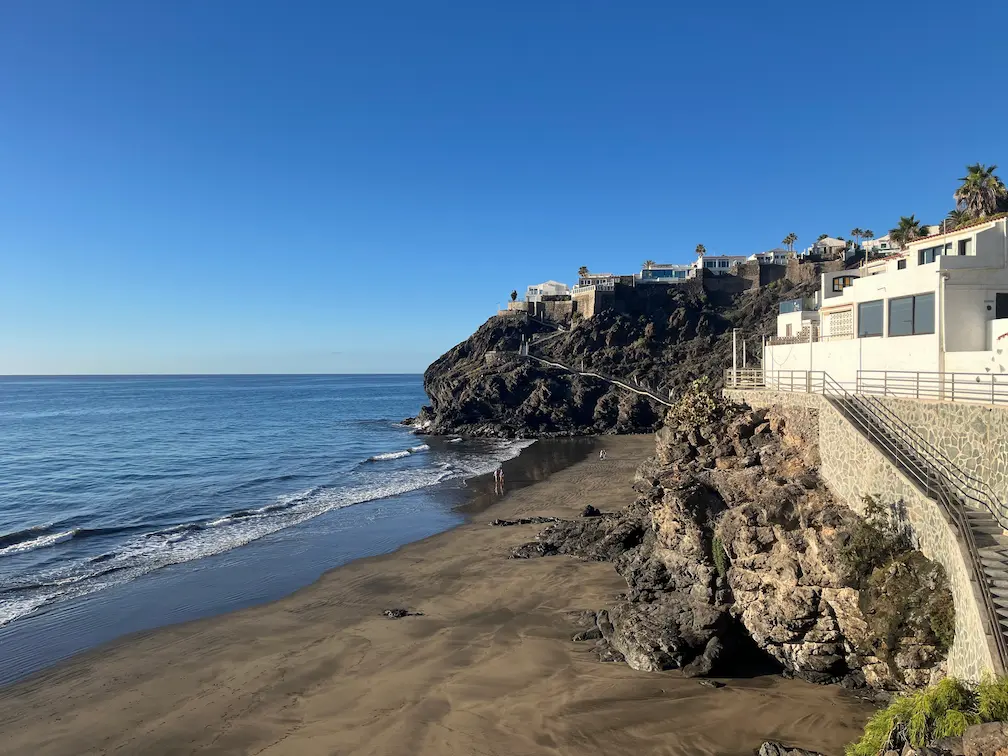
A tree drawn in the sand on Playa El Pirata – a video with music, click to play.
A small cove with darker sand, steps down to the beach and limited facilities. Watch the tide and the current waves.
Apartments above the small cove of Playa El Pirata. Getting to the beach means walking down; it is not a flat promenade.
Amadores is one of the most popular beaches in the south-west of Gran Canaria. Light sand, a wide curving bay and water that turns turquoise on a sunny day create an almost lagoon-like atmosphere. Protective breakwaters help to soften the surf.
Behind the beach runs a promenade with restaurants and cafés. Thanks to the facilities and the usually calmer water, it is often chosen by families with children. In high season and at weekends, though, it can get really full, so it is better to arrive early.
From Amadores you can also walk along the coastal path towards Puerto Rico. When choosing a hotel, though, check whether it is really by the beach or higher up the hillside – a sea view does not automatically mean an easy walk to the sand.
You will find where to go with children away from the beach in the article Gran Canaria with kids.
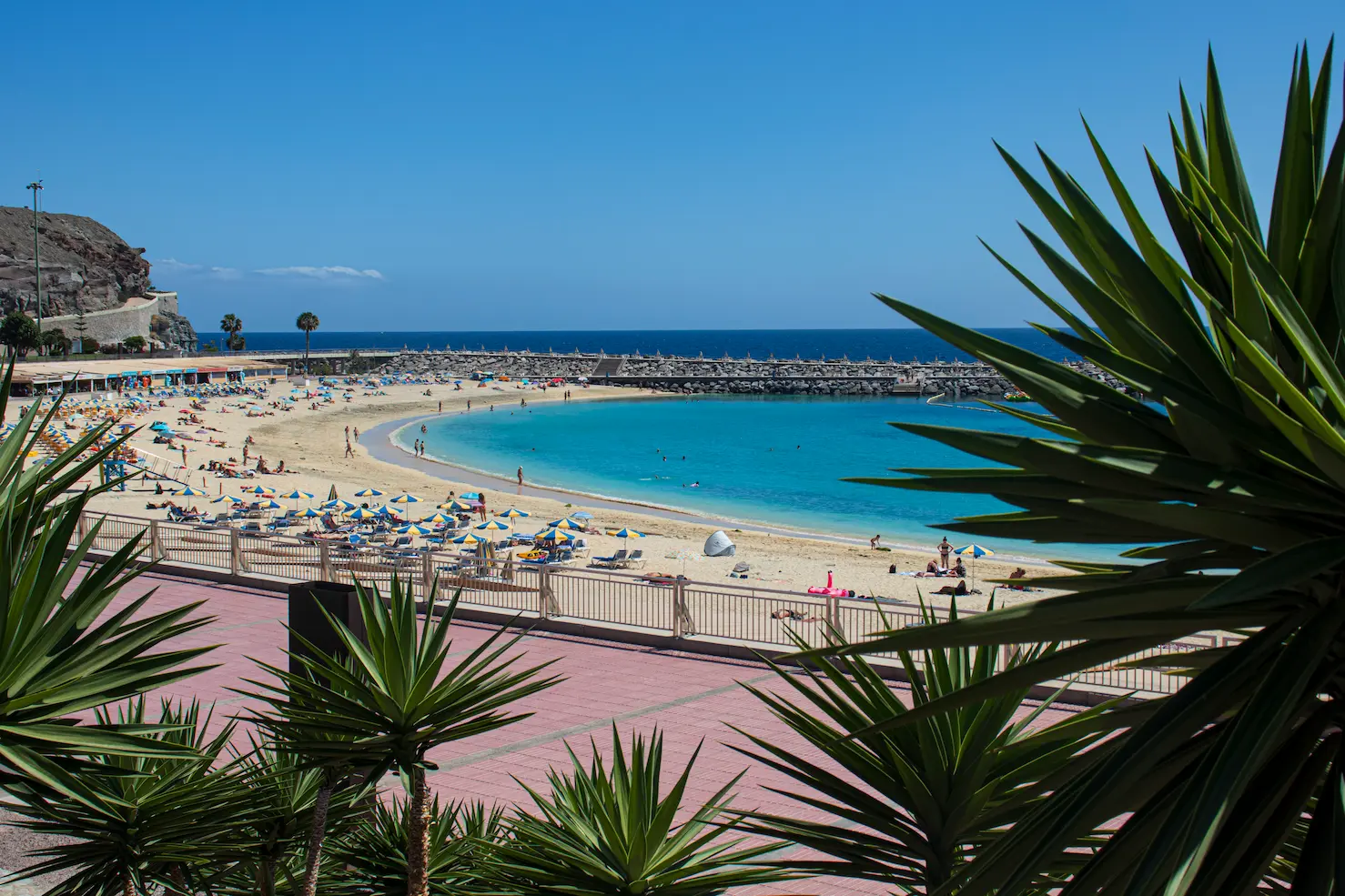
Light sand, a sheltered bay, restaurants and sunbeds. Popular with families; busy at peak times.
Apartments right next to Amadores, suitable for those who want to walk to the beach.
A resort overlooking Amadores. The beach is close by, but the hotel is on the hillside, so expect a climb on the way back from the sea.
Anfi del Mar is a beach that many visitors mistake for the Caribbean at first glance. Light sand, palm trees and calmer water in a sheltered bay create a very different scene from most of Gran Canaria’s natural dark beaches.
It is an artificially landscaped beach with tourist facilities, restaurants and a range of activities. It is ideal if you want an easy day by the water and do not mind a livelier setting. The surrounding area has apartment resorts and part of the coast is built up.
When looking for accommodation, choose a specific apartment with a confirmed location at Anfi del Mar. The same area name can also appear in offers scattered across the surrounding hillsides.
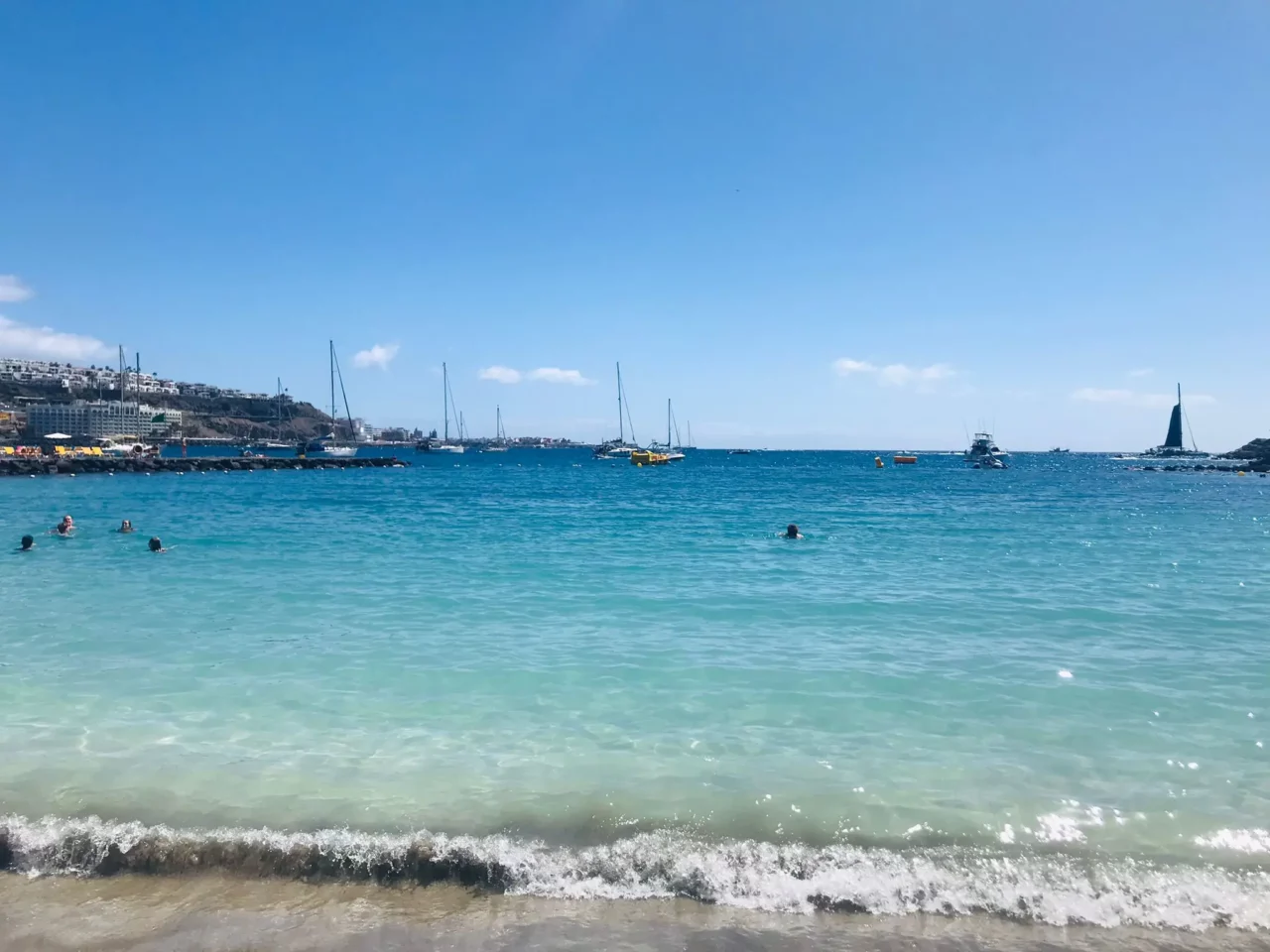
Light sand and a sheltered bay with services. Easy swimming in good weather; expect it to be busy in high season.
Apartment accommodation in the Anfi del Mar area, suitable for lovers of light sand and sheltered bays.
Puerto Rico is a classic sunny resort in the south-west. Its sandy beach lies in a smaller sheltered bay between the harbour areas, so everything is relatively close: restaurants, shops and the places where boat trips leave from.
The beach is not as extensive as Maspalomas, but its compact character makes it a convenient choice for visitors who do not want complicated journeys. It is easy to combine swimming with a stroll around the harbour or a trip out to sea.
In Puerto Rico, pay particular attention to the difference in height when booking a hotel. Many of the resorts here stand high above the coast; apartments right in the centre by the beach can be more practical for swimming every day.
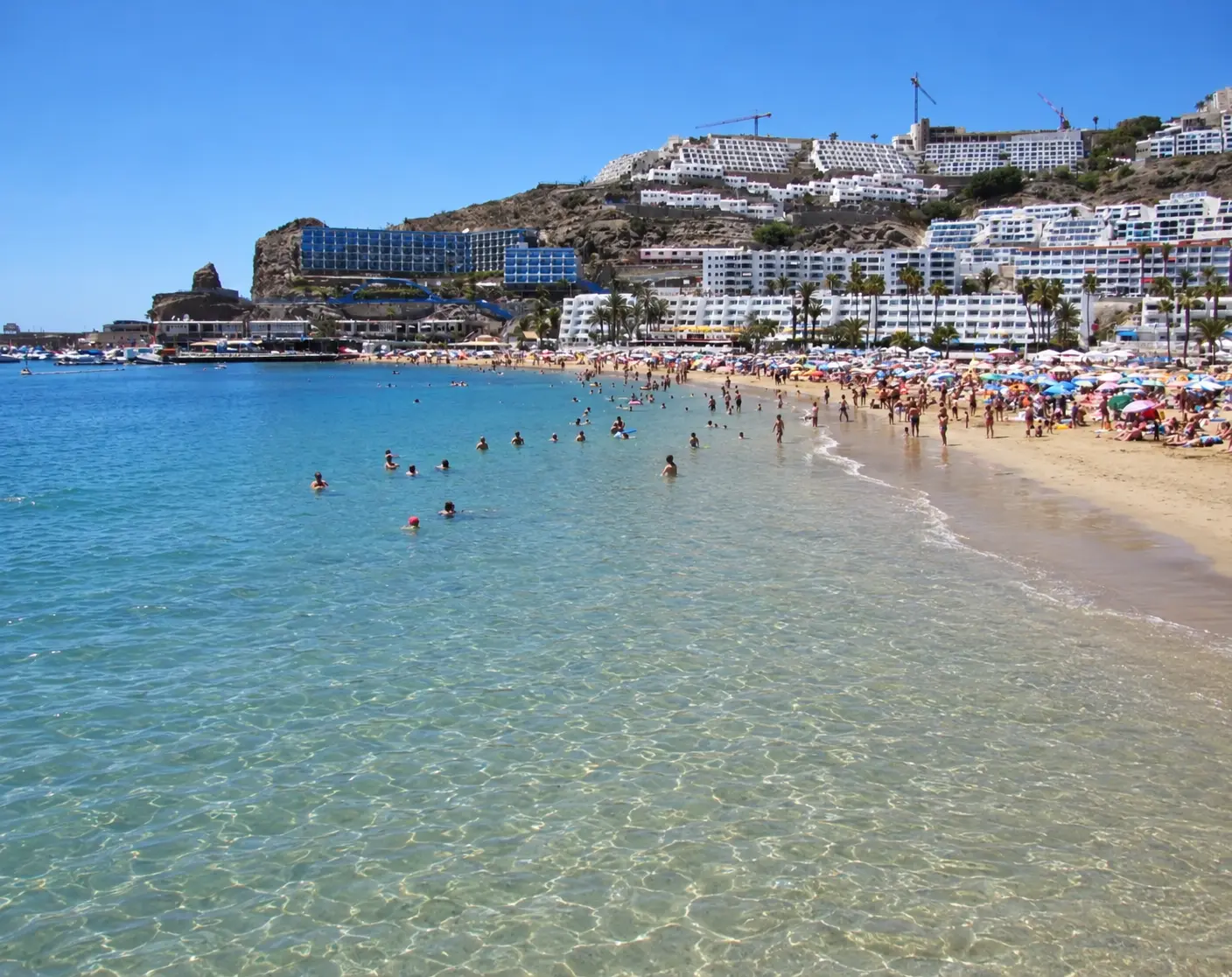
A smaller sandy beach by the harbour with good facilities. Choose your accommodation by the actual walking route, not just the distance on the map.
Apartments very close to Puerto Rico beach and the harbour, without having to stay high up on the surrounding hills.
Puerto de Mogán is one of those places where a beach day naturally turns into an outing. Next to the smaller sandy beach you will find a harbour with white houses, narrow lanes and flowers that give this small town its distinctive character.
The bay is sheltered and, in the right conditions, offers easy swimming. Restaurants and cafés are right next to it, so you can easily plan a day without long journeys. In my opinion, the nicest thing is to combine a morning swim with an early evening stroll around the harbour.
If you are also interested in the town itself, have a look at the separate article Puerto de Mogán – the Venice of the Canaries. You will find more there about the harbour, getting there and the surrounding area.
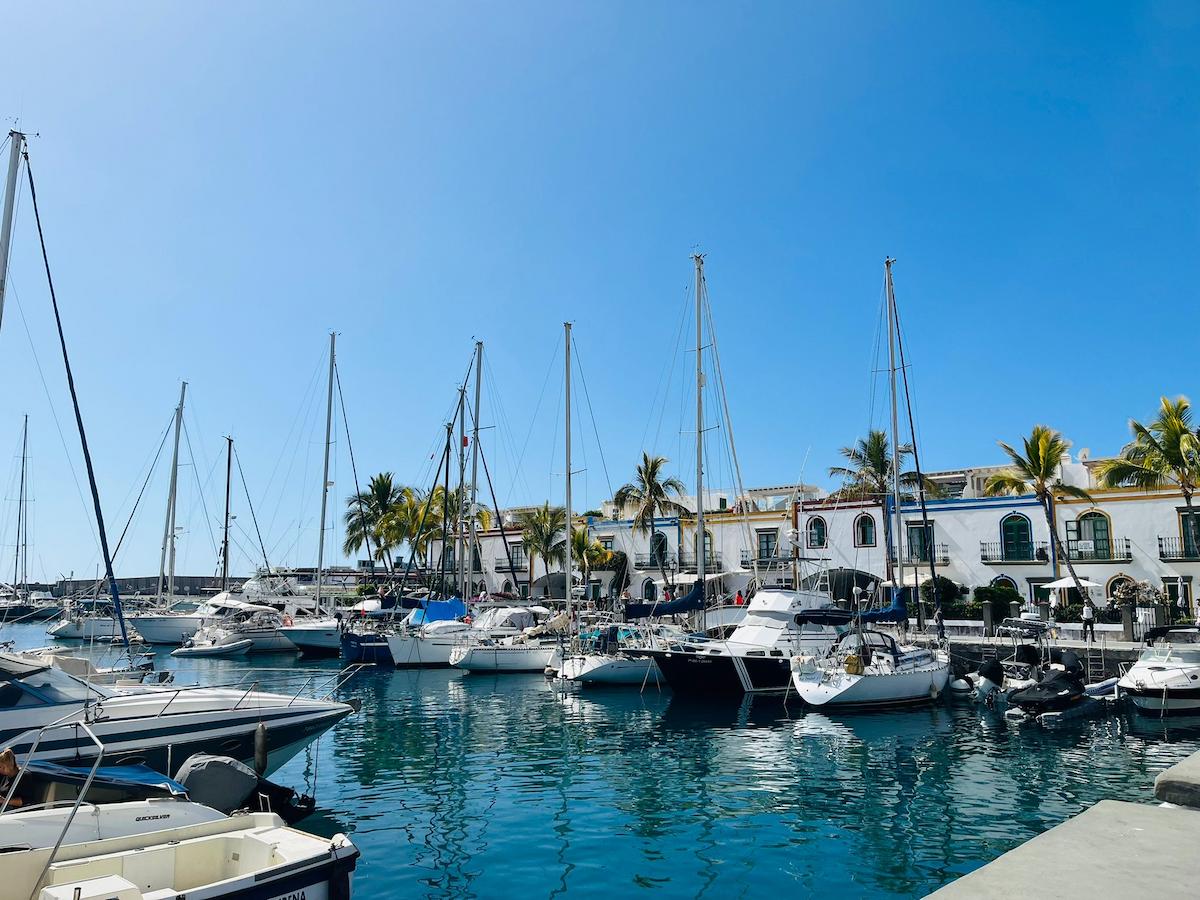
A smaller sandy beach in a sheltered bay right by the harbour. Restaurants, a promenade and an easy way to combine swimming with a stroll.
Apartment accommodation by the harbour and beach in Puerto de Mogán, great for walks and swimming right in the town.
A hotel in a tropical garden within walking distance of the beach. A good choice for those who want more extensive resort facilities.
Taurito lies in a valley enclosed by rocky slopes and feels different from the open coast of Maspalomas. The smaller dark sand beach is next to several hotel complexes, so it is popular mainly with those who want to spend their holiday mostly in one place.
The surrounding cliffs create an impressive backdrop, but they also affect how long the beach is in the sun during the day. If you like long walks on the sand, Taurito will feel small to you. If a beach, a pool and hotel services within reach are enough, it can be pleasant.
When the surf is stronger, swimming can be more demanding. Before going into the water, always follow the current signs and the lifeguards’ instructions.
A smaller dark beach between cliffs. Resort facilities nearby; how long the beach is in the sun changes during the day.
A resort by Playa de Taurito with direct access to the beach, for adult guests aged 16 and over.
Las Canteras shows that a great beach does not have to be part of a holiday resort. It stretches for several kilometres along the capital, Las Palmas, and behind the sand you will find a lively promenade with cafés, restaurants and shops.
Part of the coast is protected by a natural rock barrier, La Barra, which helps to soften the waves. At the opposite end towards La Cícer, conditions are better for surfing and the sea tends to be wilder. So it is a good idea to choose your spot on the beach depending on whether you want to swim, snorkel or just watch the waves.
A big advantage of Las Canteras is that you can combine time by the sea with getting to know the city. You will find more tips in our article Las Palmas de Gran Canaria.
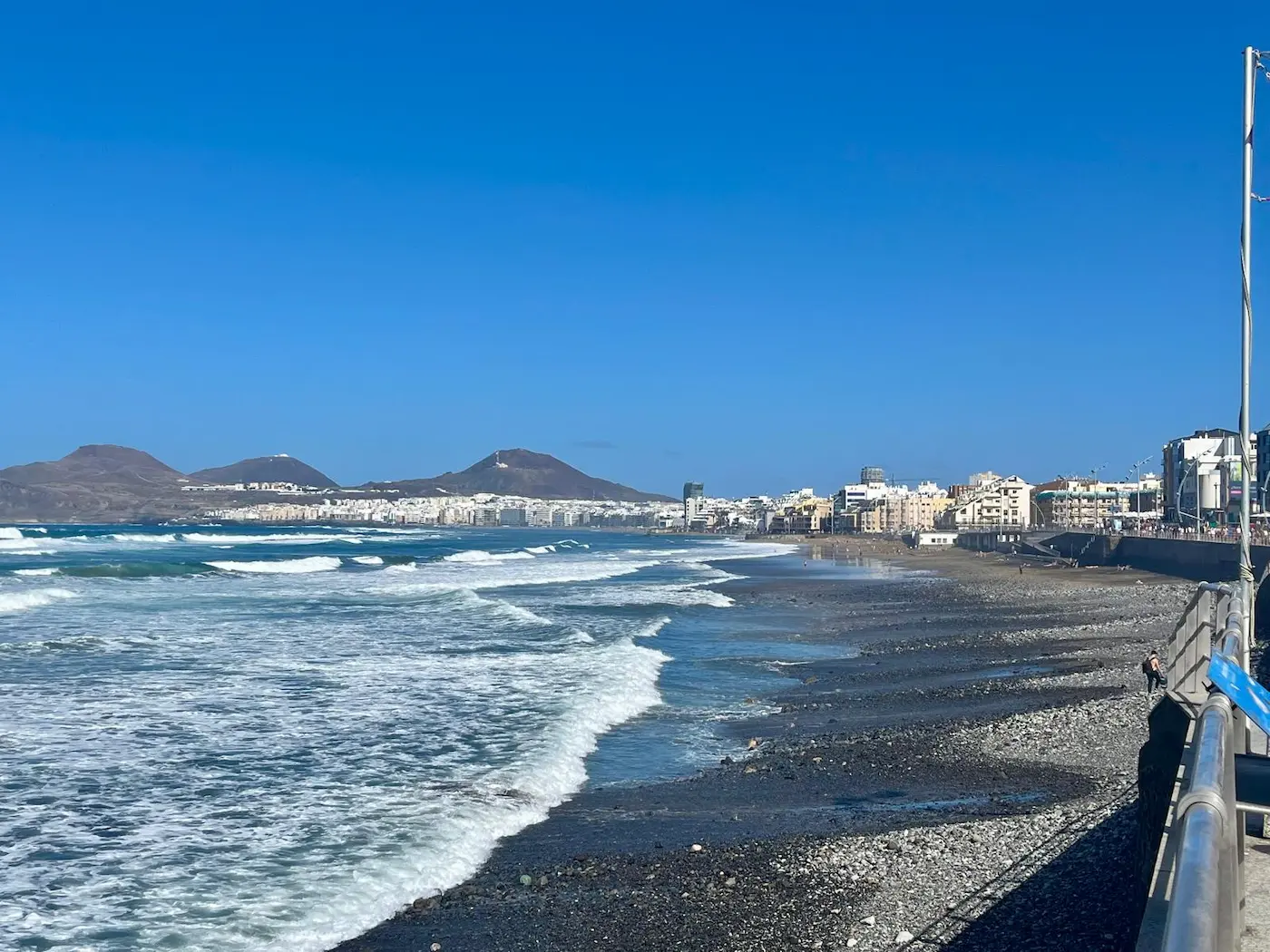
A long sandy city beach with a promenade. Conditions vary by section; La Cícer often has bigger waves.
A hotel right on the Las Canteras promenade, ideal if you want to combine a stay by the ocean with the atmosphere of the city.
A hotel at the northern end of Las Canteras near La Puntilla, with restaurants and the promenade right outside.
In the north-west of the island you will find beaches with a completely different character from the touristy south. Playa de Las Nieves, in the harbour area of Agaete, is more about volcanic pebbles, views of the surrounding cliffs and the pleasant atmosphere of a fishing port than about lying on golden sand all day.
You can eat well in the area – the local restaurants are known above all for their fish dishes. Nearby there are also the Las Salinas natural sea pools, which are worth a stop of their own. In the right conditions you can combine your day with a walk along the coast.
If you are planning to stay overnight, it is worth staying right in the harbour area. In the north-west it is nice not to rush anywhere and to enjoy a different, less touristy side of Gran Canaria.
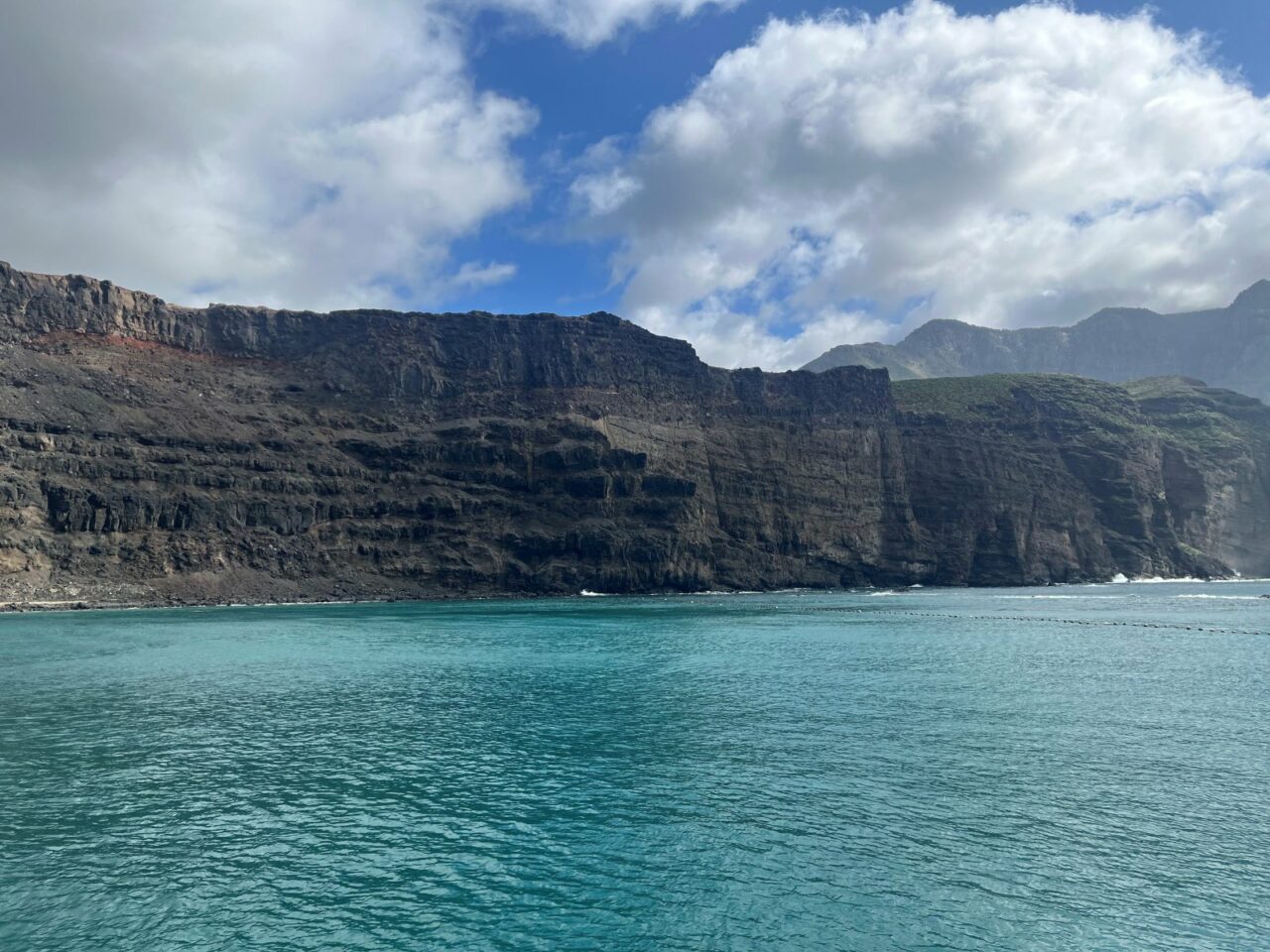
A pebbly and in places stony beach by the harbour. Water shoes may come in handy; always swim according to the current conditions.
A smaller hotel in the harbour area of Agaete, within walking distance of the pebble beach and restaurants.
Sardina del Norte lies near Gáldar and has kept the atmosphere of a traditional seaside village. The local beach with darker sand is smaller, and the surroundings do not feel like a big resort. This is the place to go if you like spots that the islanders themselves visit.
The area is also known among divers for its interesting underwater life. On the north coast, however, waves and currents are often stronger than in the sheltered bays of the south. When the sea is not suitable for swimming, it is worth just enjoying a walk and views of the ocean.
Accommodation in the area is mainly small apartments. It suits travellers with a car who also want to explore Gáldar, Agaete and the north-west coast.
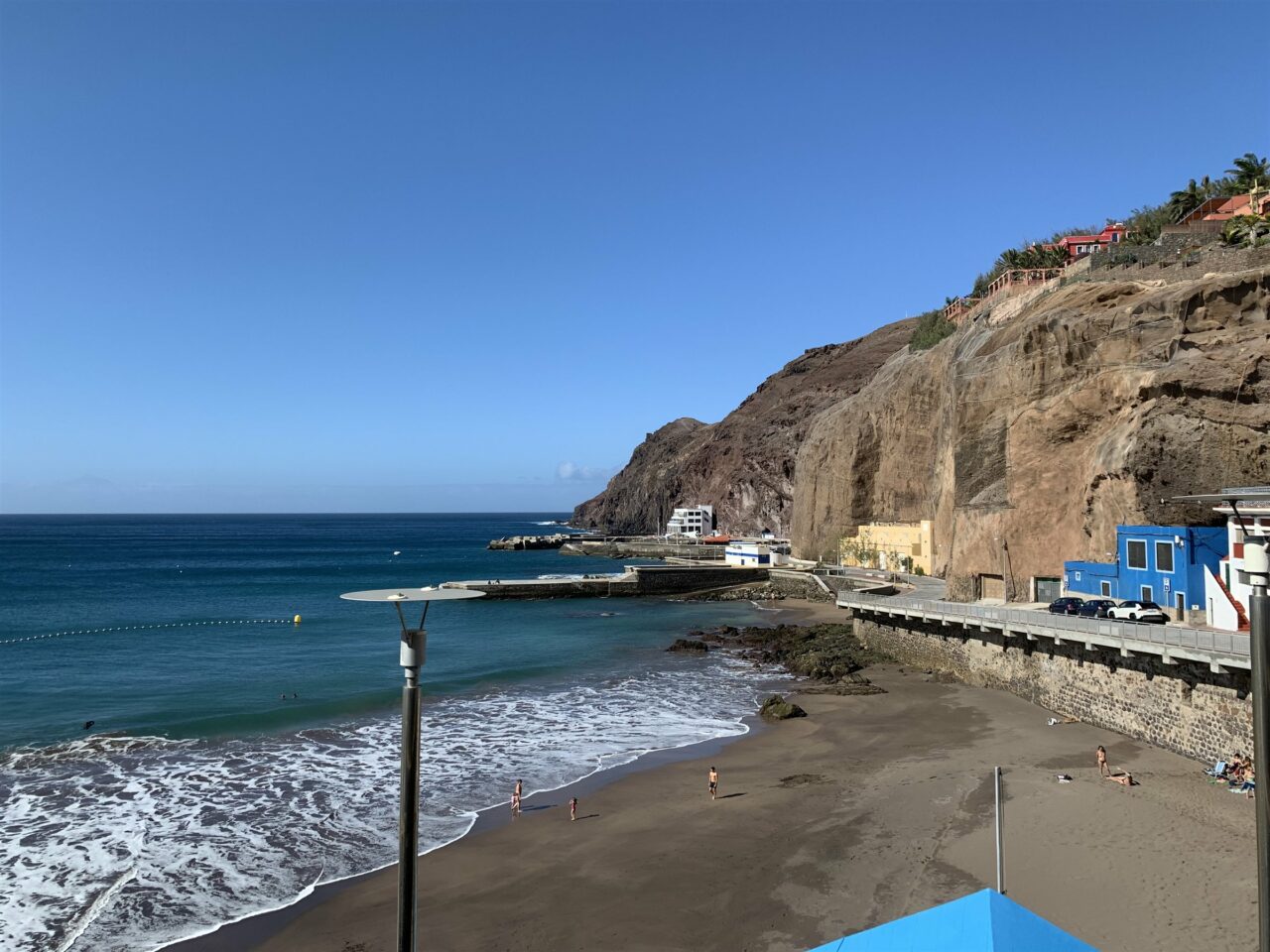
A smaller dark sand beach with a local atmosphere. In the north, swimming conditions can change quickly.
Small-scale accommodation by Playa de Sardina del Norte, suitable for a quieter stay away from the main tourist resorts.
Güigüí is the complete opposite of hotel beaches. It lies on the remote west coast below high rocky slopes, and there are no usual tourist facilities. You will not find a promenade, sunbeds or restaurants here – the main experience is the journey itself and the view of the wild landscape.
Getting here means a demanding mountain hike with a big change in altitude, or taking a boat if one is available and it is safe. It is definitely not an easy trip in flip-flops. You need sturdy footwear, plenty of water, good fitness and a weather check in advance.
The beach has no lifeguards, and swimming in remote places can be dangerous when there are waves or currents. I would recommend Güigüí rather to more experienced visitors who want to see the wildest side of the island – not as a place for a family beach day.
No hotels, restaurants or lifeguards. A demanding hike in, with preparation and a weather check needed. Respect the tides and the surf.
Swimming: Watch the beach flags and the lifeguards’ instructions. A red flag means no swimming, a yellow one means extra caution. Currents can appear even when the surface looks calm.
High and low tide: In small coves such as El Pirata, the size of the beach can change considerably. You will find tide times, waves and wind on IslaBu – Playa El Pirata today. For remote places, always check the conditions in advance.
Choosing a hotel: In the south-west, many resorts stand high above the beach. Check the actual walking route, steps and climb, not just the distance on the map.
And if you still do not know which part of the island to stay in, the guide to Gran Canaria resorts will help too. Each resort has a different atmosphere – and that is often what decides whether you will enjoy your holiday.