The Monastery of the Archangel Michael: a convent on a cliff above the sea
The Monastery of the Archangel Michael is an Orthodox sanctuary on a rocky headland above the sea, with a holy relic and a spring of holy water surrounded by legends. What you will see in the monastery and what rules apply here.
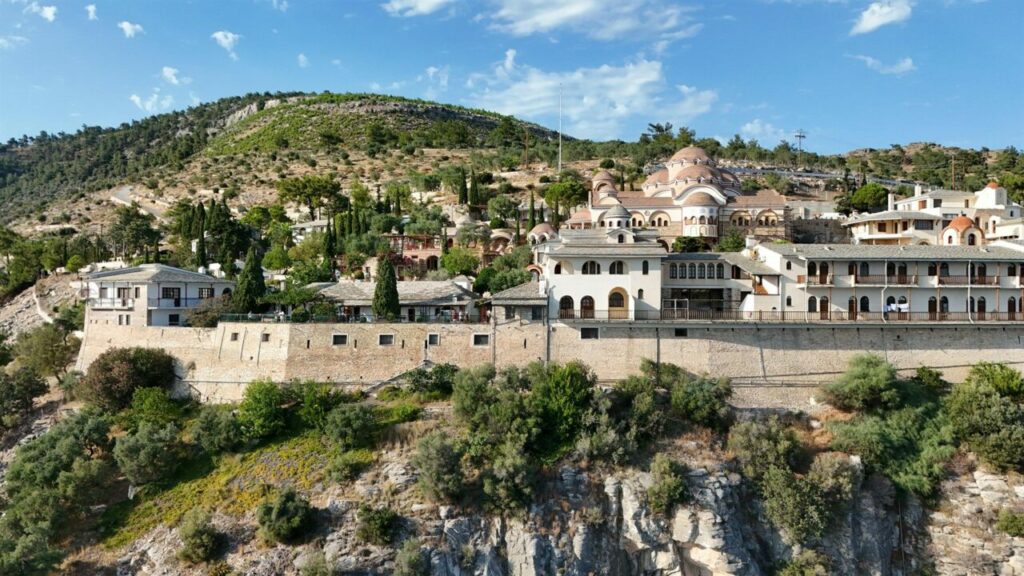
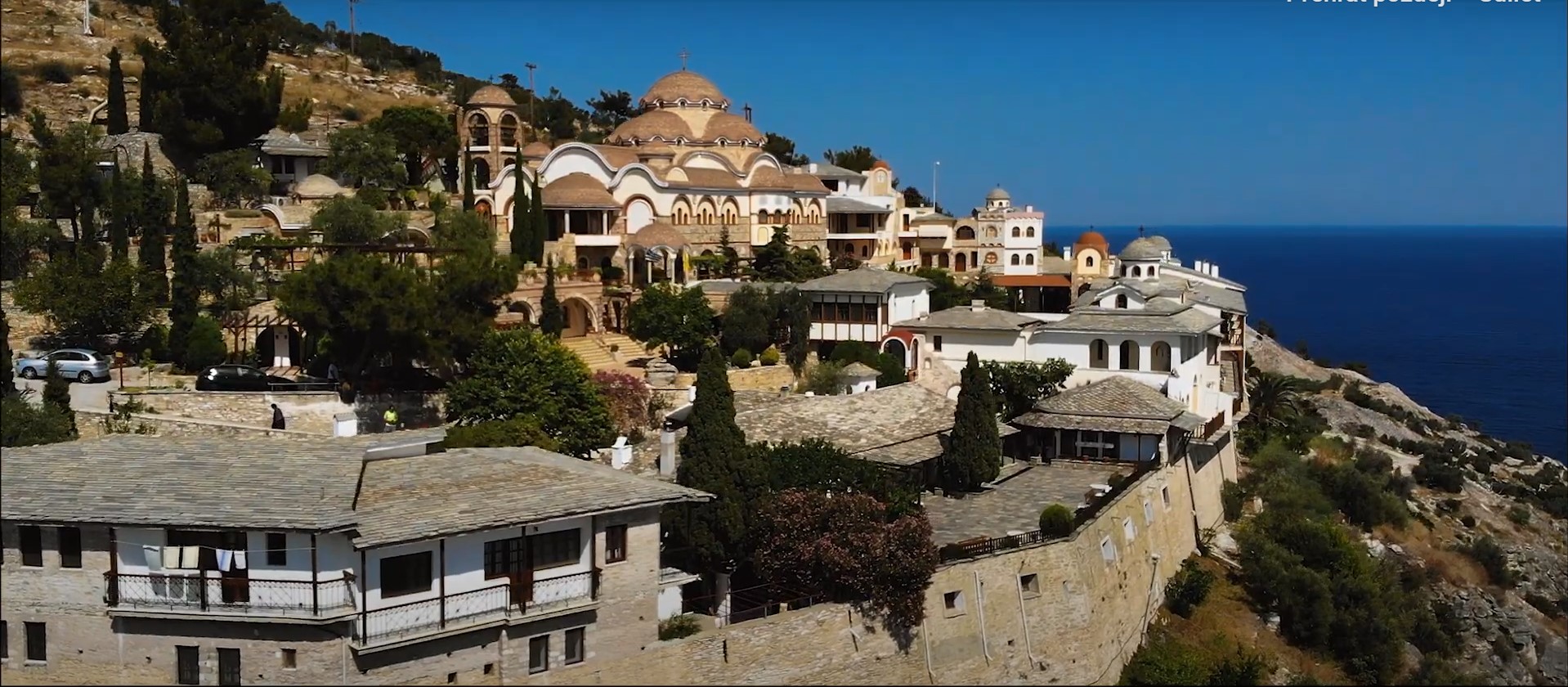
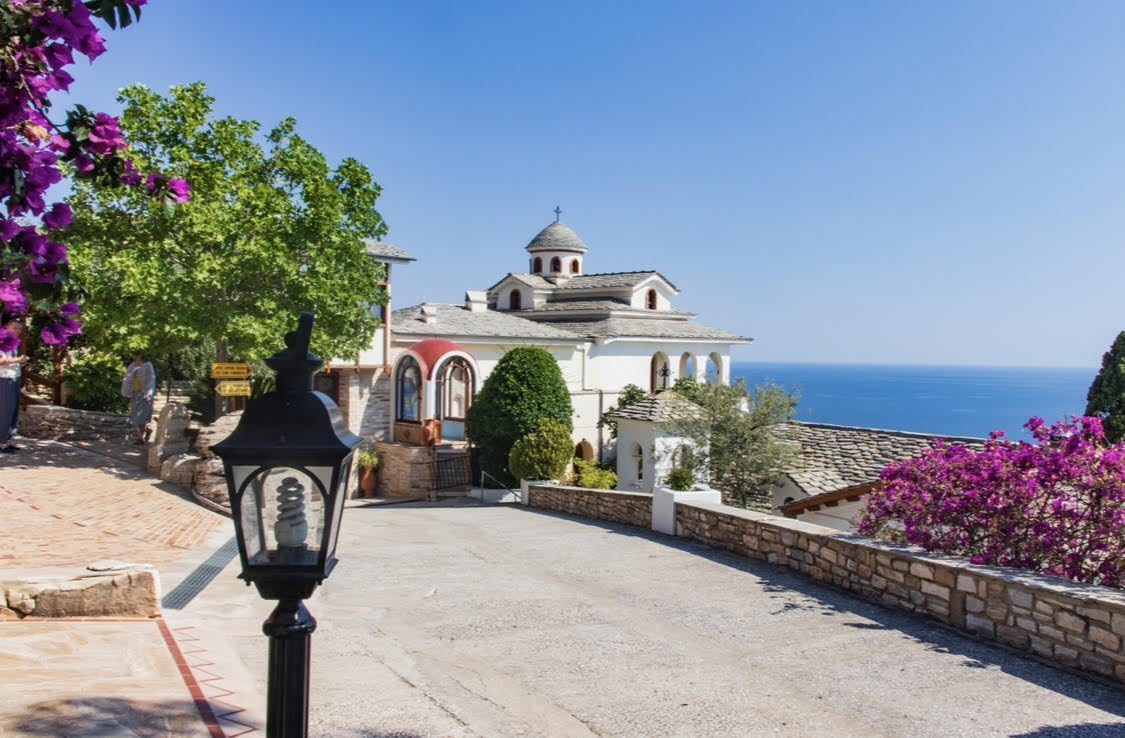
Thassos, the emerald island in the Aegean Sea, hides a treasure of spiritual wealth – the convent of the Archangel Michael. This Orthodox sanctuary, rising on a rocky headland above the azure sea, is a place of pilgrimage with a rich history and a fascinating legend about how it came to be.
The monastery is on the south-east coast of the island, not far from Aliki. You can get there by car on your own – if you are coming from Astris, you will see this beautiful building on the cliff as you drive down the hairpin bends. Another option is an optional excursion with a tour operator. The car park is small, so it is better to arrive early, especially in the season.
At a glance
Where
In the south-east of the island, not far from Aliki
Shoulders and knees covered – clothing is lent at the entrance
Photography
You can take photos before you go in; strictly forbidden in the church of St Luke
HISTORY
The history of the monastery and the views from the terrace
According to legend, the original little church of St Luke was founded as early as the 11th century. The first written record of the monastery itself dates from the 13th century. Over the centuries the monastery went through many events, including reconstruction in the 18th century after it was destroyed by pirates.
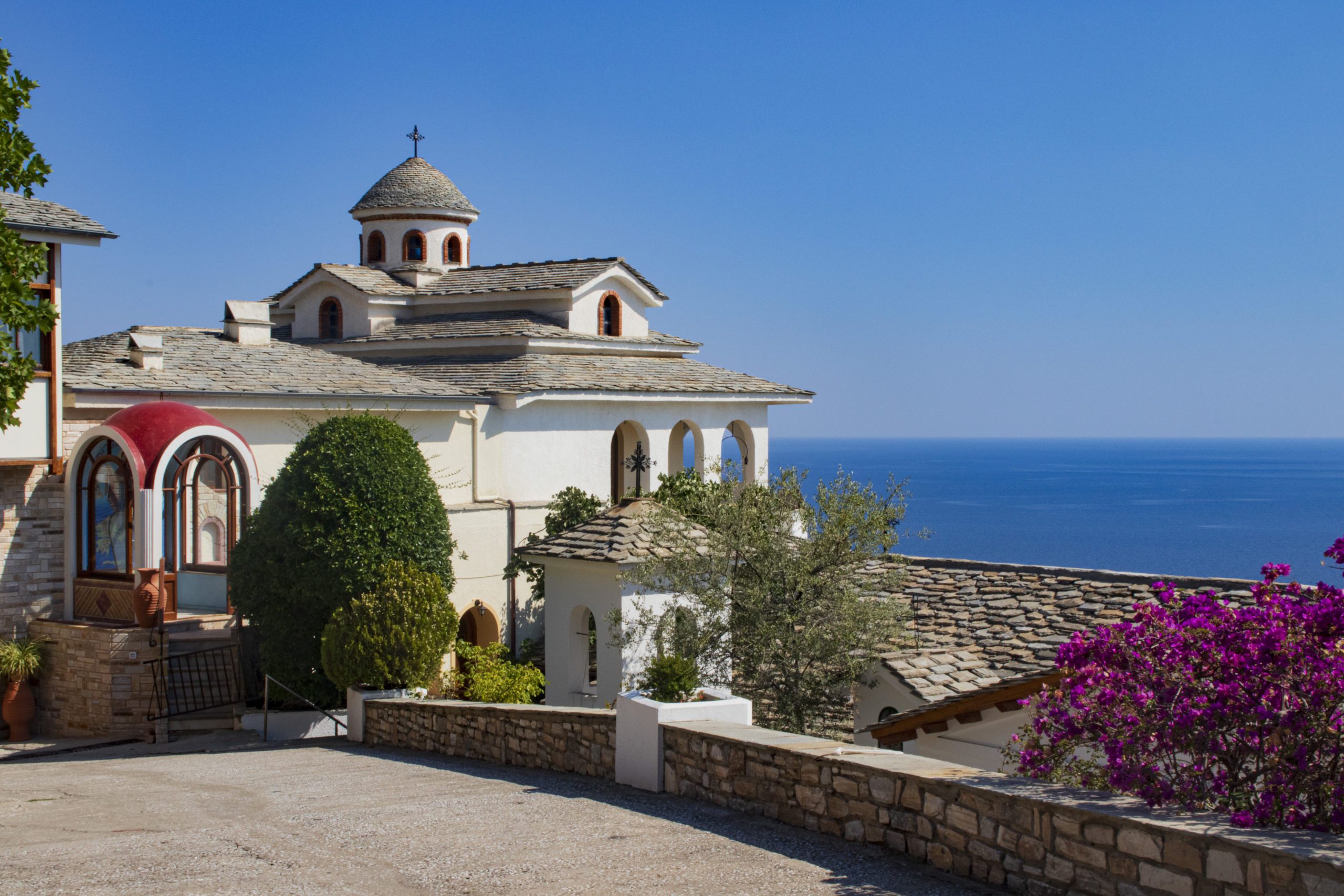
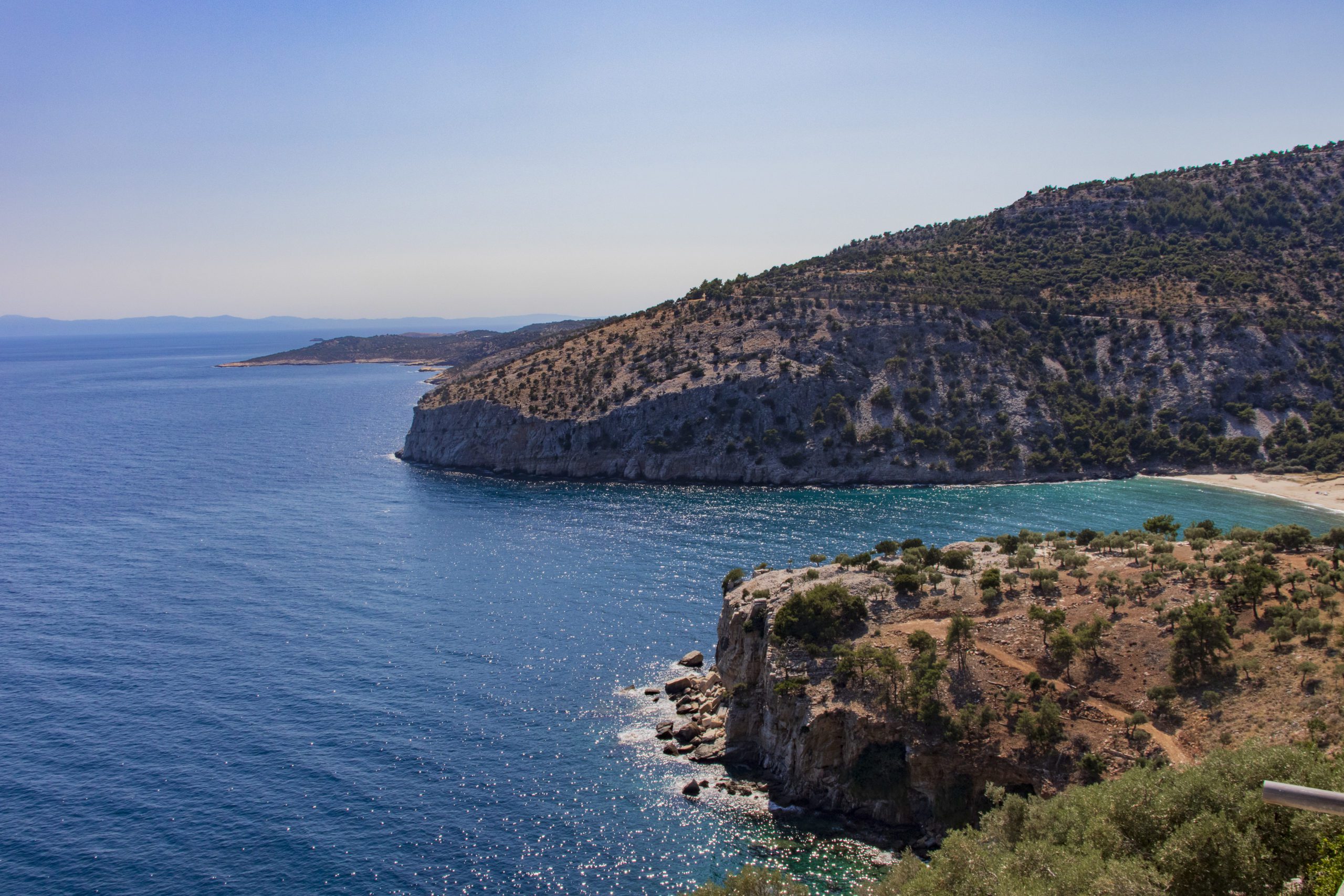
The views from the monastery are unforgettable – from the terrace they stretch over the neighbouring Livadi bay and as far as the Greek mainland.
A view of Athos
When visibility is good, you will see the Chalkidiki coast on the horizon from the terrace, with the holy mountain of Athos.
LIFE IN THE MONASTERY
The church of St Luke and the monastery shop
Today the monastery is a convent – nuns live here, look after it lovingly and keep a strict daily routine: 8 hours of sleep, 8 hours of work and 8 hours of prayer.
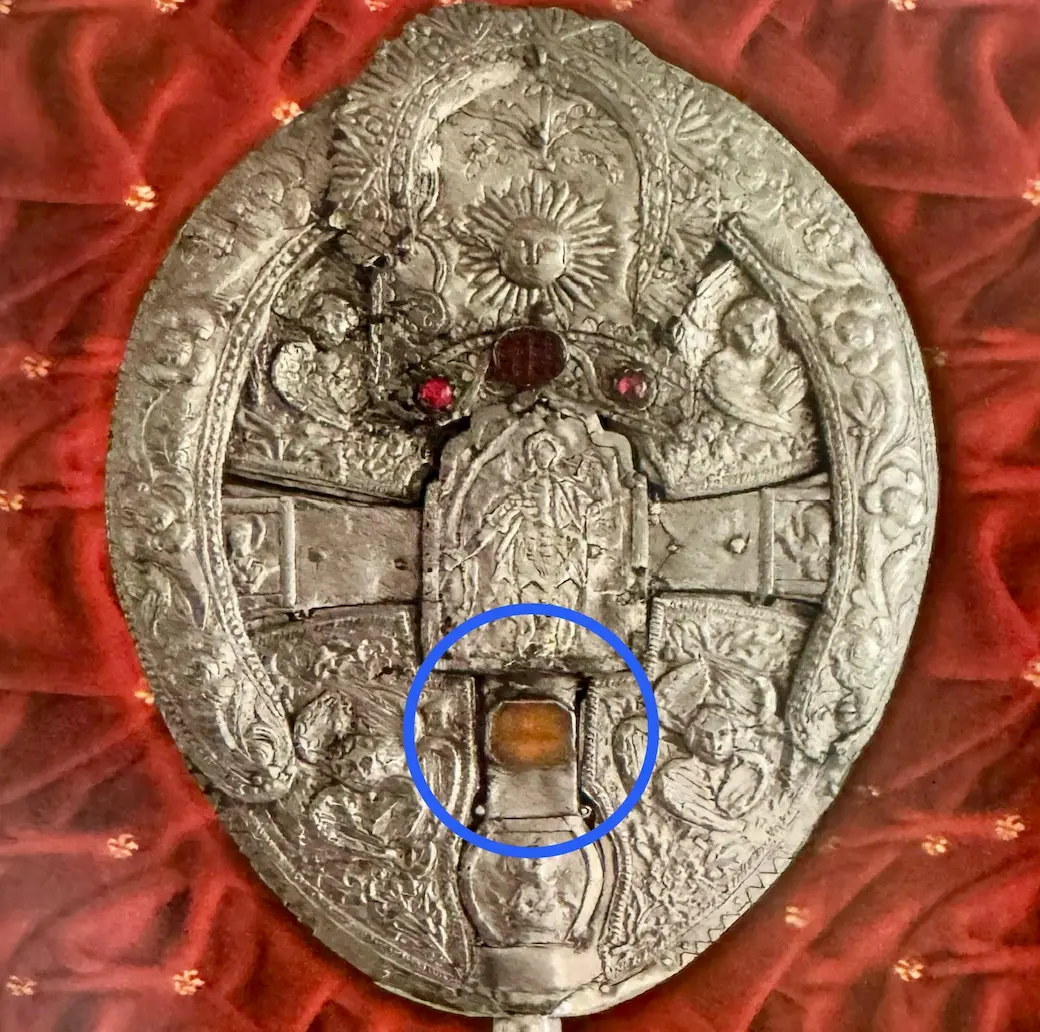
The heart of the monastery complex is the small, original church of St Luke. Inside there is a holy relic – a splinter of the nail with which Jesus Christ was crucified. You will find it right in front of the entrance to the little church on a stand, sealed in a piece of jewellery – it helps to shine your phone torch on it.
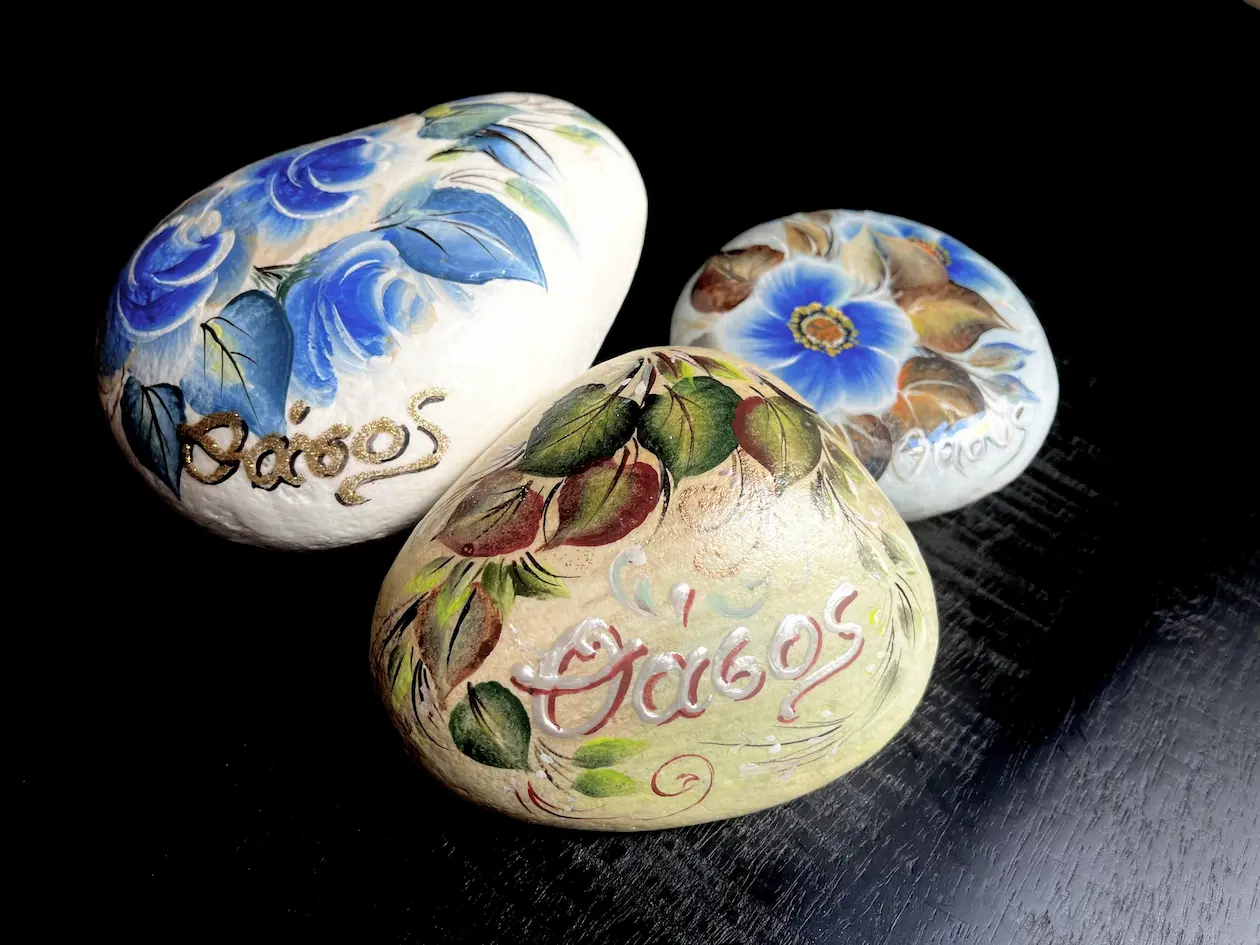
In the monastery shop you can buy handmade souvenirs, home-made jams and other products made by the nuns. Your purchase supports their community.
Mind your head
The entrance to the little church is very low. Hats and caps come off, and photography is strictly forbidden inside.
My favourite souvenir
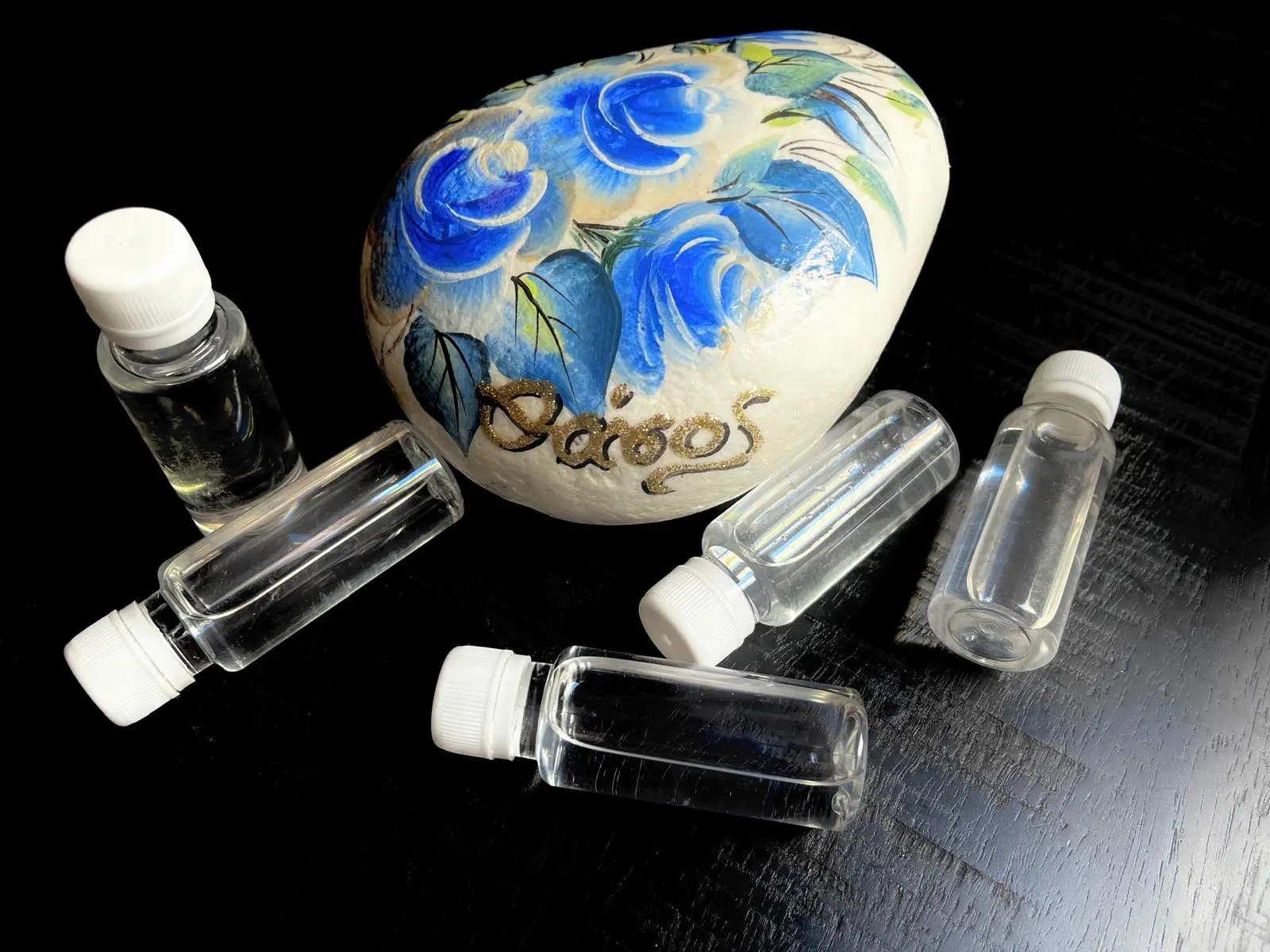
Hand-painted marble stones by the nuns – in different colours and sizes, each one an original.
THE HOLY SPRING
The monastery's miraculous healing water
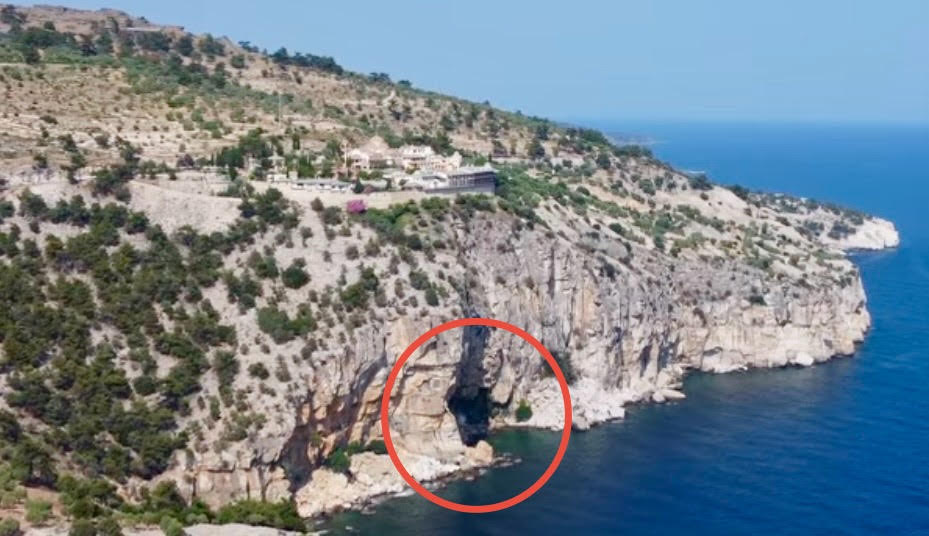
Below the monastery rises a holy spring that is considered miraculous and healing, and it is a popular part of pilgrimage rituals. The cave where the spring rises is below the monastery and can only be seen from a boat – collecting the water is difficult and requires special equipment.
The nuns have the holy water available in the monastery shop in small bottles, with a box for a voluntary donation.
How to use the holy water
Rub it on aching places, cross yourself with it, simply drink it, or keep it as a memento.
Faith
For the spring to work, you need faith.
RULES FOR VISITORS
The Monastery of the Archangel Michael: what to know before you go
The monastery is open to the public, but strict rules apply:
Open from sunrise to sunset, with an afternoon siesta – the morning or later afternoon is ideal.
Dress code – shoulders and knees covered for women and men. The nuns lend clothing free of charge at the entrance, and it is washed after every visitor.
Head coverings – men take off hats and caps before entering, women inside the little church.
Photography – strictly forbidden inside the little church of St Luke; really do not do it. In the grounds and on the terraces the nuns tell people off, so only very carefully and discreetly. It is best to photograph the monastery before you go in.
The car park is small – arrive early, especially in the season.
Respect – this is a living monastery, so keep quiet. It is better not to argue with the nuns and to put on whatever they offer you.
LEGEND
The legend of how the monastery began
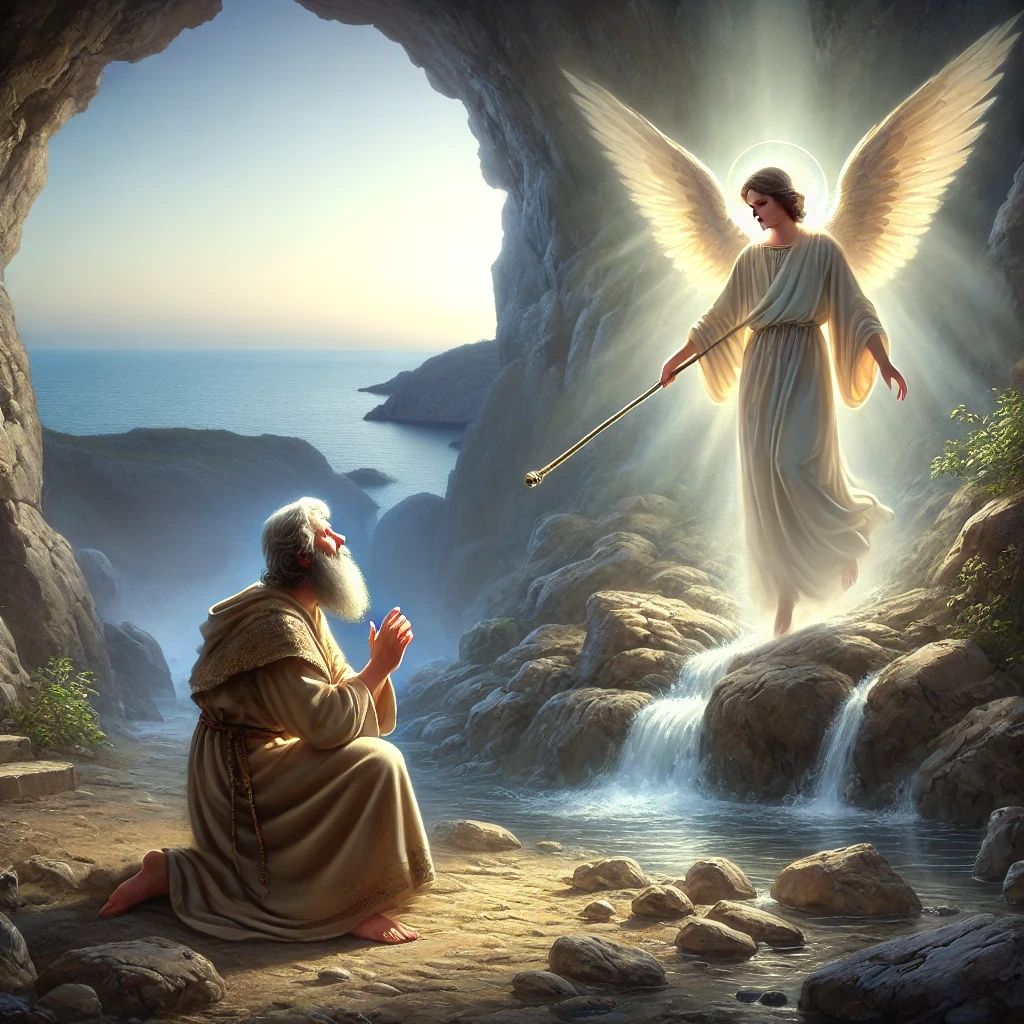
The story of the monastery began around 1090, when St Luke lived on the island. The hermit first settled near Theologos, where he built a small church, and when after 14 years he felt disturbed by people there too, he withdrew to a cave in Potamia. There, after 17 years of prayer, a guardian angel appeared to him.
At first Luke was frightened, thinking he was seeing visions. The angel wanted to convince him that it was not a dream and struck the rock with his staff, and a spring of holy water gushed out. At the same time he foretold that Luke would die in three years – and so it happened. Before that, though, at the angel’s wish, Luke built a small church on this spot, which became the foundation of the later monastery.
The desecration and rediscovery of the spring
According to legend, after 1453 the Turks desecrated the spring out of jealousy of its miraculous power, and the holy water disappeared. It was only rediscovered years later down in the rock below the monastery, where it still rises today.
The legend of St Luke
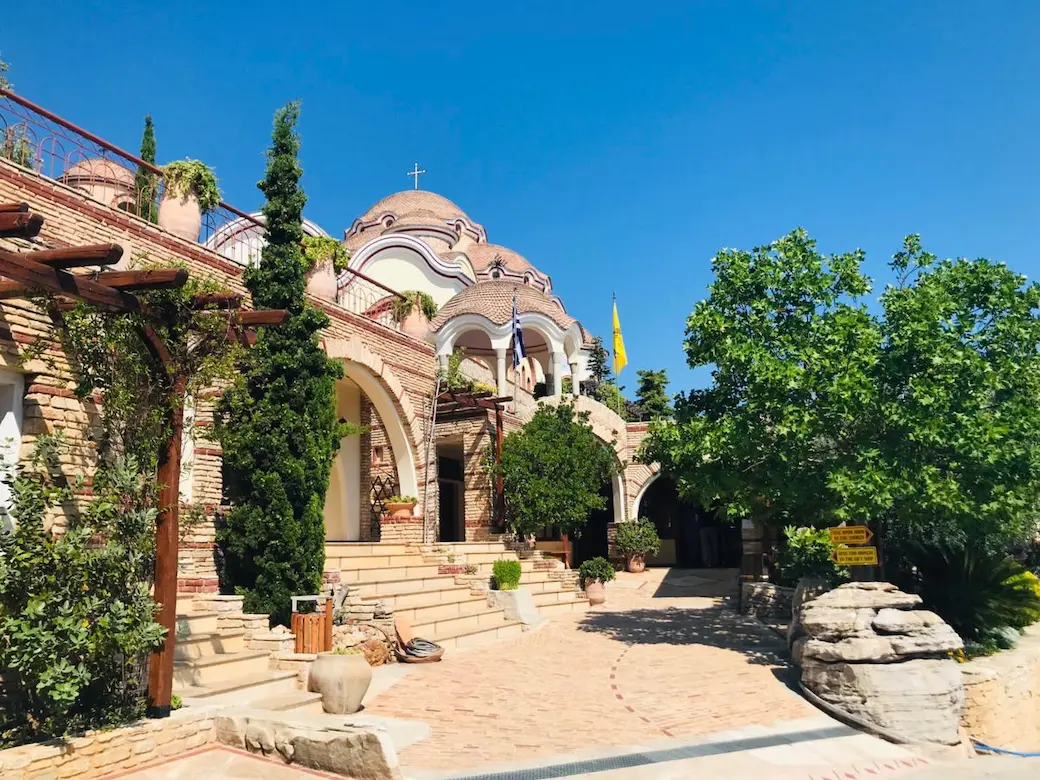
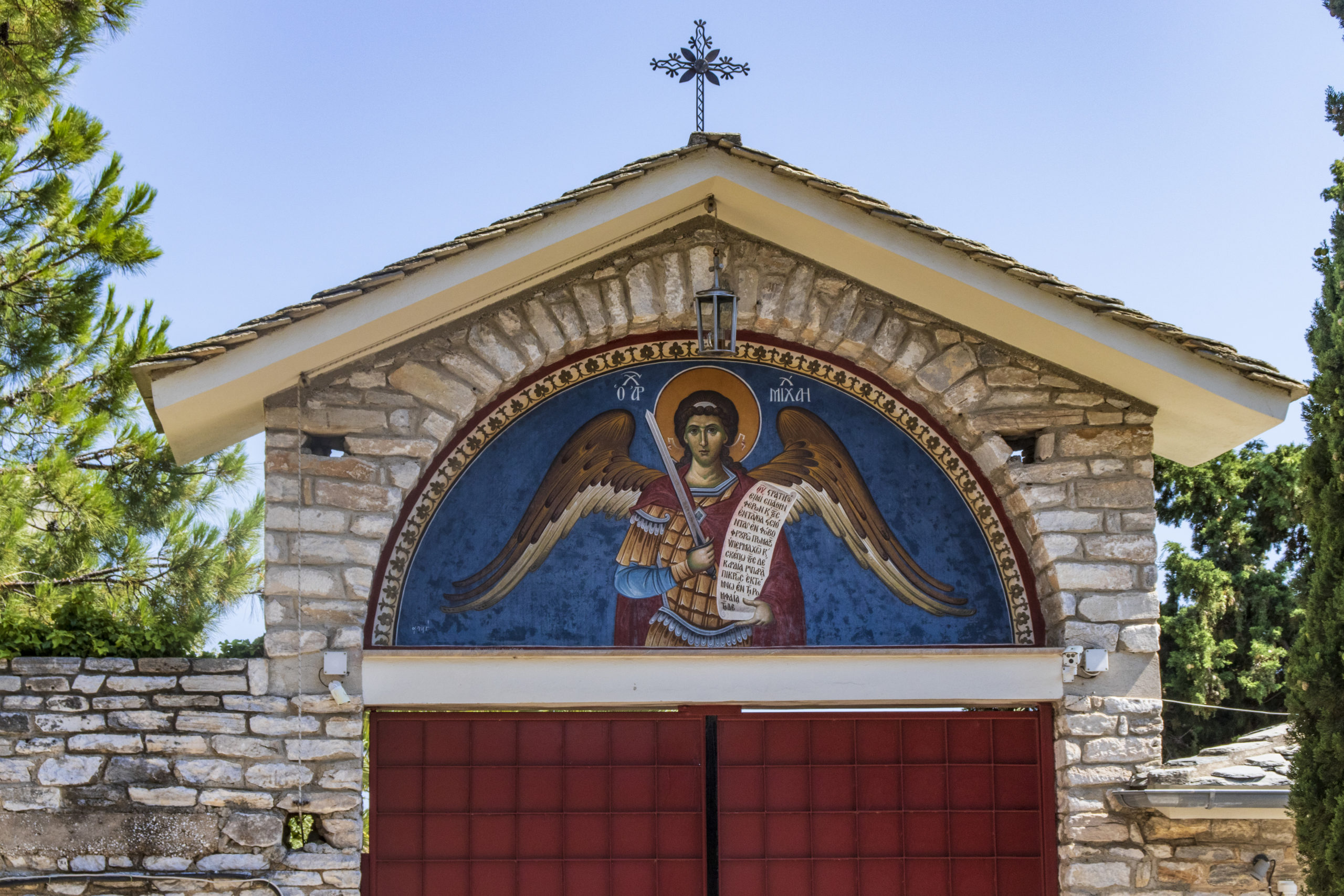
The entrance to the monastery
DID YOU KNOW?
The Monastery of the Archangel Michael then and now
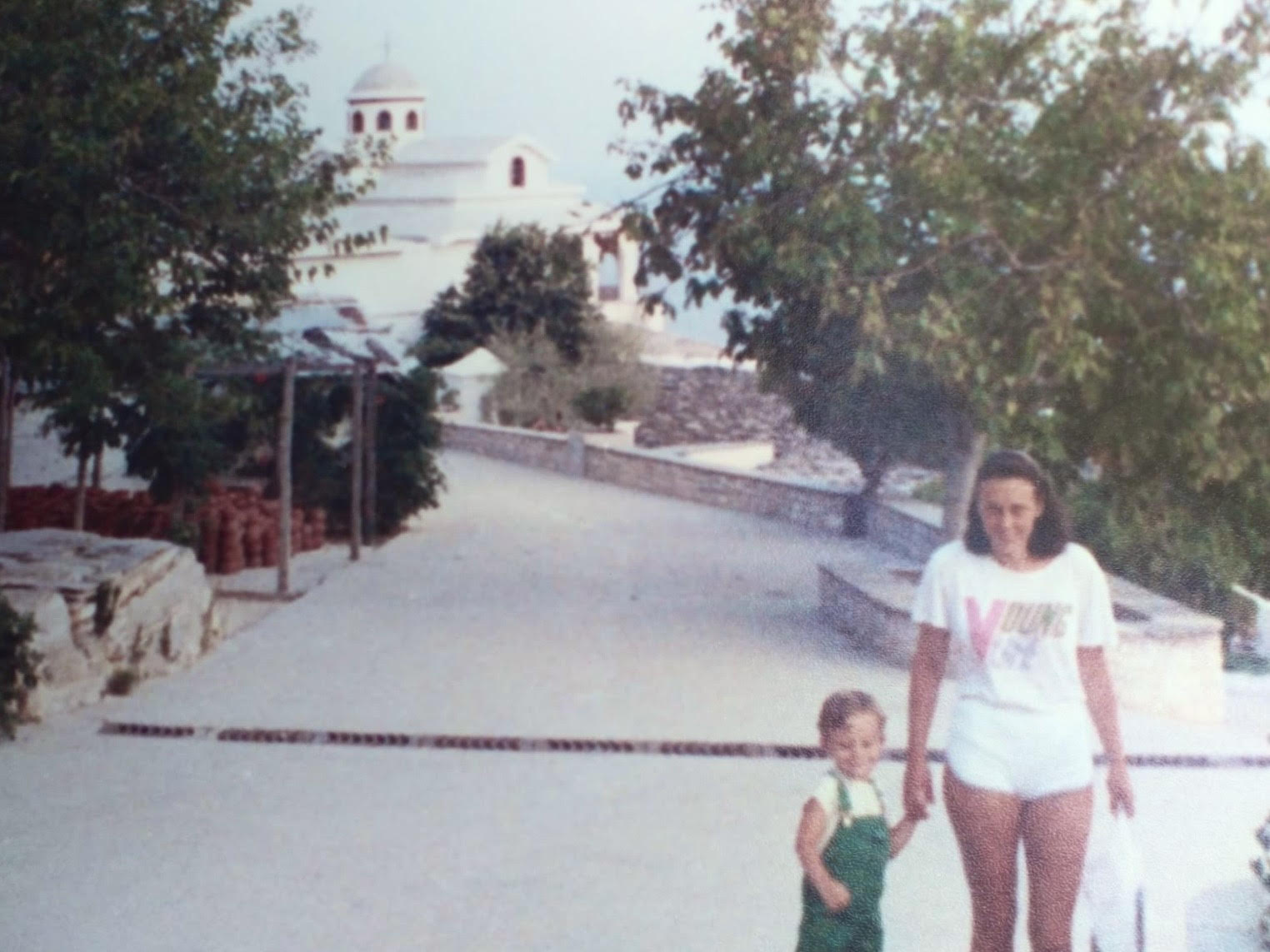
How much has the Monastery of the Archangel Michael changed over the past thirty-odd years? Compare for yourself – on the left a photo from August 1990, on the right the monastery today.
From our family archive
The photo from August 1990 comes from our family archive.
August 1990
Today
MY ACCOMMODATION TIP
Where to stay near the monastery
The closest place to the monastery is again the resort of Astris, with the linked resorts Aeolis and Aeria. From the hotel terrace in Astris you can even see the monastery on its cliff.
The family hotel Astris Sun is also a good base for the monastery and for Aliki – pleasant, with simpler facilities but hardly any complaints. Ideal for lovers of nature and quiet surroundings without crowds of tourists.
I warmly recommend a car here – everything is quite out of the way from Astris, and the nearest facilities are about 8 km away in Potos.
Both women and men must have their shoulders and knees covered. But you do not need to bring anything: a nun at the entrance will lend you suitable clothing free of charge; after your visit you put it in the laundry basket, and it is always washed.
Photography is strictly forbidden inside the little church of St Luke – really do not do it. In the grounds and on the terraces the nuns tell people off for taking photos, so only very carefully and discreetly. You can photograph the monastery freely before you go in.
By car along the main road in the south-east of the island, not far from Aliki – the car park is small, so arrive early. The monastery is also part of optional excursions run by tour operators.
Yes, the monastery shop has small bottles of holy water and a box for a voluntary donation.
FINAL THOUGHTS
The Monastery of the Archangel Michael is a place with a unique atmosphere, where history, faith and natural beauty come together. It offers space for spiritual reflection and an encounter with the sacred past of the island of Thassos.