Las Palmas de Gran Canaria – a cosmopolitan gem in the middle of the Atlantic
Las Palmas offers history in the Vegueta quarter, shopping in Triana and relaxation on one of the best city beaches in the world. The real heart of the island beats in the north.
Forget the hotel complexes in the south for a moment. Las Palmas de Gran Canaria, home today to around 383,500 people, is not just the administrative centre and the ninth-largest city in Spain. It is a place with a distinctive energy and a deep history.
It was the first Spanish city designed to a precise urban plan – the layout was meant to withstand frequent pirate raids. It is also the first Spanish city built outside the European continent – its founding symbolised the beginning of the Spanish Empire and opened up key transatlantic routes towards the Americas. While Lanzarote, Fuerteventura and La Gomera were conquered by the Normans and the Portuguese at the start of the 15th century (tactical and political agreements later attached them to Spain), Gran Canaria resisted their attempts. The turning point came only in 1478, when the troops of Queen Isabella I of Castile, led by Captain Juan Rejón, founded the first military camp. The whole island was conquered in 1483.
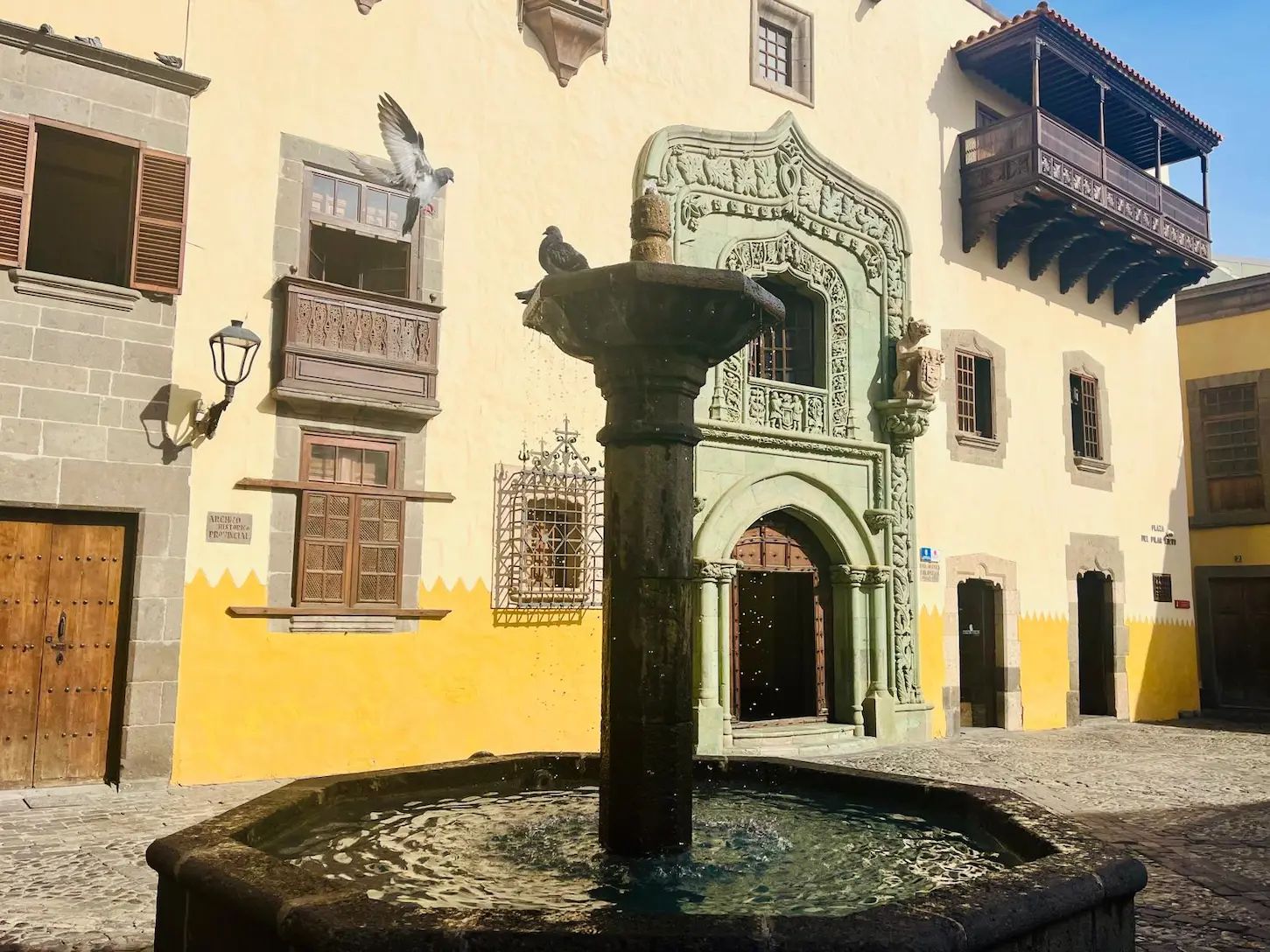
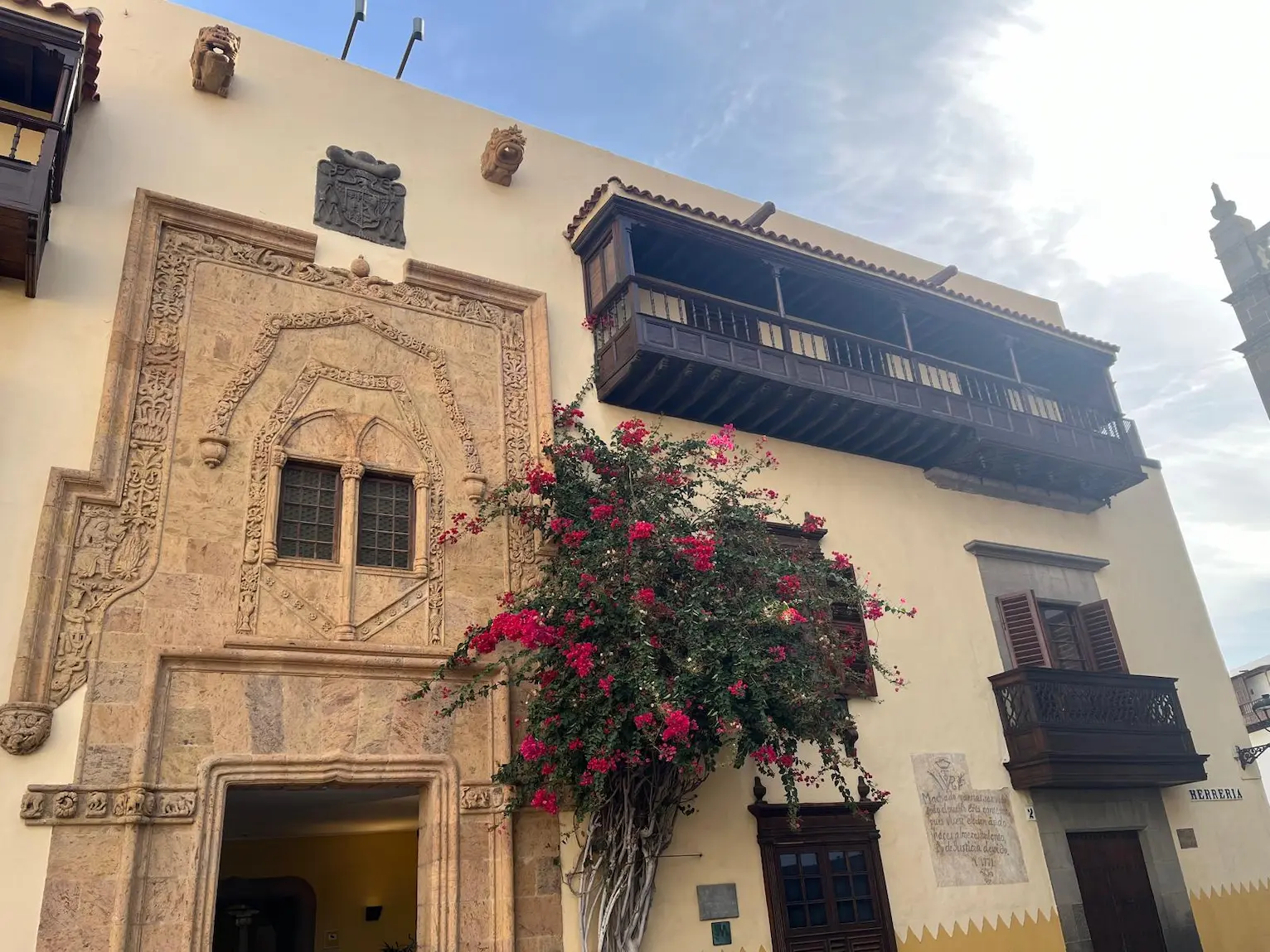
The house of Christopher Columbus in the Vegueta quarter
WHERE THE HISTORY OF THE NEW WORLD WAS WRITTEN
Vegueta and Triana
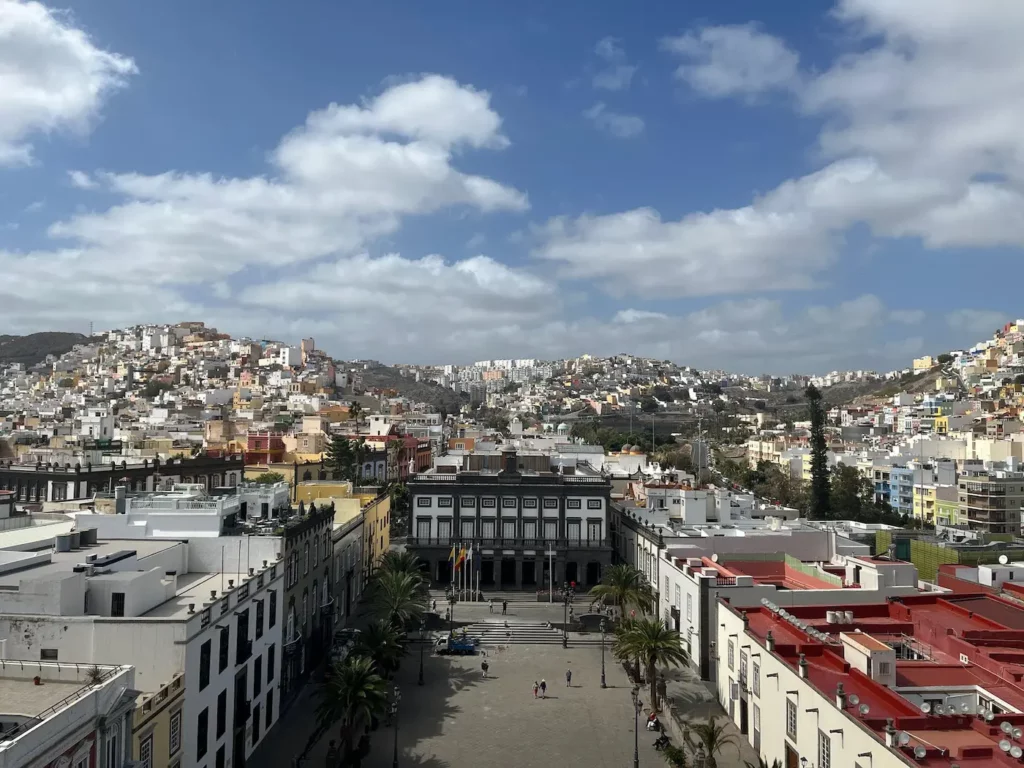
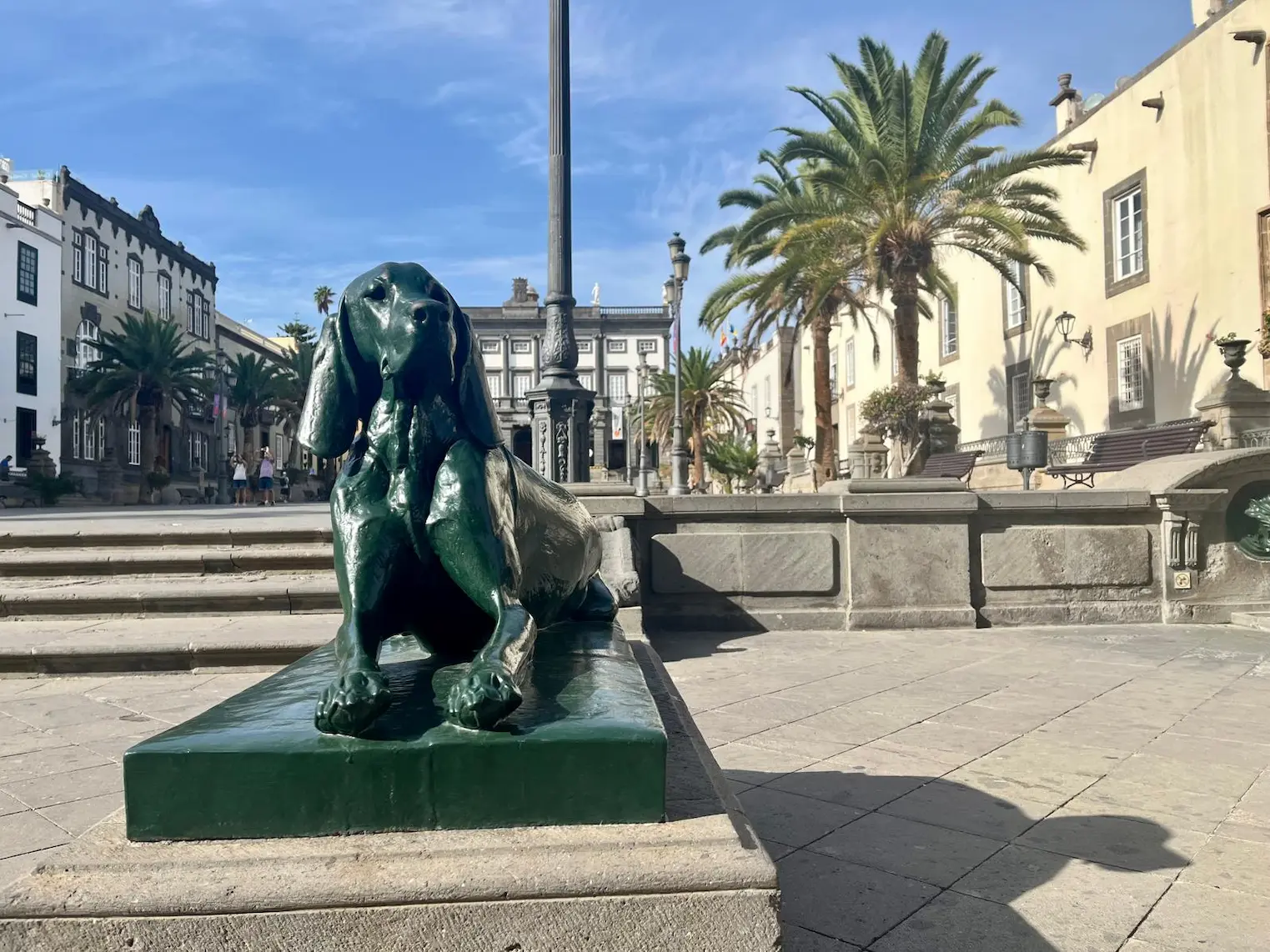
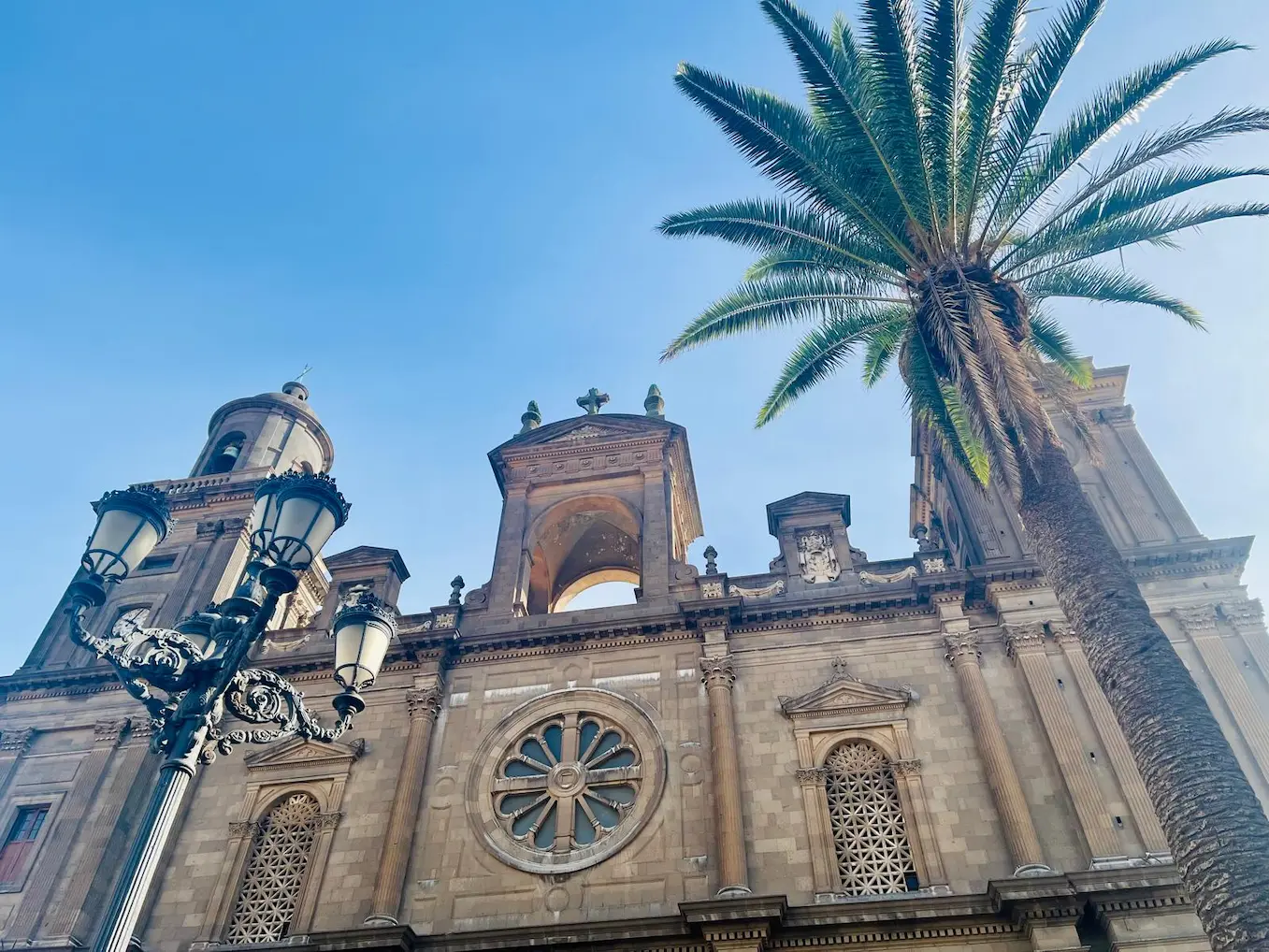
The historic Vegueta quarter is where the city was founded in 1478. Plaza de Santa Ana is dominated by Santa Ana Cathedral – building began in 1497 and took more than 400 years, which is why it mixes Gothic, Renaissance and Neoclassical styles. Nearby is Casa de Colón, the former governor’s palace where Columbus stayed in 1492 while the Pinta was being repaired (admission €4). Do not miss the historic Mercado de Vegueta market either, with exotic fruit and local cheeses.
Right next door lies the Triana quarter, traditionally the home of merchants. The pedestrian Calle Mayor de Triana is a showcase of Art Nouveau architecture and in 2013 won an award for the best open-air shopping area in Spain. San Telmo Park with its modernist kiosk is an oasis of calm.
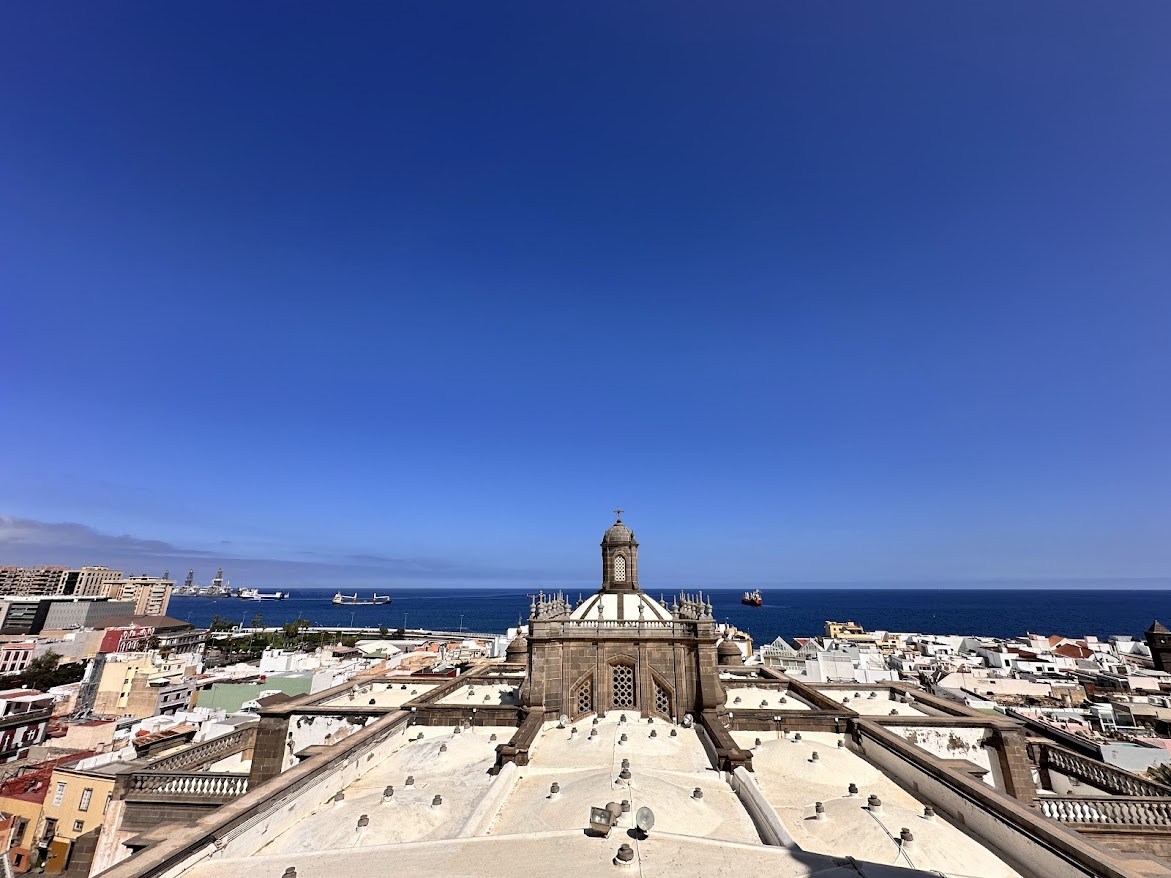
View from the cathedral tower
Admission €6 – a lift up the south tower and from there a 360° view of the city, the port and the volcanic craters in the background.
Museo Canario
The most complete collection about the island’s original inhabitants, including an exhibition of skulls and mummies. Admission €5.
Santa Ana Cathedral
View from Santa Ana Cathedral
The Columbus Museum
THE COPACABANA OF EUROPE
Las Canteras beach
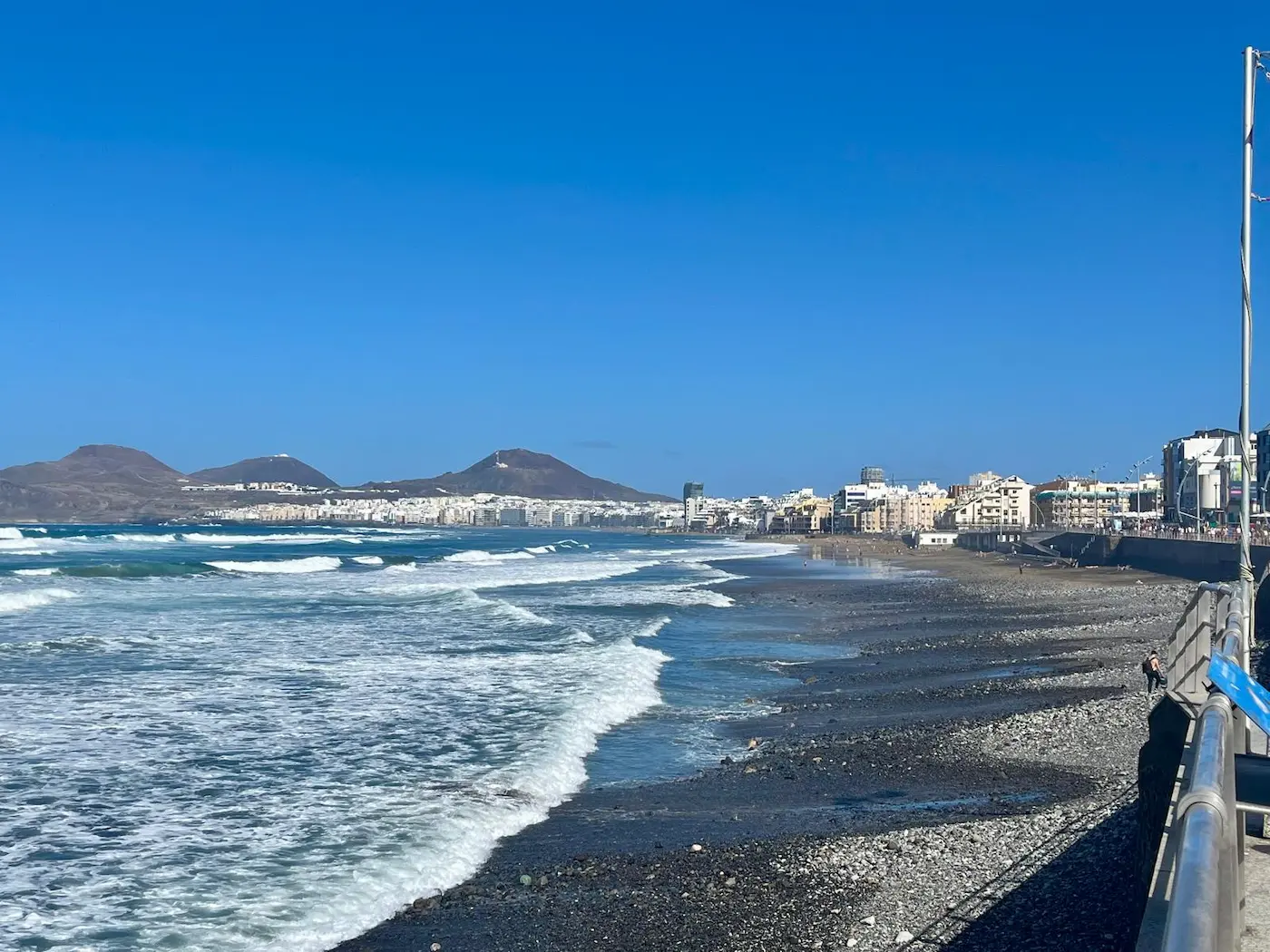
Few world cities can boast such a good beach right in the centre. Playa de Las Canteras is a strip of golden sand more than 3 kilometres long on the city’s north coast. About 200 metres from the shore runs a natural volcanic reef, La Barra, which acts as a breakwater – the water by the beach is as calm as a swimming pool and ideal for swimming and snorkelling.
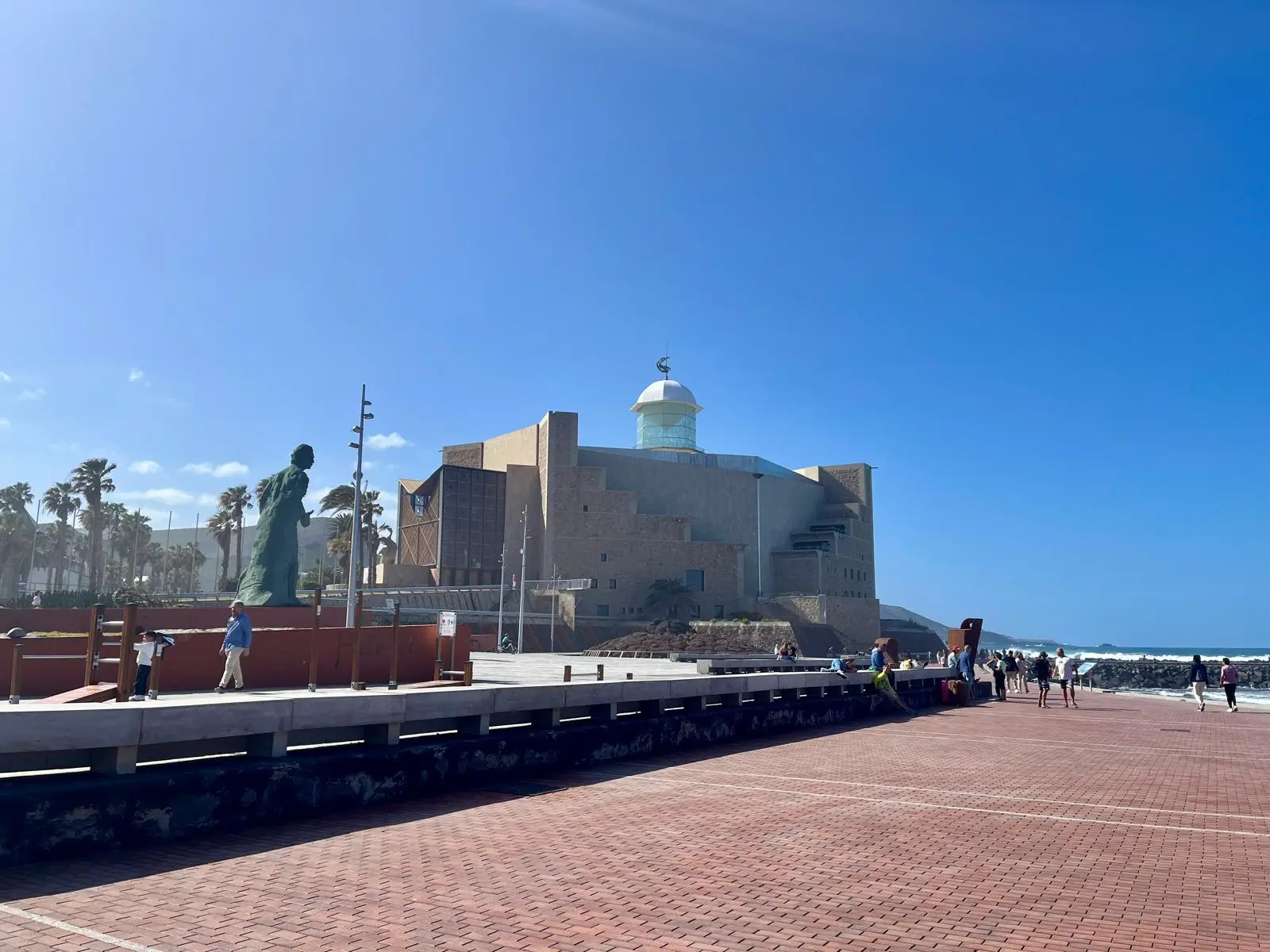
The Paseo de Las Canteras promenade is the hub of social life, with hundreds of restaurants and cafés. The section called La Cícer near the Auditorium has no protective reef and is therefore a paradise for surfers.
At low tide
At low tide you can walk to the La Barra reef without getting your feet wet.
The Auditorium by Las Canteras beach
Las Canteras beach
FOR A FAMILY DAY OUT
The Poema del Mar aquarium and the Museo Elder
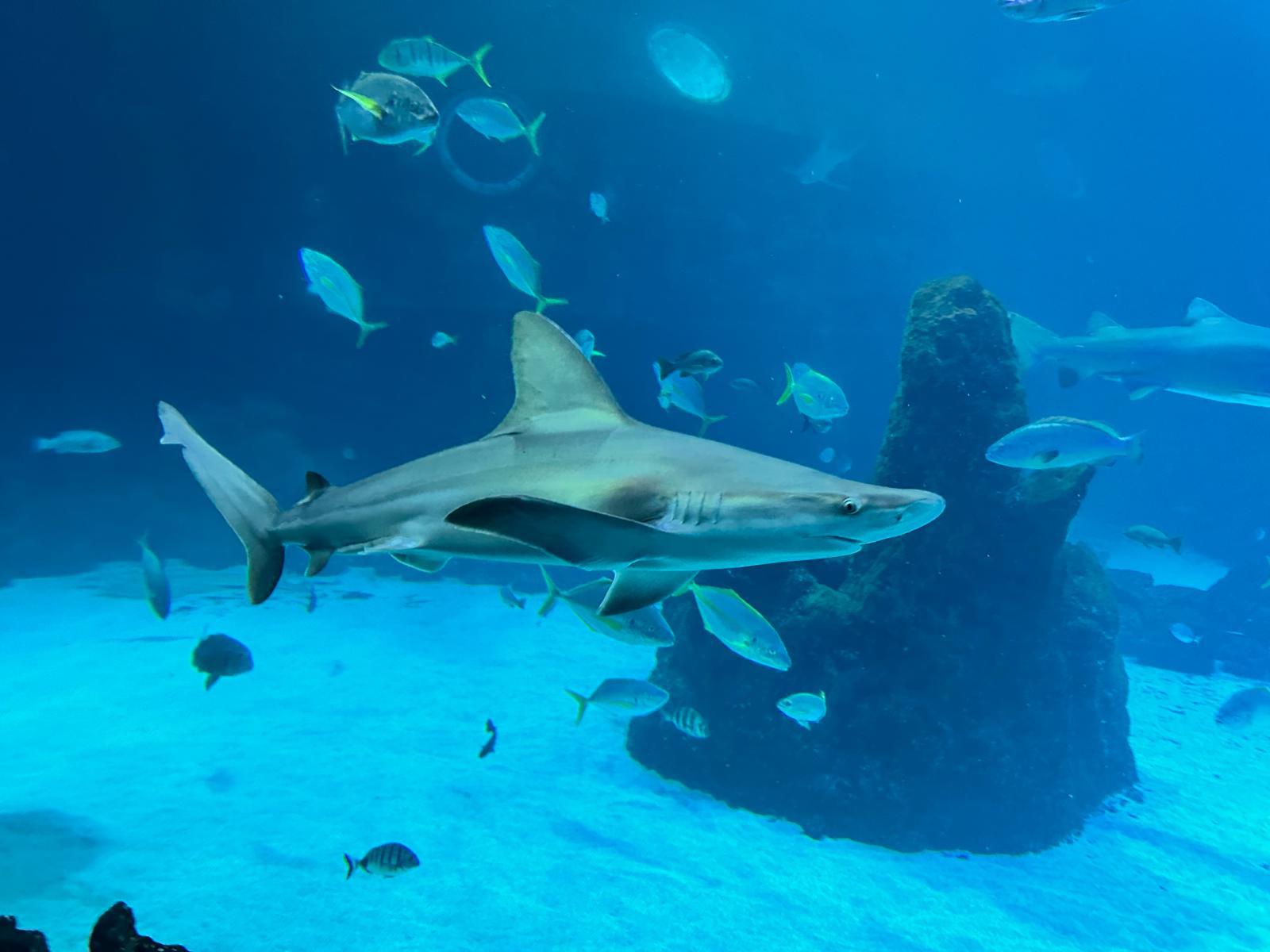
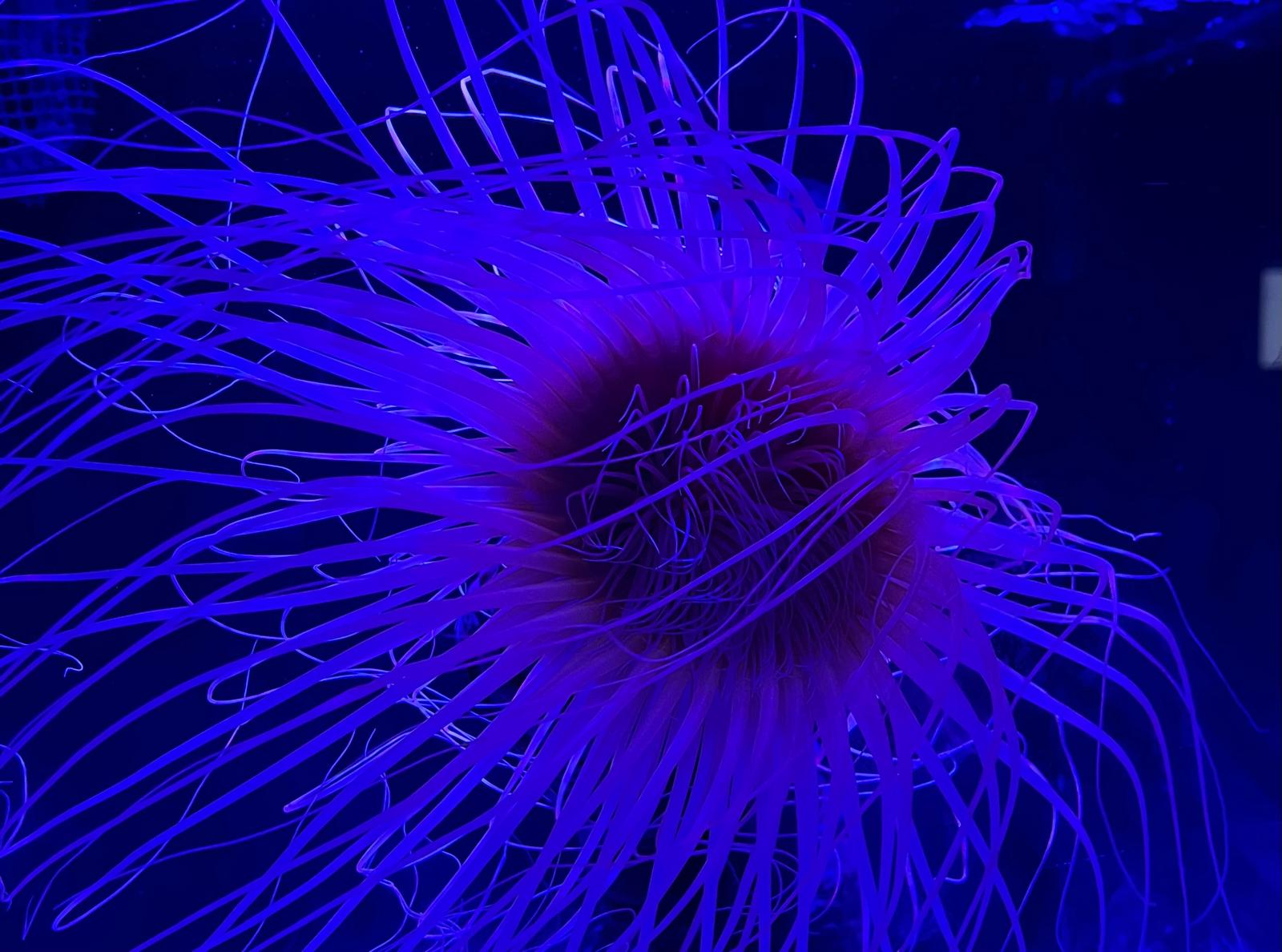
In the area of the port and Santa Catalina Park you will find modern attractions for a whole day. Poema del Mar is a large modern aquarium divided into three zones – jungle, coral reef and deep ocean. The main attraction is a huge glass wall with sharks and rays.
The interactive science and technology museum Museo Elder focuses on physics, technology and space – most of the exhibits are meant to be touched and tried out.
The aquarium and the museum are an ideal plan for days when it is cloudy over the city.
The Poema del Mar aquarium
The Poema del Mar aquarium
FACTS AND TIPS
Las Palmas: what to know before you visit
A few specifics that are often missing from standard guidebooks:
Panza de Burro – “donkey’s belly”: low cloud over the city that creates a greenhouse effect and muggy air.
Different weather from the south – when it is sunny in the south, it may be raining in Las Palmas. Check the forecast specifically for Las Palmas.
An extra layer – always pack something light to put on.
Parking – a nightmare in the centre; use the supervised car parks by the aquarium, by the Mercado de Vegueta or by the Las Arenas shopping centre.
Guaguas Global – the buses are fast and reliable.
Shopping – Calle Mayor de Triana and the Las Arenas shopping centre.
MY ACCOMMODATION TIP
Where to stay if you want to explore Las Palmas
The nicest place to stay is by Las Canteras beach – a morning swim in the calm water behind the La Barra reef, an evening stroll along the promenade full of restaurants. From here you can get to historic Vegueta quickly by Guaguas Global bus, so you do not need a car in the city – and you avoid the parking, which is a nightmare here.
The historic Vegueta quarter with Santa Ana Cathedral and Casa de Colón, the Triana shopping quarter, Las Canteras beach and the Poema del Mar aquarium.
Yes, the La Barra reef acts as a breakwater and the water is calm. Only the La Cícer section near the Auditorium has no reef and belongs to the surfers.
In the supervised car parks by the aquarium, by the Mercado de Vegueta or by the Las Arenas shopping centre. Guaguas Global buses are also a good choice.
FINAL THOUGHTS
Las Palmas de Gran Canaria is a city of contrasts that will win you over with its diversity. Whether you are looking for history, shopping or relaxing by the ocean, you will find it all in one place here.