
Maspalomas Dunes: 400 hectares of golden sand carried here over the centuries by the wind and sea currents. A Saharan landscape in sharp contrast with the blue of the Atlantic – the most iconic spot on the whole island.
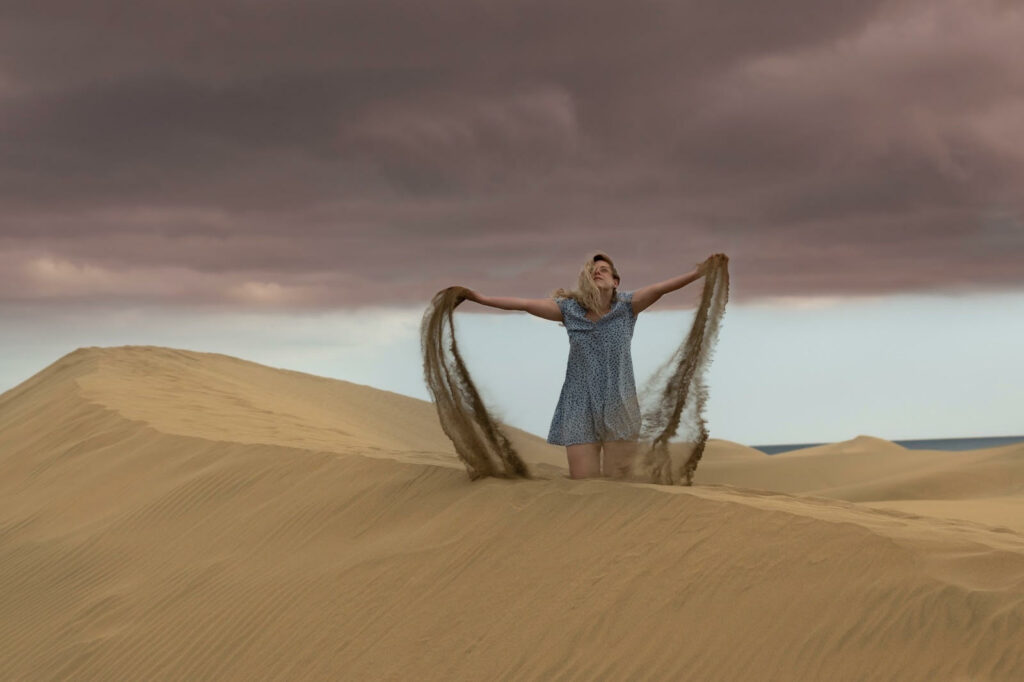
The Maspalomas Dunes are not just a tourist attraction but a precise mechanism of nature. An organic system of golden sand, carried here over the centuries by the wind and sea currents, covers 400 hectares.
The result is an authentic Saharan landscape in sharp contrast with the blue of the Atlantic. The reserve never looks the same twice – the constant trade winds shape the sand ridges into new formations.
To see what the sea and weather are like on Maspalomas beach today, check IslaBu.
South of the island, Maspalomas
Only on marked paths
The golden hour before sunset
The dunes from a drone – click to play the video.
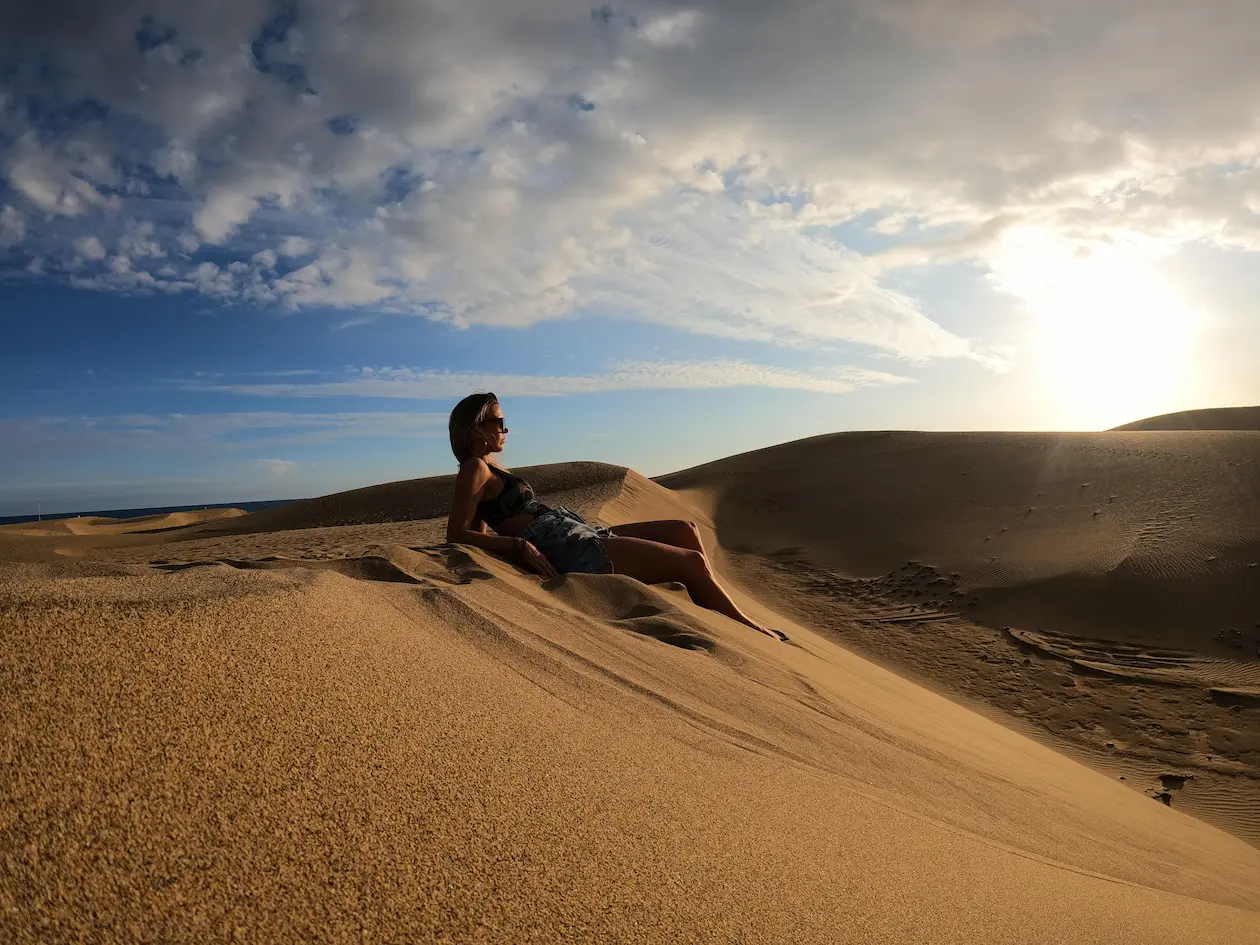
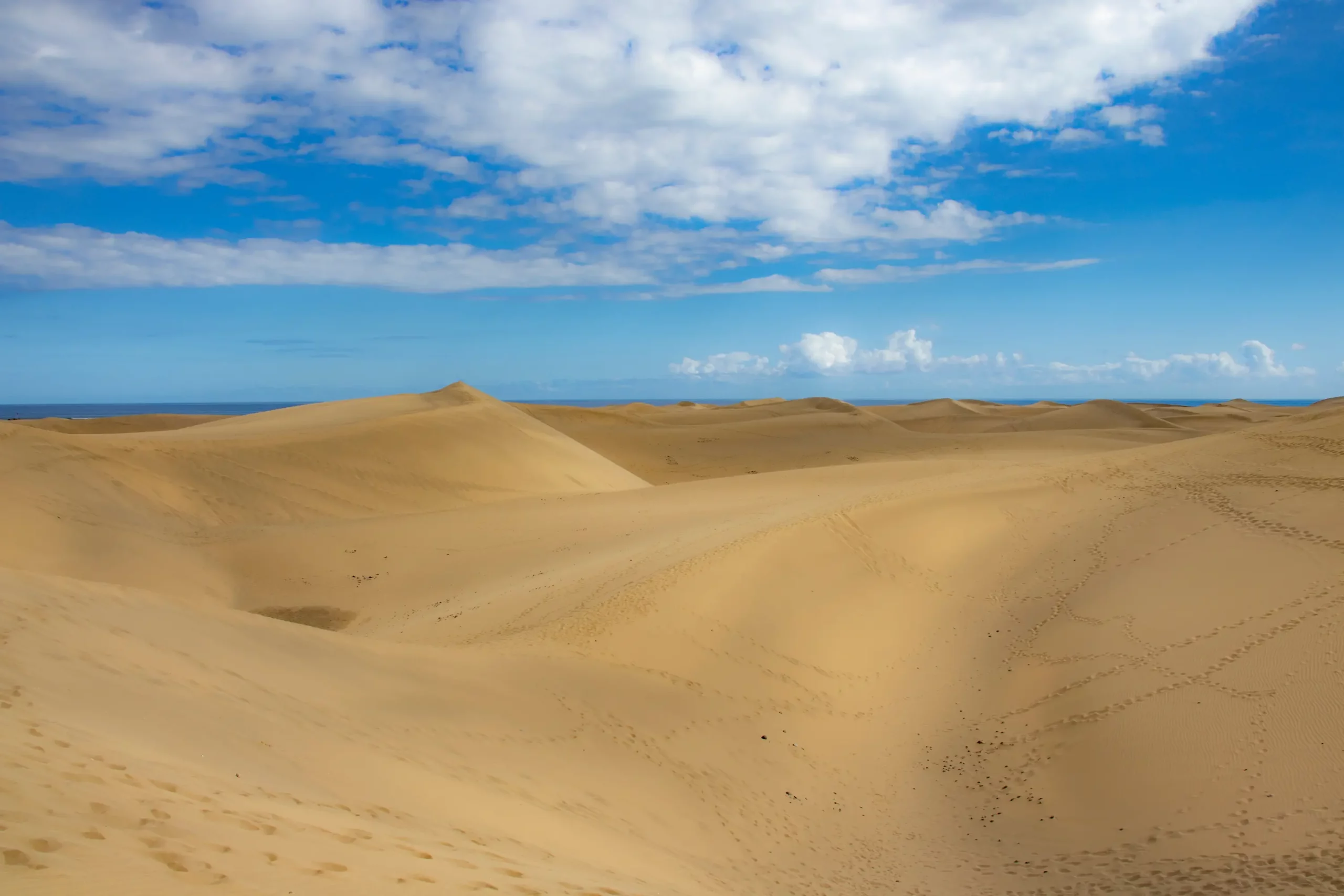
The main gateway to the dunes is the Riu Palace Maspalomas hotel on the edge of Playa del Inglés. From the hotel there is a view across the dunes to the sea, and marked paths lead from here into the reserve. You can park near the hotel wherever you find a free space.
Crossing the dunes to the sea takes about an hour, including stops for photos. At the sea you can walk along the coast all the way to the Maspalomas lighthouse. The beach from Playa del Inglés to the lighthouse is about 6 km long, so expect a longer walk.
The most pleasant time is the morning, when the sand is not yet hot and you can walk on the dunes barefoot. The same goes for the evening, when there is a beautiful sunset. That is the most popular time, though, so expect more people. On a hot day at midday and in the afternoon, be sure to wear shoes.
The dunes are a nature reserve. Stick to the marked paths and take your rubbish with you. On the beach below the dunes there are also naturist sections, popular among others with the LGBT community.
Near the Riu Palace Maspalomas hotel, wherever there is a free space. The main entrance to the dunes is here.
In the morning and towards evening you can walk on the sand barefoot. At midday and in the afternoon the sand is hot, so wear shoes.
Maspalomas is not just sand. The reserve also includes a palm grove and the La Charca lagoon, a key spot for birdwatchers and wildlife lovers. As a protected area it is subject to strict rules – you may only walk along the marked paths.
Despite their majesty, the dunes are slowly disappearing. Human activity, urbanisation and disruption of the natural wind flow mean that the sand is being lost to the ocean faster than it can be replenished. This video shows how this unique ecosystem is fighting to survive.
The best experience is the time before sunset, when the shadows lengthen and the dunes gain maximum depth.
Keep to the marked paths – you will help the dunes survive.
The resorts of Maspalomas, Playa del Inglés and Meloneras lie right next to the dunes. The Abora Catarina hotel stands right by the entrance gate to the dunes. The Riu Palace Maspalomas hotel is also on the edge of the dunes.
In the Maspalomas area I recommend the Suites & Villas by Dunas and Maspalomas Resort by Dunas bungalows – a pleasant setting that also suits families.
You will find more tips in the articles Gran Canaria resorts and Gran Canaria with kids.
They cover about 400 hectares.
In the golden hour before sunset.
No, it is a protected area – you may only walk along the marked paths.
Because of human activity, urbanisation and disruption of the wind flow, the sand is being lost faster than it is replenished.
The main gateway to the dunes is the Riu Palace Maspalomas hotel on the edge of Playa del Inglés. Marked paths lead from here across the dunes to the sea. You can park near the hotel wherever there is space.
Yes. Cross the dunes to the sea and then walk along the coast to the Maspalomas lighthouse. The beach from Playa del Inglés to the lighthouse is about 6 km long.
Yes, on the beach below the dunes there are naturist sections, popular among others with the LGBT community.
The Maspalomas Dunes are unique in the world and their raw beauty has no rival in Europe – a place you must experience at least once in your life.